


The Zodiac Killer Mystery
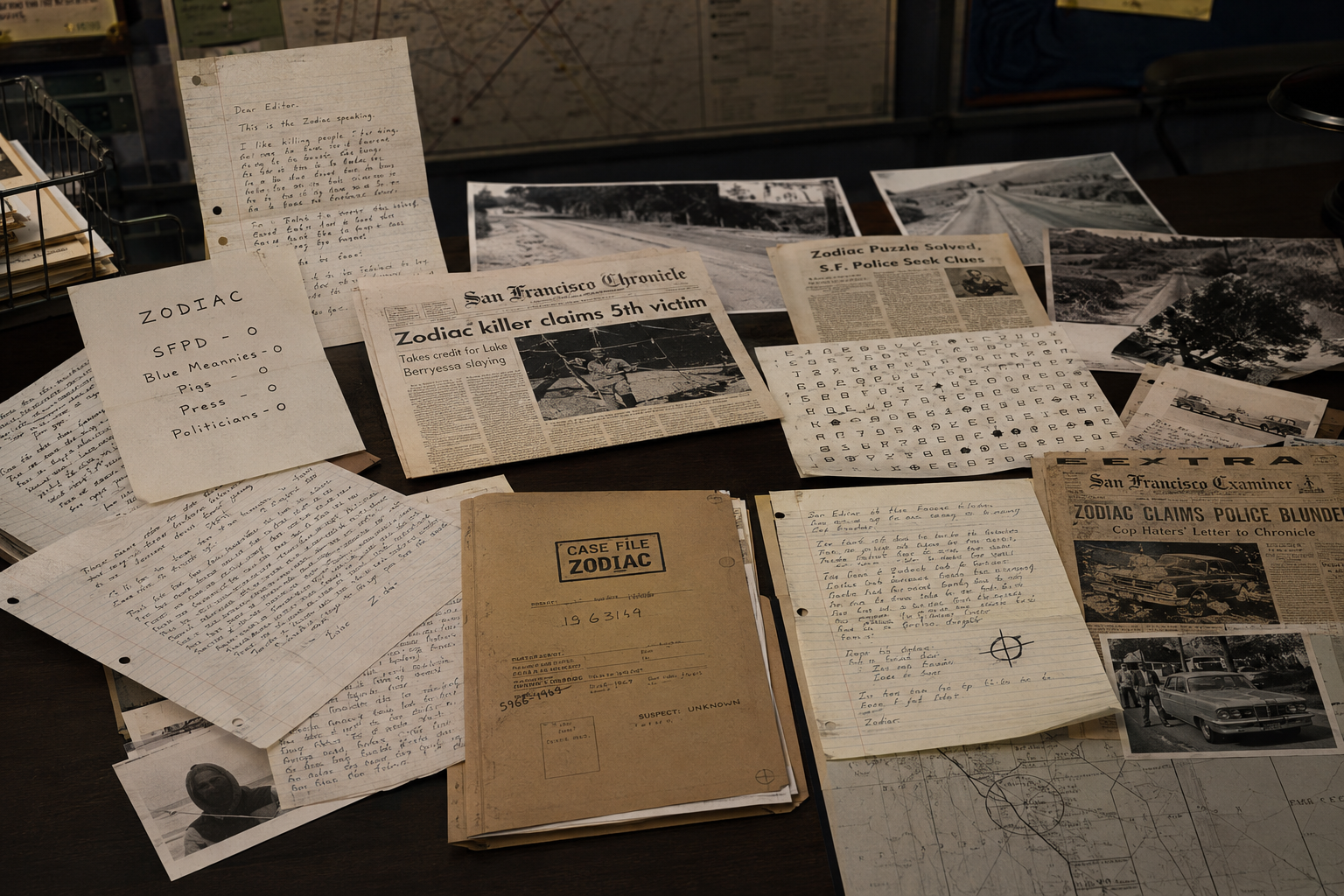
Few American criminal investigations have generated as much evidence, speculation and unanswered debate as the Zodiac Killer mystery. Between December 1968 and October 1969, an unidentified offender attacked seven people in Northern California in four confirmed attacks, killing five and leaving two survivors. He then communicated with newspapers, sent cryptograms, claimed responsibility for murders and deliberately turned the investigation into a public contest over his identity.
More than half a century later, the central question remains the same: who was the man who called himself Zodiac?
The answer is not Arthur Leigh Allen, Gary Francis Poste, or any of the other names that have appeared in books, documentaries and theories unless law enforcement evidence can establish that connection. No person has ever been charged with the five confirmed Zodiac murders, and no court has determined the identity of the killer. The FBI’s released files also make clear that not every letter attributed to Zodiac was definitively established as authentic.
That distinction is essential to understanding the case. The Zodiac mystery is not simply a story about a clever unidentified killer. It is a case in which genuine crime-scene evidence exists alongside uncertain communications, disputed connections to other murders and decades of speculation. Some questions have become clearer with modern forensic methods. Others remain stubbornly unanswered.
The result is an unusual historical record: investigators know a great deal about what happened to several victims, but still cannot reliably identify the person responsible.
Who Were the Confirmed Zodiac Killer Victims?

The five confirmed homicide victims were David Faraday, Betty Lou Jensen, Darlene Ferrin, Cecelia Shepard and Paul Stine. Two other victims, Michael Mageau and Bryan Hartnell, survived their respective attacks. The FBI’s historical records document the 1968 and 1969 attacks and the involvement of multiple local law-enforcement agencies.
The first confirmed attack occurred on December 20, 1968, on Lake Herman Road near Benicia, California. David Faraday, 17, and Betty Lou Jensen, 16, were attacked while parked in a secluded area. Both were killed.
At the time, investigators did not know they were dealing with the beginning of a series. The crime initially appeared to be another unexplained double homicide rather than part of a larger campaign by an offender who would later seek publicity.
On July 4, 1969, Darlene Ferrin and Michael Mageau were attacked while sitting in a parked car at Blue Rock Springs Park in Vallejo. Ferrin died from her injuries. Mageau survived.
A telephone caller subsequently contacted the Vallejo Police Department and claimed responsibility for both the Blue Rock Springs attack and the earlier Lake Herman Road murders. That claim became increasingly important when newspapers began receiving letters from a person claiming to be the murderer.
The third confirmed attack took place at Lake Berryessa on September 27, 1969. Bryan Hartnell and Cecelia Shepard were approached by a man wearing an unusual hooded costume. The attacker bound the pair and stabbed them. Hartnell survived, but Shepard died two days later from her injuries.
The final confirmed murder occurred on October 11, 1969, in San Francisco. Taxi driver Paul Stine was shot inside his cab in the Presidio Heights neighborhood. The circumstances were particularly important because witnesses saw the killer after the shooting, and physical evidence was recovered from the taxi.
These five deaths form the core of the Zodiac case. Other murders and disappearances have been proposed as possible Zodiac crimes, but they should not be presented as confirmed victims without sufficient evidence.
The Killer Who Chose the Name “Zodiac”
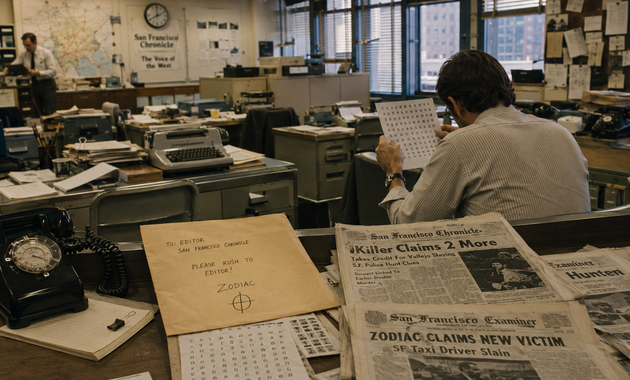
The investigation changed dramatically in July 1969 when newspapers in the San Francisco Bay Area received letters from someone claiming responsibility for the killings.
The FBI’s released laboratory records document letters received in August 1969, including correspondence beginning with the phrase identifying the writer as Zodiac. Investigators examined the handwriting, envelopes and accompanying cryptographic material.
The letters were more than communications. They were part of the offender’s apparent strategy.
He demanded newspaper publication, threatened further killings and supplied cryptograms that he claimed would reveal his identity. The decision to communicate with newspapers created a second investigative trail alongside the physical evidence from the murders.
It also created a serious problem.
Not every communication could automatically be treated as genuine.
The FBI later explicitly noted that it had not been definitely established that all letters received in the Zodiac investigation were written by the Zodiac.
That warning matters because later theories sometimes treat every postcard, letter or alleged confession as if it came from the same person. The historical record does not justify that assumption.
The First Cipher Was Solved in 1969
One of the most famous elements of the Zodiac mystery was the series of cryptograms sent to Bay Area newspapers.
In July 1969, the writer divided a 408-symbol cipher among three newspapers. A schoolteacher, Donald Harden, and his wife, Bettye Harden, eventually solved it. Contemporary FBI records preserve reporting about the solution and the investigation surrounding it.
The decoded message contained a disturbing explanation of the writer’s supposed motivation and discussed killing for excitement. But it did not provide investigators with the identity they wanted.
This was an early lesson in the Zodiac case: solving one mystery did not necessarily solve the larger one.
The cipher could establish something about the writer’s communications, but it did not produce a usable name.
The 340 Cipher Took 51 Years to Solve
The more famous Zodiac cryptogram was the 340-character cipher, commonly called Z340.
It was mailed to the San Francisco Chronicle in 1969 and remained unsolved for more than five decades. In December 2020, David Oranchak, Sam Blake and Jarl Van Eycke announced that they had deciphered it. The FBI independently verified the solution.
The achievement was significant, but it did not provide the breakthrough many people expected.
The decoded message contained further taunting language and references to death and the gas chamber. It did not reveal the killer’s name.
That distinction is sometimes lost in popular accounts of the case. The Z340 cipher was solved, but the Zodiac Killer was not.
The FBI’s confirmation therefore represented a major cryptographic achievement rather than the identification of a murderer. The agency continued to describe the case as an ongoing investigation.
Two other famous Zodiac ciphers, including the short Z13 and Z32 communications, remain unresolved.
What Evidence Did Investigators Actually Have?
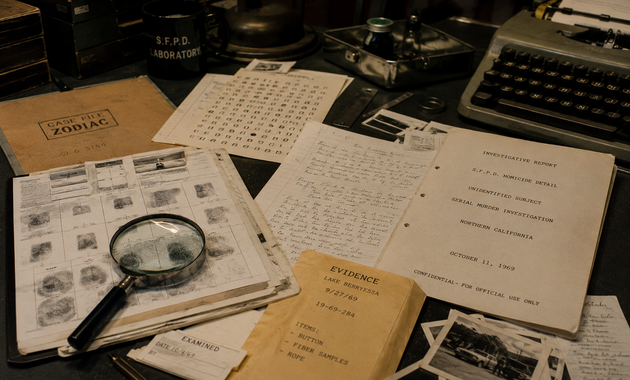
The Zodiac investigation is unusual because investigators possessed several different types of evidence. None has been sufficient to establish the identity of the offender.
Ballistics
Firearms evidence connected weapons and ammunition to individual attacks. At Lake Herman Road, investigators recovered evidence associated with a .22-caliber firearm. Other attacks involved different weapons, including a 9mm handgun.
Ballistics could help establish what happened at a crime scene and whether attacks were connected. It did not produce a named offender because investigators never recovered a weapon that conclusively linked the murders to a particular suspect.
Fingerprints and Palm Prints
Physical prints became particularly important after Paul Stine’s murder.
Investigators recovered fingerprints and a palm print from the taxi. These became potential identification evidence because the killer had been inside the vehicle.
The problem was not the absence of evidence. It was the absence of a confirmed match.
A fingerprint can be powerful evidence when it is reliably associated with a known individual. A latent print belonging to an unidentified person, however, can remain an unidentified lead for decades.
Handwriting
The Zodiac letters generated extensive handwriting analysis.
Arthur Leigh Allen was eventually compared with Zodiac correspondence, but handwriting evidence did not establish that Allen was the writer. Historical accounts of the investigation describe handwriting comparisons that failed to produce a convincing match.
This is one reason the Allen theory remains controversial. A suspect can accumulate numerous circumstantial similarities without satisfying the forensic evidence required to establish identity.
DNA
DNA has also been discussed extensively in the case, but its significance needs to be described carefully.
A partial DNA profile was developed from material associated with Zodiac correspondence and was reported as inconsistent with Arthur Leigh Allen. That evidence did not identify another person as the Zodiac, and it does not automatically prove that the biological material came directly from the killer rather than another person who handled an envelope or stamp.
This is an important example of the difference between excluding one suspect and identifying the offender.
Modern forensic technology can answer questions that investigators in 1969 could not ask. But technology is only as useful as the provenance and quality of the underlying evidence.
Arthur Leigh Allen: The Most Famous Suspect
No suspect has become more closely associated with the Zodiac mystery than Arthur Leigh Allen.
Allen was investigated repeatedly. His name entered the case because of information supplied to police and a series of circumstantial similarities that attracted investigators’ attention. He was searched and questioned, and his background was examined in considerable detail.
Some of the evidence appeared suggestive.
Allen owned a Zodiac-brand watch, and investigators found material at his residence that attracted attention because it seemed potentially relevant to aspects of the Zodiac investigation. He also became the central suspect portrayed in Robert Graysmith’s influential books about the case.
But suspicion is not proof.
Allen was never charged with the Zodiac murders. His fingerprints did not match relevant prints associated with the case, his handwriting was not accepted as a match, and the partial DNA evidence discussed publicly did not match him. Searches of his property also failed to produce the kind of conclusive evidence necessary to establish that he was the murderer.
Allen died in 1992.
Because he was never charged, there was never a Zodiac trial in which a court could evaluate the complete case against him. Calling him “the Zodiac Killer” as an established fact therefore goes beyond the evidence.
He remains one of the most discussed suspects, but the legal and evidentiary record does not establish his guilt.
The Gary Francis Poste Theory
Decades after Allen’s death, another name became prominent.
In 2021, an independent group known as The Case Breakers publicly identified Gary Francis Poste as the Zodiac Killer. Poste had died in 2018.
The claim attracted substantial media attention, but law enforcement did not confirm it. The FBI’s San Francisco office continued to describe the Zodiac investigation as open.
That distinction is critical.
An investigative theory can be interesting without becoming an established fact. A private group identifying a suspect does not have the same evidentiary status as an arrest, criminal charge, forensic identification or court finding.
Poste therefore belongs in the history of Zodiac theories, not in a list of proven offenders.
The Cheri Jo Bates Connection
The Zodiac mystery became even more complicated because investigators and researchers attempted to connect the killer to crimes outside the five confirmed murders.
One of the most important examples is the 1966 murder of Cheri Jo Bates in Riverside, California.
Bates was killed two years before the first confirmed Zodiac murder. Letters associated with the Bates investigation later fueled theories that she was an early Zodiac victim.
For years, the possibility remained part of the broader Zodiac narrative.
Modern investigation changed the picture.
The Riverside Police Department states that DNA testing conducted in 2020 identified the person responsible for writing a hoax letter associated with the Bates investigation. Investigators determined that the individual was not involved in the Bates murder or the Zodiac murders. Riverside Police now treats the Bates homicide as a separate investigation and states that it does not consider the murder part of the Zodiac case.
This does not solve the Bates murder.
It does, however, demonstrate why evidence must be separated from historical mythology.
A letter claiming to be from a killer does not prove that the letter writer committed a murder.
Donna Lass and the Problem of Claimed Victims
Donna Lass is another example of how the Zodiac mystery expanded beyond the confirmed murders.
Lass disappeared from the Lake Tahoe area in September 1970. A later postcard was interpreted by some researchers as a possible Zodiac communication referring to her disappearance.
But the connection was never conclusively established.
In December 2023, DNA testing identified human remains discovered decades earlier as those of Donna Lass. The identification resolved the question of who the remains belonged to, but it did not establish that the Zodiac was responsible for her disappearance or death.
The distinction is important. Solving a missing-person identification does not automatically solve the circumstances of the person’s death.
Why the Zodiac Was So Difficult to Catch
The investigation faced several structural problems.
First, the murders occurred in different jurisdictions. Vallejo, Napa County and San Francisco authorities each dealt with different crime scenes, while other agencies became involved as the investigation expanded. FBI records show cooperation with several local agencies and laboratory examinations of evidence submitted by them.
Second, investigators were operating before modern forensic databases and DNA technology existed.
A fingerprint found at a crime scene in 1969 could be preserved, but investigators had far fewer ways to compare it with unknown offenders than investigators have today.
Third, the killer deliberately introduced noise into the investigation.
Letters and ciphers created new evidence, but they also created new questions. Investigators had to determine whether communications were genuine, whether claims of responsibility were accurate and whether alleged Zodiac crimes were actually connected.
Finally, the killer appears to have understood the value of publicity.
The newspapers became part of the investigation. Every published letter increased public awareness, while every threat generated new pressure on police.
The killer’s identity remained unknown despite the enormous amount of attention devoted to the case.
What the Zodiac Evidence Proves — and What It Does Not
The evidence becomes easier to understand when divided into separate questions.
The crime scenes prove that five people were murdered in four confirmed attacks attributed to the Zodiac. Two additional victims survived those attacks.
The letters demonstrate that someone using the Zodiac identity communicated with newspapers and authorities. The FBI’s own records caution that not every letter received was definitively established as authentic.
The ciphers demonstrate that the Zodiac communications contained deliberate cryptographic material. Two major ciphers have been solved, but solving them did not reveal the killer’s identity.
The physical evidence provides investigative leads but has not produced a universally accepted suspect identification.
Arthur Leigh Allen was investigated extensively but was never charged and was not established as the Zodiac.
Gary Francis Poste was publicly identified by a private investigative group, but law enforcement has not confirmed that claim.
The Cheri Jo Bates and Donna Lass cases cannot be treated as confirmed Zodiac crimes merely because theories have connected them to the case.
That last distinction is perhaps the most important.
The Zodiac mystery survives partly because the evidence is real, but the interpretation of that evidence has often gone much further than the evidence itself.
The Zodiac Killer Mystery Today
The Zodiac case is now more than half a century old, but it has not become merely a historical curiosity.
The FBI maintains released investigative files documenting its involvement with local law enforcement, including laboratory and fingerprint examinations. The agency’s public statement after the 2020 Z340 breakthrough said the case remained an ongoing investigation.
At the same time, modern developments have shown that old evidence can still produce new information.
The Bates letter investigation demonstrated how DNA technology could separate a genuine homicide investigation from a false claim of Zodiac involvement. The identification of Donna Lass’s remains demonstrated the ability of modern forensic methods to resolve long-standing questions about a missing person.
The Z340 breakthrough showed something different: even a cryptographic puzzle that had resisted specialists for decades could eventually be solved.
Yet none of those advances has produced the one answer the public has wanted most.
No scientifically established identity has emerged for the Zodiac Killer.
What Remains Unresolved?
The central mystery is still the offender’s identity.
Investigators know considerably more about the crimes than they did in 1968. They know the identities of the five confirmed victims. They know where the attacks occurred. They possess surviving letters, physical evidence and investigative records. They have solved two major ciphers.
But several fundamental questions remain unanswered.
Who was the person behind the Zodiac identity?
What happened to the offender after the final confirmed murder in 1969?
Were any later murders or disappearances actually committed by the same person?
Which Zodiac communications were genuine?
What information, if any, remains hidden in the unsolved ciphers?
And can modern forensic technology extract a reliable identity from evidence collected more than fifty years ago?
These are not all questions that can be answered by speculation.
Some may eventually require new forensic testing. Others may never be resolved because critical evidence has deteriorated, been contaminated, been lost or never existed in the first place.
Why the Mystery Still Matters
The Zodiac case has become one of America’s most recognizable unsolved murder investigations, but its historical importance goes beyond the identity of one offender.
It illustrates the limitations of criminal investigation before DNA databases, modern digital records and advanced forensic technology. It also demonstrates how mass media can become intertwined with an investigation when a criminal deliberately communicates with journalists.
The case also provides a warning about true-crime storytelling.
There is a temptation to turn every suspicious detail into a clue and every suspect into a definitive answer. The Zodiac investigation shows why that approach is dangerous. A suspect can look compelling in isolation while failing when fingerprints, handwriting, DNA and other evidence are considered together.
Likewise, an alleged confession or cryptic message can become famous without ever proving that its author committed a particular crime.
The surviving record is strongest when facts are kept separate from theories.
That means remembering the victims first, recognizing the five confirmed murders as the core of the case, and resisting the urge to turn an unresolved investigation into a solved story simply because a theory is compelling.
Conclusion
The Zodiac Killer mystery remains unsolved not because investigators lacked clues, but because the clues never converged on a legally and forensically established identity.
Five people were killed in four confirmed attacks between December 1968 and October 1969, while two others survived. The offender communicated with newspapers, supplied cryptograms and created an investigation that stretched across multiple jurisdictions. The FBI examined handwriting, fingerprints and other evidence, while local agencies pursued suspects and physical leads.
Arthur Leigh Allen remains the most famous suspect, but he was never charged and important forensic evidence did not establish that he was the Zodiac. Gary Francis Poste became the subject of a later identification claim, but law enforcement did not confirm it. The Cheri Jo Bates and Donna Lass cases demonstrate how modern forensic work can resolve individual questions without proving a Zodiac connection.
Even the famous Z340 cipher, solved after 51 years and independently verified by the FBI, did not reveal the killer’s name.
That is the uncomfortable truth at the center of the Zodiac Killer mystery.
The evidence is extensive. The theories are numerous. The cryptography has produced breakthroughs. Yet the identity of the person who called himself Zodiac remains unproven.
Until reliable evidence establishes otherwise, the most accurate conclusion is also the simplest: the Zodiac Killer has never been conclusively identified.
FAQ
Who was the Zodiac Killer?
The Zodiac Killer was the unidentified offender responsible for five confirmed murders in Northern California between December 1968 and October 1969. He also attacked two people who survived. He became known as “Zodiac” after sending letters to Bay Area newspapers using that name.
How many people did the Zodiac Killer kill?
Five deaths are officially associated with the confirmed Zodiac attacks: David Faraday, Betty Lou Jensen, Darlene Ferrin, Cecelia Shepard and Paul Stine. Two additional victims, Michael Mageau and Bryan Hartnell, survived. The killer claimed responsibility for additional murders, but those claims were never substantiated to the same standard.
Was Arthur Leigh Allen the Zodiac Killer?
Arthur Leigh Allen was a major suspect, but he was never charged or convicted for the Zodiac murders. Evidence discussed publicly, including handwriting, fingerprint and partial DNA comparisons, did not establish him as the killer.
Did the Zodiac Killer’s 340 cipher reveal his identity?
No. The Z340 cipher was solved in December 2020 by David Oranchak, Sam Blake and Jarl Van Eycke, and the FBI verified the solution. The message did not reveal the killer’s identity.
Is the Zodiac Killer case solved?
No. The killer has never been conclusively identified, and no person has been charged or convicted for the five confirmed Zodiac murders. The FBI stated after the 2020 cipher breakthrough that the investigation remained ongoing.
Was Cheri Jo Bates a Zodiac victim?
A Zodiac connection was proposed for the 1966 murder of Cheri Jo Bates, but Riverside Police Department does not consider the Bates murder part of the Zodiac case. DNA testing in 2020 also identified the author of a related hoax letter and established that person was not involved in the Bates or Zodiac murders.
Was Donna Lass a Zodiac victim?
There is no confirmed evidence establishing that Donna Lass was a Zodiac victim. Her remains were identified through DNA testing in 2023, resolving her identity but not establishing a connection to the Zodiac.
SOURCES & REFERENCES
- Federal Bureau of Investigation — FBI Records: The Zodiac Killer. The FBI Vault contains the released investigative files, including laboratory reports, correspondence and investigative records.
- Federal Bureau of Investigation — Zodiac Killer investigative records, Part 1. Includes records concerning the 1968 and 1969 attacks, letters, ciphers and forensic examinations.
- Federal Bureau of Investigation — Zodiac Killer investigative records, Part 4. Documents jurisdictional involvement, handwriting and latent-print evidence and later communications.
- Riverside Police Department — Cold Case Unit, Cheri Jo Bates. Official account of the Bates investigation, the hoax Zodiac-related letters and the 2020 DNA investigation.
- The Washington Post — “Zodiac Killer’s 340-character cipher solved.” Contemporary reporting on the 2020 Z340 solution and FBI verification.
- CBS News — “Zodiac Killer’s cipher solved by amateur codebreakers after 51 years.” Reporting on the FBI confirmation and continuing status of the case.
- HISTORY — “The Zodiac Killer: A Timeline.” Secondary historical chronology of the confirmed attacks and disputed Zodiac-related cases.
- HISTORY — “Could Any of These Men Have Been the Zodiac Killer?” Review of major suspects and the evidence for and against them.
- Los Angeles Times — “Zodiac Killer cipher solved 51 years after it was sent to newspaper.” Reporting on the Z340 breakthrough and FBI statement that the investigation remained ongoing.


