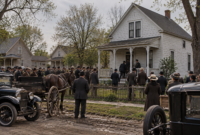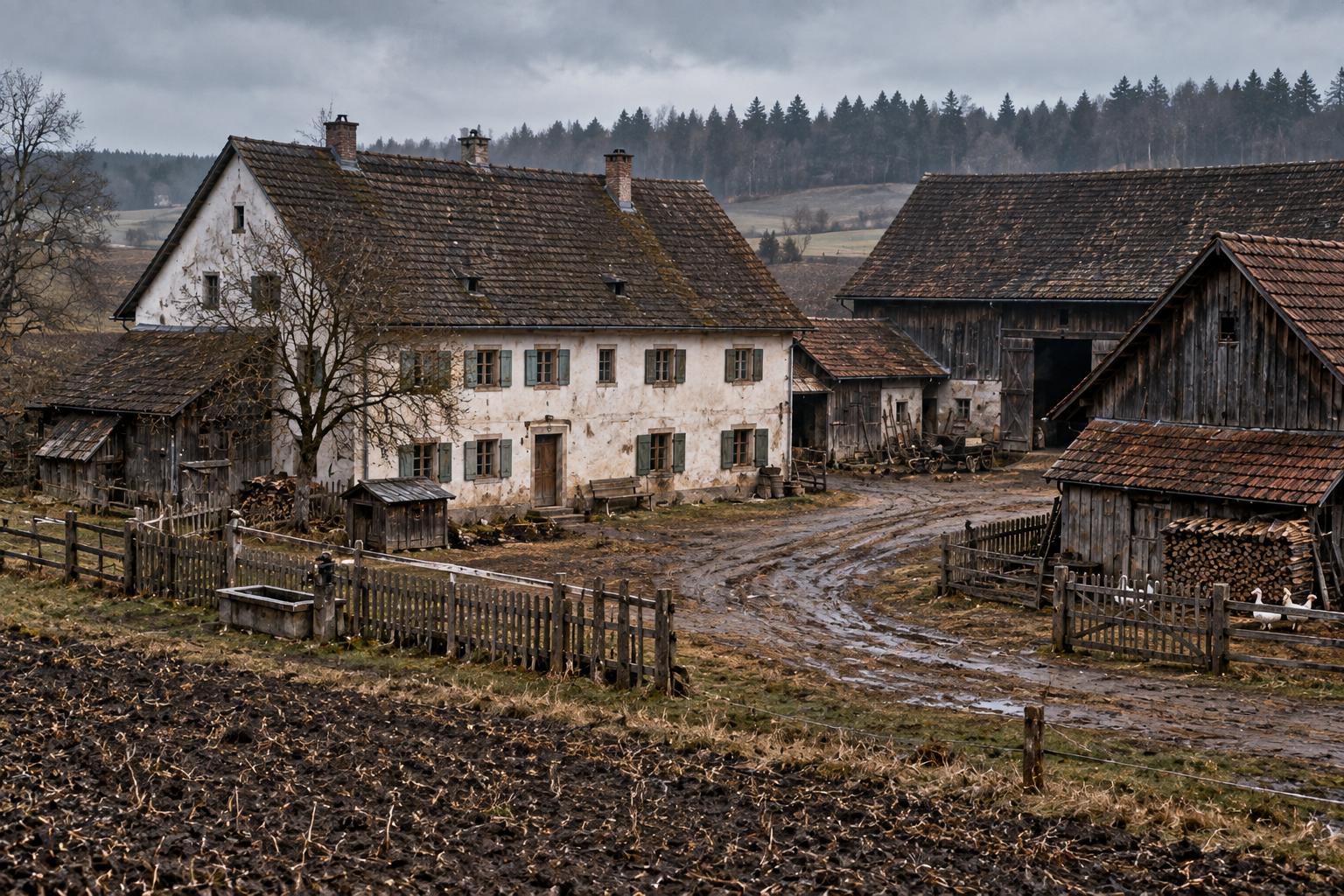
On the night of March 31, 1922, an isolated farm in Upper Bavaria became the scene of a sixfold murder that would remain unresolved for generations. Six people living at Hinterkaifeck, including two children, and a newly hired maid were killed, but the bodies were not discovered until four days later, when neighbors finally became concerned by the silence surrounding the property. The investigation that followed produced a large collection of police and prosecutorial records, more than one hundred investigative proceedings, numerous suspects and competing theories, yet no legally established perpetrator. GDA Bayern
AI & Editorial Note
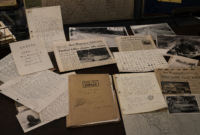
Hidden Frontiers uses AI-assisted tools as part of its content-production workflow, including research organization, drafting assistance, and visual development. The factual content of this article is strictly grounded in verified, cited sources, and disputed or uncertain information is identified where appropriate. Visuals accompanying this article are AI-generated historical reconstructions created for illustrative purposes.
The People Who Lived at Hinterkaifeck
Hinterkaifeck was an isolated farm near Gröbern in Upper Bavaria, not far from Schrobenhausen, and the property was operated by members of the Gruber and Gabriel families. The six residents killed there were Andreas Gruber and his wife, Cäcilia Gruber; their widowed daughter Viktoria Gabriel; Viktoria’s children, Cäcilia and Josef; and Maria Baumgartner, the maid who had arrived at the farm only on the afternoon before the killings. The Bavarian State Archives identifies all six victims by name in its 2026 exhibition on the case, preserving a record that places the people rather than the later mythology at the center of the crime. GDA Bayern
The family history was complicated, and later accounts frequently emphasized conflicts surrounding Viktoria Gabriel’s relationships, inheritance, and family circumstances. Viktoria had been married to Karl Gabriel, who was killed during the First World War in northern France in December 1914, leaving her widowed with a young daughter. She later had a son, Josef, whose paternity became the subject of a dispute involving Lorenz Schlittenbauer, a local man with whom Viktoria had had a relationship. GDA Bayern
Some aspects of the family’s history became important to investigators because they provided possible motives and relationships to examine, but they should not be confused with evidence establishing responsibility for the murders. Historical research has repeatedly shown how family tensions and social norms influenced later interpretations of the case, particularly speculation surrounding Viktoria and her father. The University of Augsburg’s research on the case specifically examines how these narratives were repeatedly reshaped over the decades, demonstrating why later theories need to be separated carefully from what investigators actually established in 1922. University of Augsburg
The Warning Signs Before the Murders
The days immediately preceding the killings contained several unusual events that later became central to the investigation. On March 30, Andreas Gruber reportedly discovered footprints in the snow behind the house leading toward a small machine building, but investigators found no corresponding tracks leading away from the property. The Bavarian State Archives also records reports that Gruber had spoken about strange noises in the upper part of the house and concerns about an apparent intruder, although the precise significance of these observations remains uncertain. GDA Bayern
The new maid, Maria Baumgartner, arrived at Hinterkaifeck at approximately half past four on March 31 accompanied by her sister Franziska Schäfer. Schäfer remained for roughly an hour, met members of the household, and later told police that the farm had struck her as unusually isolated. She was the last documented person known to have seen the residents alive before the killings. GDA Bayern
The murders occurred during the night of March 31 into April 1, 1922, with the historical investigation narrowing the probable time of death to the evening of March 31. The surviving investigative material indicates that the victims were killed with severe blows to the head, although the exact sequence of events inside the farm remains partly reconstructive rather than directly observed. The official archival exhibition states that the exact number of perpetrators cannot be established, which is why its modern presentation refers cautiously to “the perpetrator” rather than claiming certainty that only one person acted. GDA Bayern
The Bodies Were Not Found for Four Days
The absence of the family initially failed to trigger an immediate search because the Grubers and Gabriels were known locally as private and hardworking people. Seven-year-old Cäcilia Gabriel did not attend school on April 1, the family was absent from church the following day, and several people noticed unusual quiet around the farm, but none of those observations immediately produced the conclusion that a mass killing had occurred. The distance and isolation of the property contributed to the delay in discovering what had happened. GDA Bayern
On April 4, a mechanic named Albert Hofer arrived at the farm to repair machinery and spent several hours there without encountering anyone. After he reported the unusual silence, Lorenz Schlittenbauer sent his sons to check the property before going there himself with Jakob Sigl and Michael Pöll. The three men entered through the machine building and discovered the bodies, after which the local authorities were notified and the information was relayed to the Munich Police Directorate. GDA Bayern
The first response was already complicated by the number of people who had entered or gathered around the property before the principal criminal investigators arrived. The Bavarian State Archives records that news of the murders had spread through the local community and attracted numerous onlookers, meaning that potentially important traces had probably been disturbed before systematic forensic examination began. When the Munich investigators and a police dog finally reached the scene, the dog was unable to establish a useful trail. GDA Bayern
The Hinterkaifeck Murders Investigation
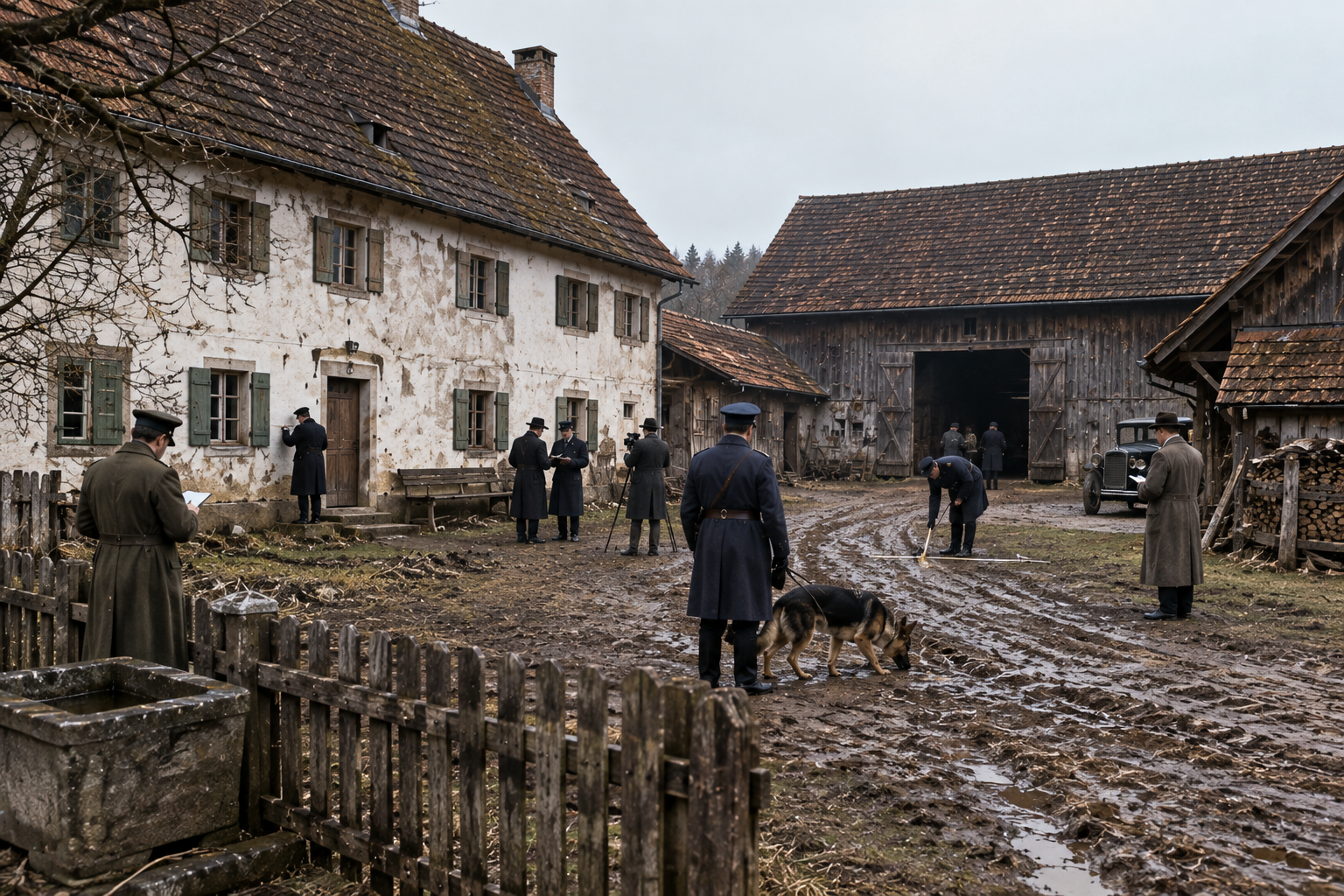
The principal Munich investigator was Kriminaloberinspektor Georg Reingruber, who arrived with other officers after the local authorities requested additional assistance. The original scene examination documented the locations of the victims, the condition of the buildings, possible routes through the property, and other physical details that investigators would continue to analyze. Because the crime scene had already been disturbed, however, investigators were forced to rely heavily on witness interviews and reconstruction rather than a pristine collection of physical evidence. GDA Bayern
The investigation also produced one of the most unusual aspects of the case: indications that someone may have remained at the farm after the killings. Investigators found evidence suggesting that the cattle had continued to receive care, while other observations indicated that food had been consumed and activity had occurred on the property after the deaths. The official archival exhibition treats the continued presence of a perpetrator after the murders as a significant possibility, but it does not claim that every detail of the alleged post-murder occupation can be established with certainty. GDA Bayern
The physical arrangement of the property also created questions about how the killer or killers moved through the farm. Investigators documented an upper area containing straw, a rope leading downward, and roof tiles that had been moved in positions from which much of the property could be observed. These findings generated the possibility that someone had watched the farm before the killings or used the buildings to remain hidden, but they do not identify who did so. GDA Bayern
The Murder Weapon Was Found a Year Later
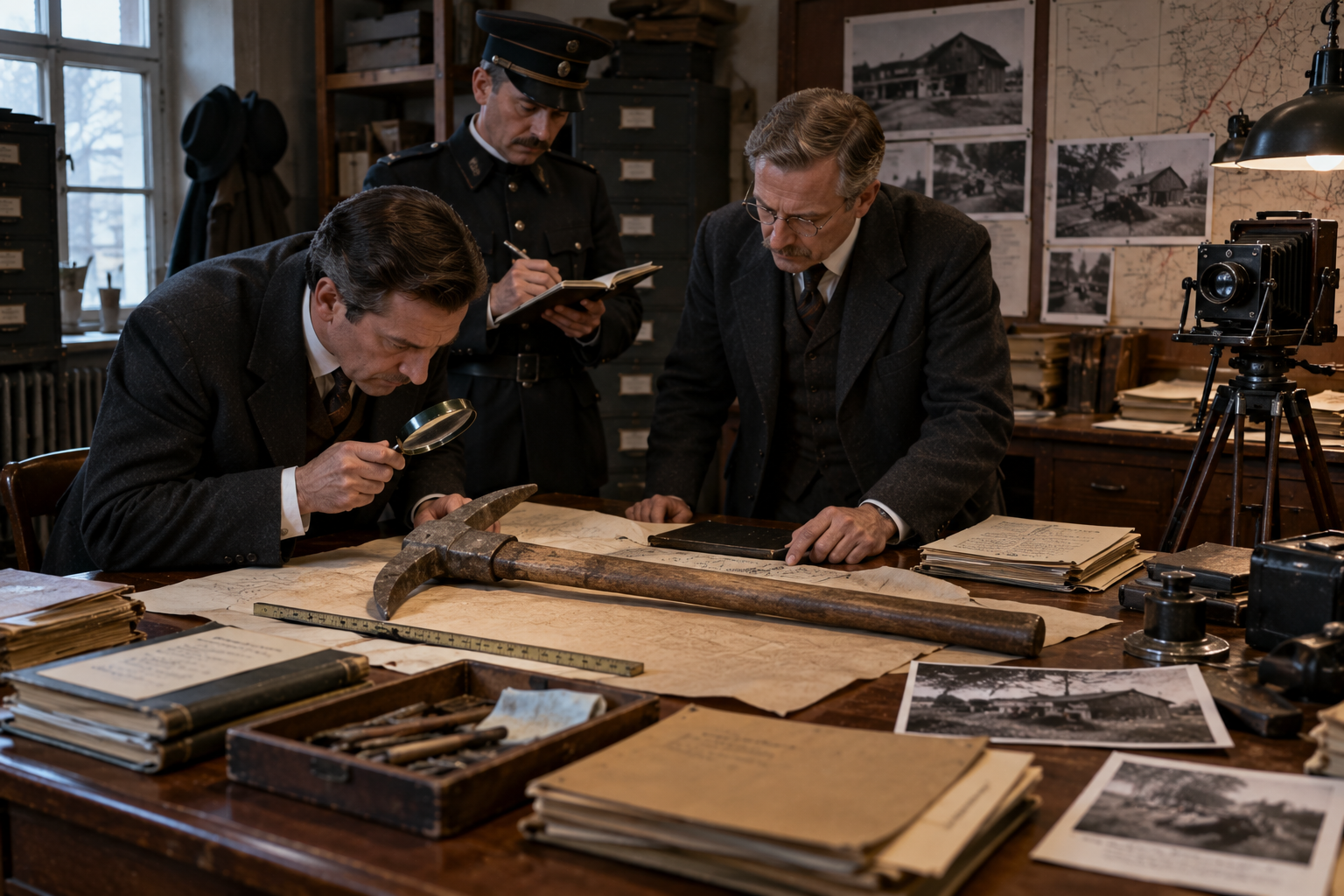
One of the most significant pieces of evidence was not found during the initial investigation. Investigators initially considered a pointed agricultural tool discovered in the animal-feeding area as a possible murder weapon, but the medical examination of the injuries indicated that it could not account for the distinctive wounds found on the victims. The actual weapon, a Reuthaue, an agricultural mattock or hoe-like implement, was discovered only in February 1923 when the farm was being demolished. GDA Bayern
The later-discovered weapon was particularly important because of its construction. The handle contained a distinctive repair involving a protruding screw, and investigators connected the shape of that feature with one of the unusual injuries documented during the autopsies. A former farm worker, Georg Siegl, also recognized the tool as one that had been used on the property, strengthening the conclusion that the weapon came from Hinterkaifeck rather than being introduced by an outsider after the murders. GDA Bayern
The discovery solved one important forensic question but did not solve the larger case. Investigators could associate a particular agricultural tool with the fatal injuries, yet there was no corresponding identification of the person who had used it. The later archival record also indicates that fingerprints were not successfully recovered from the weapon, illustrating one of the technological limitations that separated the investigation from what would be possible with modern forensic methods. GDA Bayern
The Crime Scene Had Already Lost Critical Evidence
The condition of the crime scene became one of the enduring weaknesses of the investigation. Before the Munich police arrived, neighbors and other members of the public had entered the property, and some of the victims had been moved during the initial search. Lorenz Schlittenbauer, for example, moved bodies while searching for his son Josef, meaning that investigators did not have an untouched record of every body’s original position. GDA Bayern
The archival record preserves only a limited photographic record of the original scene. The Bavarian State Archives identifies five surviving crime-scene photographs from 1922, including an exterior view of the farm, photographs relating to the bodies in the barn, an image of the maid’s room, and a photograph showing the child’s pram. These photographs are valuable historical evidence, but they cannot restore physical traces that were never documented before the scene was disturbed. GDA Bayern
The problem became even greater as decades passed. A large portion of the relevant prosecutorial records held in Augsburg was destroyed in the 1944 bombing of the city’s justice building, while other material survived through copies, duplicate records, and later archival reconstruction. The modern archival record is therefore substantial but incomplete, and contemporary researchers have to distinguish original documentation from later summaries and reconstructions. GDA Bayern
The Major Suspects and Theories
Lorenz Schlittenbauer became one of the most frequently discussed suspects because of his relationship with Viktoria Gabriel and his presence among the first people to enter the farm after the bodies were discovered. Investigators examined his behavior at the scene and his earlier conflicts with the family, but the archival exhibition notes that police ultimately considered his social standing and apparent concern for his son as factors against a murder motive. He was never convicted or legally established as the perpetrator, and his prominence in later theories should not be mistaken for a judicial finding. GDA Bayern
Karl Gabriel generated a different kind of theory because he was Viktoria’s husband and had officially died during the First World War years earlier. Investigators nevertheless examined the possibility that he might somehow have returned, while later speculation imagined a motive based on the children born after his death. Archival records contain extensive efforts to verify his wartime death, including inquiries involving men who had served with him, and the surviving evidence does not establish that Karl Gabriel returned to Hinterkaifeck in 1922. GDA Bayern
Joseph Bärtl, a baker who had escaped from a psychiatric institution before the murders, became another major investigative target. Police believed his movements could potentially place him in the region, and one of the clairvoyants consulted during the investigation identified him as the perpetrator, but he was never captured and the paranormal claim did not produce reliable evidence establishing his guilt. The Bavarian State Archives records that more than one hundred investigative proceedings ultimately failed to produce a successful identification. GDA Bayern
Later investigations also produced theories involving other people, including the Gump brothers, but these allegations likewise failed to establish a legally proven perpetrator. In the early 1950s, renewed investigations examined new allegations and possible suspects, while prosecutors also had to confront the loss of original records and questions surrounding the statute of limitations. The surviving record therefore demonstrates repeated investigative activity rather than a hidden official solution that was simply never disclosed. Hinterkaifeck Wiki

The Role of Later Investigations
The Hinterkaifeck case did not simply disappear after the first investigation. Police and prosecutors returned to the case at different points, witnesses were questioned again, and later investigators attempted to reconstruct what could still be established from surviving documents. The Bavarian State Archives notes that more than one hundred investigative proceedings were conducted through 1930 without identifying the perpetrator, while later archival material documents additional efforts after the Second World War. GDA Bayern
Modern analytical approaches have also been applied retrospectively to the surviving evidence. A later operational case analysis examined behavioral patterns and the relationship between the perpetrator, the victims and the property, but such analysis is necessarily limited by the incomplete evidence base and the loss of original records. The existence of a modern assessment should therefore be understood as another attempt to interpret the historical evidence, not as a modern criminal identification. GDA Bayern
The official closure of the files in 1955 marked the end of the formal investigation rather than a resolution of the murders. The University of Augsburg’s research records that the investigation against one later suspect was discontinued after authorities could not establish the necessary legal basis for continuing prosecution, and the Hinterkaifeck files were officially closed the following year. Bavarian public broadcasting likewise describes the case as still unresolved and confirms that the investigation was officially ended in 1955. OPUS Augsburg
Why the Hinterkaifeck Murders Remain Unsolved
Several factors explain why the case resisted resolution. The crime scene was compromised before the principal investigators arrived, the initial forensic technology was limited, important witnesses were sometimes questioned only much later, and the investigation accumulated rumors and competing allegations that were difficult to separate from reliable evidence. The Bavarian State Archives’ modern exhibition explicitly identifies these weaknesses, including delayed witness interviews and missing interrogation records. GDA Bayern
The destruction of archival material during the Second World War created another permanent obstacle. Records held in the Augsburg justice building were destroyed in the 1944 bombing, leaving researchers dependent on surviving police copies, duplicate documents and later reconstructions. The loss means that some questions cannot now be answered simply by consulting the original investigative file because portions of that file no longer exist. OPUS Augsburg
The case has also been complicated by its cultural afterlife. The University of Augsburg describes Hinterkaifeck as a case that has been repeatedly retold in journalism, books, film, television, radio and online discussions, with each generation producing new interpretations of the evidence. That long process of retelling has helped preserve the case but has also made it especially important to distinguish archival facts from theories that emerged decades after the murders. University of Augsburg
Remembering the Six Victims
The mystery surrounding the unknown perpetrator should not eclipse the identities of the people who died. Andreas and Cäcilia Gruber, their daughter Viktoria Gabriel, Viktoria’s children Cäcilia and Josef, and Maria Baumgartner were six individuals whose lives ended at an isolated farm in Bavaria in 1922. Their names survive in archival records, funeral materials and investigative documents, even though the circumstances of their deaths remain unresolved. GDA Bayern
Maria Baumgartner deserves particular attention because she had arrived at Hinterkaifeck only hours before the killings. Her sister Franziska accompanied her to the farm and became the last documented person known to have seen the household alive, making Baumgartner’s brief presence at Hinterkaifeck an important part of the surviving timeline. The fact that she was new to the household also illustrates how the murders affected someone who had only just begun working there. GDA Bayern
The six victims were buried at Waidhofen on April 8, 1922, and approximately three thousand people reportedly attended the funeral. Investigators were present because they hoped the perpetrator might appear among the mourners and reveal something through unusual behavior, but nothing useful emerged from the gathering. The funeral became one of the earliest public moments in which the victims were remembered collectively, long before Hinterkaifeck became the subject of generations of speculation. GDA Bayern
Conclusion
The Hinterkaifeck Murders remain unresolved not because the investigation lacked effort, but because crucial evidence was compromised, lost or never captured with sufficient precision. The victims were discovered four days after the killings, the crime scene had already been disturbed, the murder weapon was not recovered until the farm was demolished nearly a year later, and many subsequent investigative leads depended on testimony that became increasingly difficult to verify. More than a century later, the surviving archival record can establish important facts about the victims, the investigation and the physical evidence, but it cannot establish who committed the murders. GDA Bayern
The major suspects remain part of the historical record, but none should be presented as a confirmed killer. Lorenz Schlittenbauer, Karl Gabriel, Joseph Bärtl and later suspects were examined for different reasons, while allegations involving other individuals generated additional investigations without producing a conviction. The archival record instead demonstrates a long sequence of investigative attempts, renewed suspicions and unresolved questions. GDA Bayern
What makes Hinterkaifeck historically significant is therefore not simply the identity of a missing killer. It is the combination of a documented mass killing, an isolated rural setting, a compromised crime scene, a weapon recovered too late, destroyed records and more than a century of competing interpretations. The Bavarian State Archives continues to preserve surviving records from the investigation, allowing the case to be studied as history while maintaining the essential distinction between what the evidence demonstrates and what remains unknown. GDA Bayern
FAQ
Who were the victims of the Hinterkaifeck Murders? The six victims were Andreas Gruber, Cäcilia Gruber, Viktoria Gabriel, Viktoria’s daughter Cäcilia Gabriel, her son Josef Gruber, and the newly hired maid Maria Baumgartner. They all died at the isolated Hinterkaifeck farm during the night of March 31 into April 1, 1922. The Bavarian State Archives preserves the names of all six victims in its historical exhibition and related archival material. GDA Bayern
When did the Hinterkaifeck Murders happen? The killings occurred during the night of March 31 into April 1, 1922, with the historical investigation narrowing the likely time of death to the evening of March 31. The bodies were not discovered until April 4, when Lorenz Schlittenbauer, Jakob Sigl and Michael Pöll went to the farm after concerns arose about the family’s absence. The police were then notified, and the Munich investigators traveled to the scene later that night. GDA Bayern
Who discovered the bodies at Hinterkaifeck? Lorenz Schlittenbauer went to the farm with Jakob Sigl and Michael Pöll after a mechanic’s visit raised concerns that nobody was present. The three men entered through the machine building and encountered the bodies of the victims, after which local authorities were contacted. Schlittenbauer later became a major subject of suspicion, but his presence at the discovery does not establish that he committed the murders. GDA Bayern
What was the murder weapon at Hinterkaifeck? Investigators initially considered a pointed agricultural tool found near the livestock area, but medical examination indicated that it could not account for the distinctive injuries. A Reuthaue was discovered in February 1923 during the demolition of the farm, and its distinctive construction corresponded with an unusual injury documented during the examination of Viktoria Gabriel. The weapon was therefore identified as the principal murder weapon, but finding it did not identify the person who used it. GDA Bayern
Was Lorenz Schlittenbauer the Hinterkaifeck killer? Lorenz Schlittenbauer was investigated and remained one of the most discussed suspects because of his relationship with Viktoria Gabriel and his involvement in discovering the bodies. Historical records also document that investigators considered his behavior at the crime scene and his previous conflicts with the family, while ultimately finding factors that argued against a clear motive. He was never convicted of the murders, so presenting him as the confirmed killer would go beyond the surviving evidence. GDA Bayern
Was Karl Gabriel alive when the murders happened? Karl Gabriel, Viktoria Gabriel’s husband, was officially recorded as having died during the First World War in December 1914. Nevertheless, investigators examined the possibility that he might have survived and returned to Bavaria, and people who had served alongside him were questioned as part of that investigation. The surviving archival record does not establish that Karl Gabriel returned to Hinterkaifeck in 1922, and the theory remains historical speculation rather than a proven explanation. GDA Bayern
Why did the Hinterkaifeck case remain unsolved? The investigation was weakened by the early contamination of the crime scene, limited forensic technology, delayed witness interviews, conflicting allegations and the later destruction of important prosecutorial records. More than one hundred investigative proceedings were conducted without producing a successful identification, while later investigations faced additional difficulties because much of the original evidence was no longer available. The files were officially closed in 1955, but the case remains historically unresolved. GDA Bayern
When were the Hinterkaifeck investigation files closed? The formal investigation was officially closed in 1955 after decades of police and prosecutorial activity. The closure did not represent a conviction or definitive identification of the perpetrator, and later historical research has continued to examine the surviving documents. The University of Augsburg and Bavarian public broadcasting both describe the murders as unresolved despite the formal end of the investigation. OPUS Augsburg
SOURCES & REFERENCES
- Bavarian State Archives — The Sixfold Murder at Hinterkaifeck — Official archival overview of the case, victims, investigation and surviving records. GDA Bayern
- Bavarian State Archives — Exhibition Catalogue: Der sechsfache Mord in Hinterkaifeck — Detailed archival reconstruction based on Munich Police Directorate records and Bavarian Army Museum material. GDA Bayern
- University of Augsburg — The Transmission of the Hinterkaifeck Murder Story — Academic research examining the case’s historical documentation, interpretations and cultural memory. University of Augsburg
- University of Augsburg — Doctoral Dissertation on Hinterkaifeck — Scholarly study of the case’s historical transmission and investigative history. OPUS Augsburg
- Bayerischer Rundfunk — Hinterkaifeck After One Hundred Years — Regional public broadcaster’s historical overview, including the unresolved status and official closure of the investigation. BR
- Augsburger Allgemeine — Hinterkaifeck Crime Scene and Historical Investigation — Regional newspaper account of the crime scene, investigation and continuing mystery.