Introduction
The Black Dahlia murder remains one of Los Angeles’s most famous unsolved homicide cases, nearly eight decades after Elizabeth Short was found dead in a vacant lot in South Los Angeles. Short was twenty-two years old, and within days her death had become a national newspaper sensation that mixed genuine investigative reporting with rumor, sensationalism, and a nickname that would eventually overshadow the woman herself. The surviving record establishes the broad outline of what happened, but it still does not establish who killed her or why, and that distinction is essential to understanding the case today.
AI & Editorial Note
Hidden Frontiers uses AI-assisted tools as part of its content-production workflow, including research organization, drafting assistance, and visual development. The factual content of this article is strictly grounded in verified, cited sources, and disputed or uncertain information is identified where appropriate. Visuals accompanying this article are AI-generated historical reconstructions created for illustrative purposes.
Who Was Elizabeth Short?
Elizabeth Short was born in Massachusetts in 1924 and spent part of her early life in the difficult economic conditions of the Depression era. She later moved west and spent time in California and Florida, living an unsettled life that took her through a series of temporary homes, jobs, friendships, and relationships. Popular accounts frequently reduced her to an aspiring actress chasing Hollywood fame, but later historical reporting has emphasized that this version of her life was considerably simpler and less glamorous than the legend suggested.
Short’s life in Southern California was marked by instability rather than celebrity. She worked as a waitress and cashier at different points, relied on acquaintances for housing and meals, and moved frequently enough that reconstructing her final movements became difficult almost immediately after her death. The Los Angeles Times has noted that there is little evidence she pursued a conventional acting career, even though later retellings repeatedly presented her as a Hollywood hopeful on the verge of stardom.
The nickname “Black Dahlia” also arrived after layers of public storytelling had already begun to form around her. Contemporary reporting connected the name with Short’s dark hair and preference for black clothing, while the name also echoed the film noir title The Blue Dahlia. The FBI likewise describes the nickname as something the press attached to her after her death, not a formal identity she carried through life.
The Final Days Before the Black Dahlia Murder
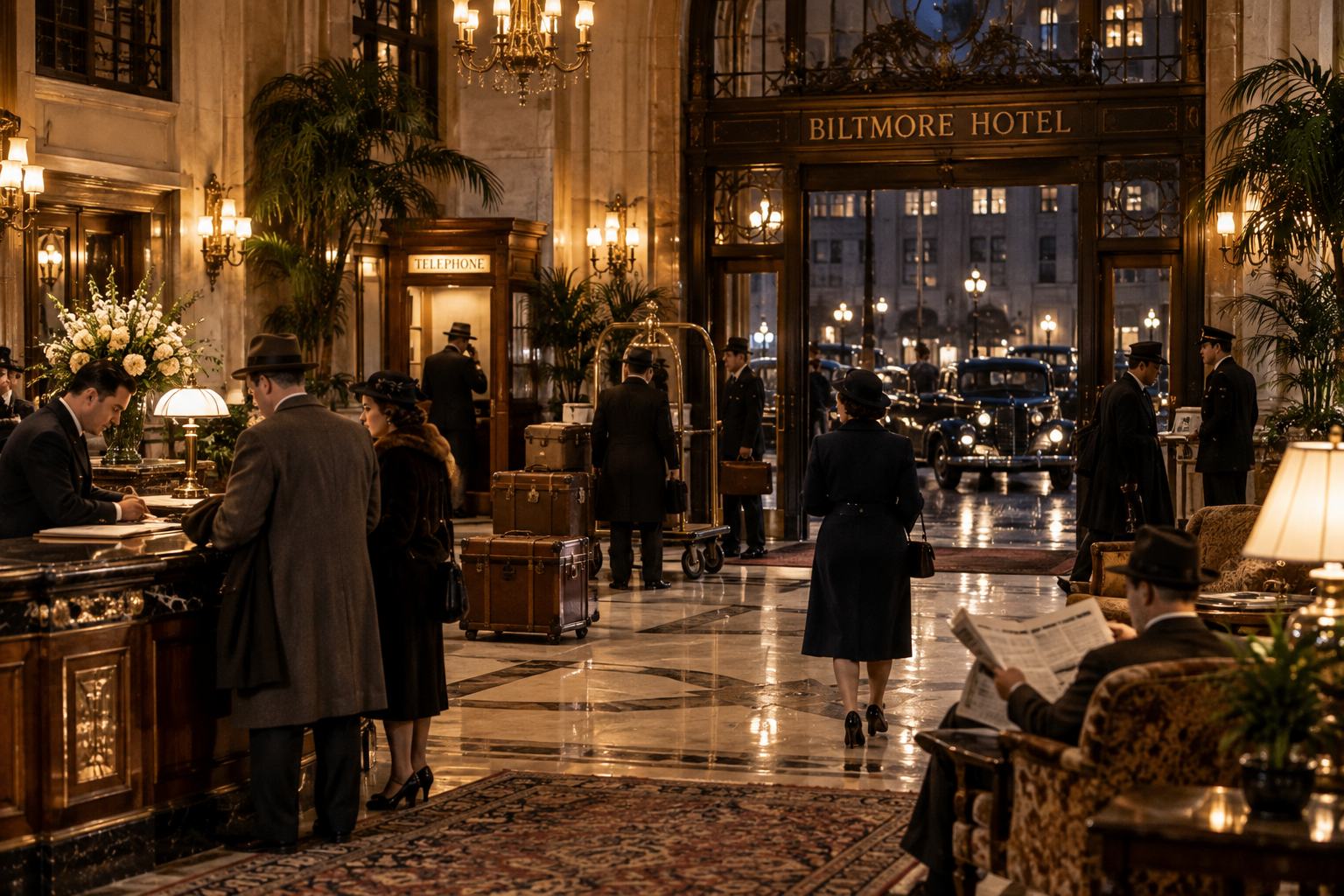
The final confirmed portion of Short’s movements places her in Los Angeles after returning from San Diego in January 1947. She had been traveling with Robert Manley, a salesman with whom she had been acquainted, and he later told investigators that he left her at the Biltmore Hotel in downtown Los Angeles. According to the historical record summarized by the Los Angeles Times, Short remained in the hotel for a period and was seen using the lobby telephone before disappearing from the documented record.
What happened after Short left the Biltmore remains one of the central gaps in the case. Investigators could reconstruct portions of her movements through interviews and surviving accounts, but the period between her last confirmed sighting and the discovery of her body could never be established with certainty. That missing interval is especially important because it contains the unknown circumstances of where she went, whom she met, and where the fatal attack occurred.
The evidence indicates that Short was not killed at the location where she was discovered. The FBI states that there was no blood at the scene despite the extensive injuries to her body, a circumstance that led investigators to conclude that she had been killed elsewhere before being transported to the vacant lot. This distinction shaped the investigation from the beginning because detectives were not dealing with a conventional crime scene containing the full physical record of the attack.
The Discovery in Los Angeles
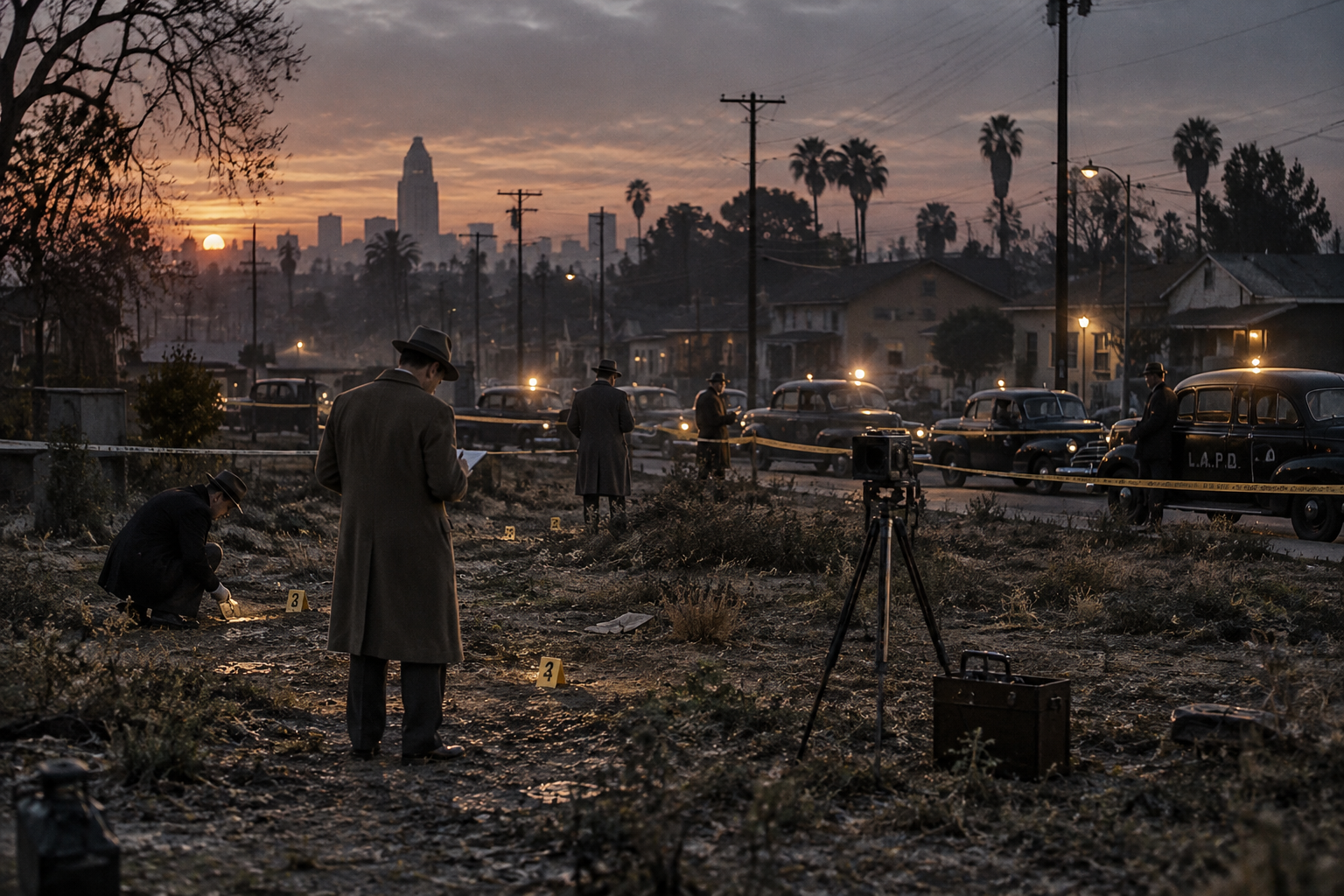
On the morning of January 15, 1947, Elizabeth Short’s body was discovered beside a sidewalk in a vacant lot in the Leimert Park area of South Los Angeles. Betty Bersinger was walking with her young daughter when she noticed what she initially believed was a mannequin, an impression created by the way the body had been positioned and its pale appearance. Police were soon called, and the discovery initiated one of the most heavily publicized homicide investigations in the city’s history.
The physical condition of the body immediately made the case extraordinary in the eyes of investigators and the public, but the same brutality also created a long-term problem: every gruesome detail became material for newspapers, later books, films, and competing theories. The FBI records that the body had been severely mutilated and cut in half, while later historical reporting describes the method as sufficiently precise that investigators initially considered whether the person responsible might have anatomical or medical knowledge. Those observations were investigative leads, not proof of the identity or profession of the offender.
The crime scene itself also became part of the mythology. Photographs and newspaper accounts circulated widely, and the vacant lot on Norton Avenue became permanently associated with the case even though the location did not contain all of the evidence surrounding Short’s death. The separation between the discovery site and the presumed killing location meant investigators had to reconstruct events from scattered fragments rather than rely on a single, contained scene.
How Investigators Identified Elizabeth Short
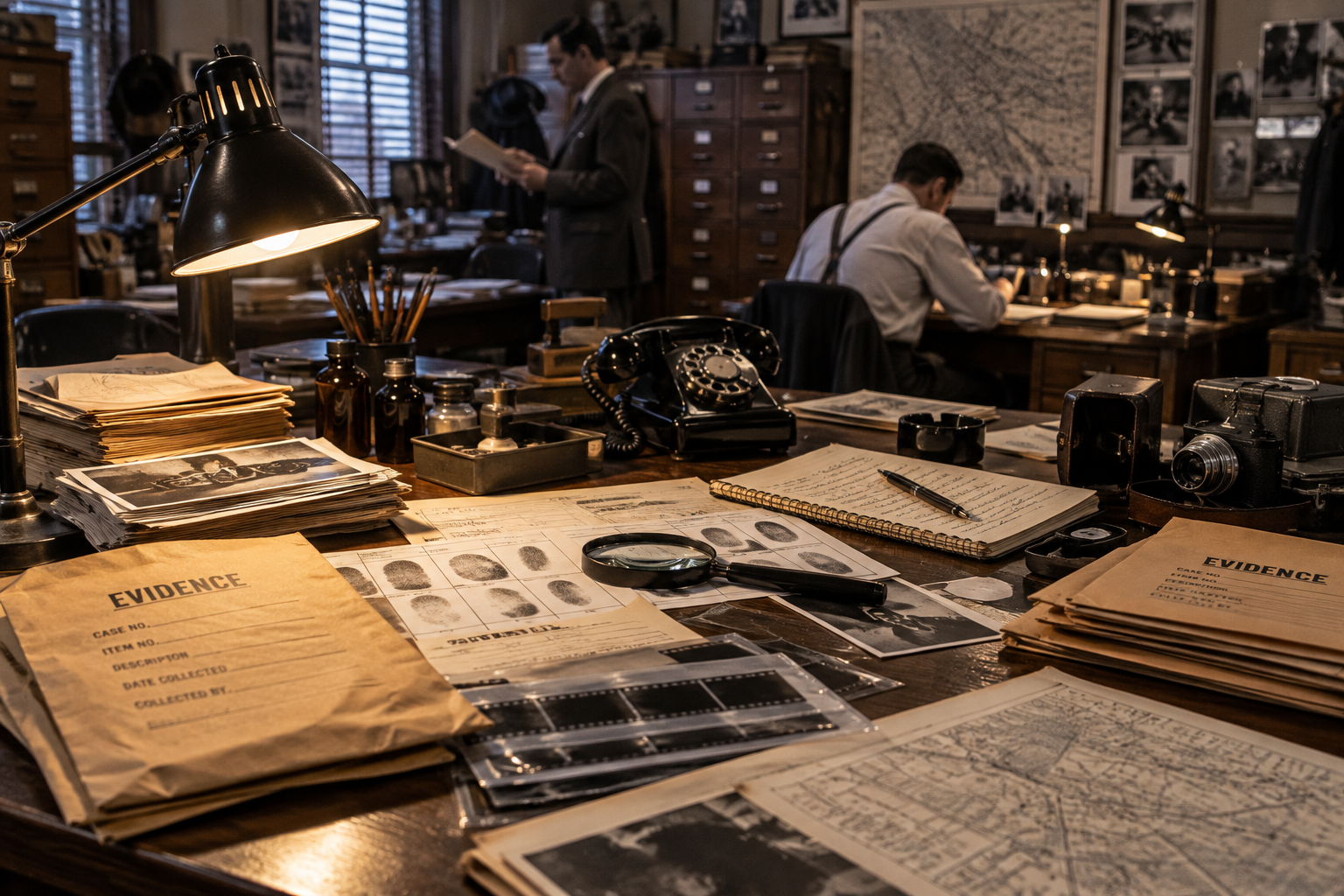
One of the earliest investigative successes came through fingerprints. The FBI explains that Los Angeles investigators sent blurred fingerprints obtained from Short to the Bureau using a system known as “Soundphoto,” and the fingerprints produced an identification in approximately fifty-six minutes. Short’s prints were already present in FBI records because she had previously been fingerprinted for employment and had also been arrested by Santa Barbara police for underage drinking.
The identification transformed the investigation from an unidentified homicide into an inquiry into Elizabeth Short’s life. Investigators could now examine her background, movements, acquaintances, employment history, and previous contacts, while the FBI could compare information against its own records and communicate with agencies outside California. The speed of the identification was an important technical success, but it did not solve the more difficult question of who had killed her.
The FBI subsequently assisted the Los Angeles Police Department with records checks and interviews across the country. Investigators also explored people connected to medical and anatomical training because of the precision associated with the handling of Short’s body, including students at the University of Southern California medical school. The fact that investigators examined those groups shows how physical evidence can generate a direction of inquiry without producing a definitive identification.
The Evidence That Defined the Investigation
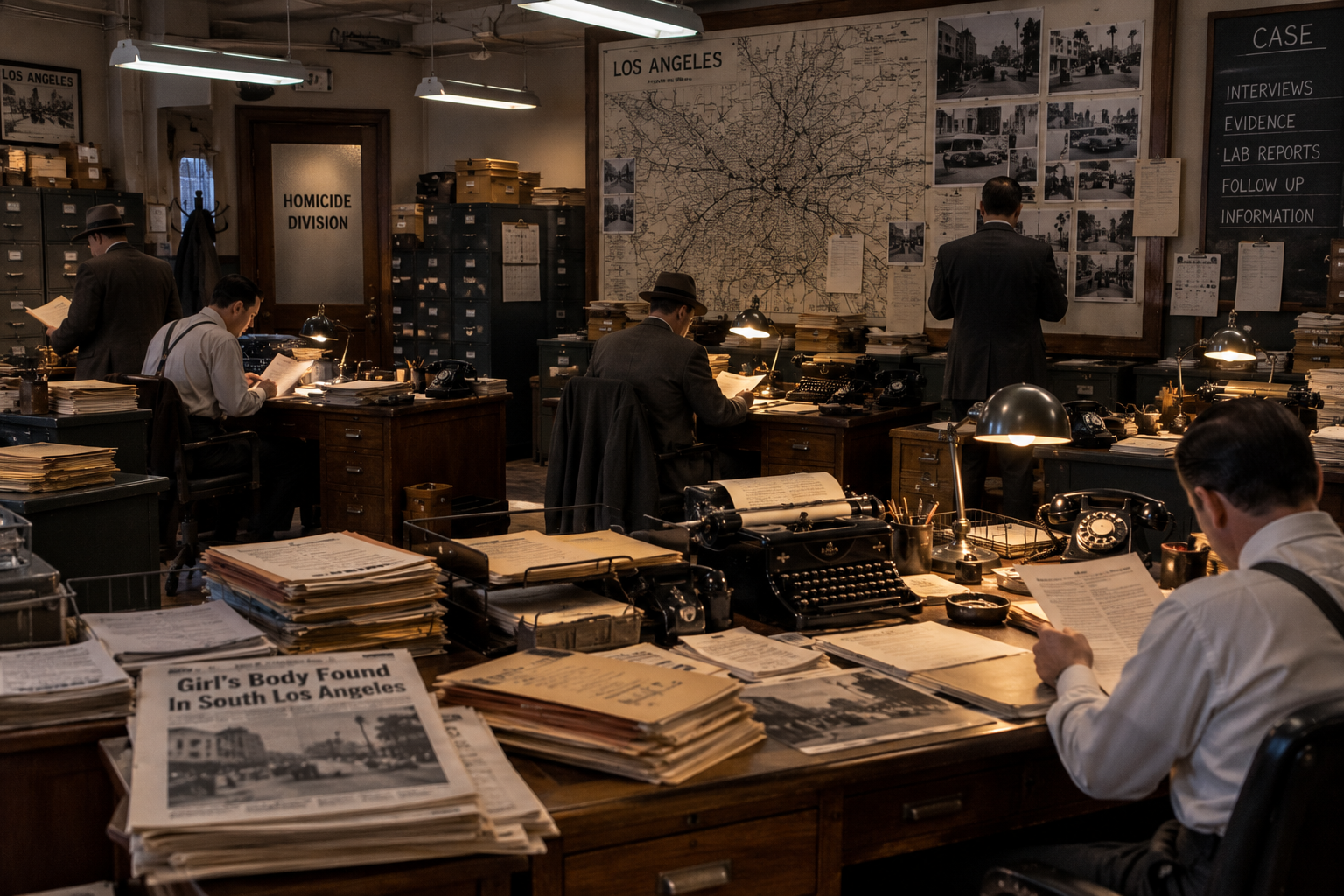
The physical evidence in the Black Dahlia murder was both striking and incomplete. The absence of blood at the discovery site suggested that Short had been killed elsewhere, while the condition of the body caused detectives to consider whether the offender possessed specialized anatomical knowledge. Those facts could narrow investigative possibilities, but they could not by themselves establish where the murder occurred, who carried it out, or whether the person responsible actually had formal medical training.
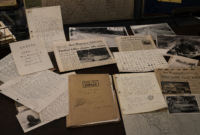
Another unusual element was the appearance of anonymous communications after Short’s death. The FBI says investigators searched for a fingerprint match connected to an anonymous letter that may have been sent by the killer, but the prints did not match anything in the Bureau’s files. The Los Angeles Times has also documented a sequence of messages and the later delivery of Short’s personal effects to newspapers, including an envelope containing items that were turned over to police.
Those communications remain important because they demonstrate how the case quickly became entangled with publicity. An anonymous sender could control what newspapers printed while investigators had to determine whether a message represented genuine knowledge, deliberate deception, a hoax, or some combination of those possibilities. The existence of the communications is documented, but attributing every message to the person who killed Short requires a level of certainty the surviving record does not provide.
The Investigation and Its Difficulties
The Black Dahlia investigation was enormous by the standards of its era. The Los Angeles Police Department conducted interviews, reviewed leads, examined suspects, and worked with the FBI, while newspapers independently pursued their own stories and encouraged public speculation. The result was a flood of information that made it difficult to separate useful evidence from false confessions, unreliable claims, publicity-seeking behavior, and stories created long after the original investigation.
The media environment was particularly significant. Los Angeles had several competing newspapers willing to pursue the case aggressively, and Short’s nickname gave editors a ready-made narrative that was easier to market than the mundane and uncertain details of her actual life. Later historians have argued that the nickname and the crime’s imagery helped transform Short from a young woman with an unsettled life into a fictionalized noir character, a process that made the case famous while also distorting the historical record.
That distortion continued for decades. Authors, former investigators, independent researchers, and journalists proposed different suspects, sometimes relying on handwriting comparisons, alleged eyewitness observations, family stories, surveillance records, geographic connections, or interpretations of long-ago police files. Some of these theories have received significant media attention, but attention is not the same thing as a criminal finding, and none has produced a conviction for Short’s murder.
Major Suspect Theories
One of the best-known later theories concerns Dr. George Hodel, a physician who had been investigated by authorities in connection with the Black Dahlia case. The theory received renewed attention in the early twenty-first century after Hodel’s son, retired LAPD detective Steve Hodel, published a book identifying his father as the killer and pointing to handwriting, photographs, historical documents, and surveillance material as supporting evidence. The Los Angeles Times examined those claims and reported significant disagreements over how much the material actually proved.
The Hodel theory illustrates why the Black Dahlia case must be divided into documented evidence and interpretation. The records establish that George Hodel was a suspect and that investigators examined him, but that does not establish that he murdered Elizabeth Short. The Los Angeles Times reported that an LAPD review of the theory found Hodel could have been responsible but did not regard the available evidence as sufficient to resolve the case, while other researchers have disputed Hodel’s conclusions.
Other suspects have been proposed over the decades, including individuals who were questioned or investigated during the original inquiry and others who became associated with the case through later research. Some historical suspects were temporarily booked or held for questioning, but those events should not be confused with convictions or proof of guilt. Recent reporting continues to revisit old names and new interpretations, including theories attempting to connect Short’s murder to other notorious crimes, yet those connections remain theories rather than established findings.
The difficulty is not simply that there are too many suspects. It is that the surviving evidence does not produce a single, independently verified chain connecting one person to Short’s death beyond reasonable doubt. The further investigators move from the original records into later books, recollections, and retrospective analysis, the greater the need to distinguish original evidence from interpretations added decades afterward. That distinction is one of the most important safeguards against turning an unsolved case into a false certainty.
What Modern Forensics Can and Cannot Change
The Black Dahlia murder is often discussed as though today’s forensic technology could automatically solve any historical homicide. In reality, modern methods are only as useful as the evidence that survives, has been preserved properly, and can still be interpreted reliably. Contemporary reporting on the case has repeatedly emphasized the limited condition of the surviving physical evidence, which places hard constraints on what modern investigators can reconstruct.
The original investigation did have one important forensic advantage: fingerprints identified Short very quickly because her prints already existed in government records. The same era, however, lacked the DNA technology, digital databases, surveillance systems, and forensic imaging now available to investigators. When a case begins with a scene where the victim appears to have been killed elsewhere, missing or degraded evidence becomes even more consequential because the most informative physical traces may never have been preserved.
There is also a broader lesson in the case. A forensic clue can be real without being conclusive, and a suspect can be historically interesting without being legally responsible. Any modern retelling of the Black Dahlia murder has to resist the temptation to turn a plausible theory into a verdict that the evidence never established.
Why the Black Dahlia Case Remains Unsolved
The fundamental mystery is remarkably narrow when stripped of decades of mythology: who killed Elizabeth Short, where did the killing occur, and what happened during the missing period after her last confirmed sighting? The investigation generated suspects, interviews, fingerprints, anonymous communications, and extensive newspaper coverage, yet none of these pieces combined into a prosecutable case against a named individual. The FBI still describes the murder as unsolved, and recent reporting in 2026 continues to treat it as an unresolved historical homicide.
The case also demonstrates how fame can obscure the victim. Elizabeth Short became known internationally as the Black Dahlia, but the nickname was created by newspapers and quickly became more memorable than her real name, encouraging later generations to think about a crime story before thinking about a twenty-two-year-old woman. Recent historical work has deliberately tried to reverse that process by separating what can be documented about Short’s life from the noir mythology that accumulated after her death.
As of 2026, there is no verified public resolution identifying the person responsible for Elizabeth Short’s murder. New books, renewed archival research, and fresh theories may continue to reshape how parts of the story are interpreted, but they do not alter the legal and historical bottom line without evidence capable of establishing responsibility. The Black Dahlia case therefore remains what the strongest sources say it is: a real homicide with a well-documented victim, a massive historical investigation, and no proven killer.
Conclusion
The enduring power of the Black Dahlia murder does not come only from the brutality of the crime. It also comes from the gap between what investigators were able to establish and what the public has spent generations trying to imagine, explain, and solve. Elizabeth Short’s story is strongest when that gap is acknowledged honestly, because the uncertainty is part of the historical record rather than something that needs to be disguised with a convenient answer.
Elizabeth Short was twenty-two when her life ended, and her identity was recovered through fingerprints with remarkable speed even though the circumstances of her death remained hidden. The investigation reached across Los Angeles and beyond, generated extensive evidence and public attention, and later produced a long succession of suspect theories that still circulate today. Until reliable evidence establishes who was responsible, the Black Dahlia murder remains an unsolved case and Elizabeth Short remains the person at its center, not merely the nickname assigned to her after death.
FAQ
Who was Elizabeth Short? Elizabeth Short was a twenty-two-year-old woman from Massachusetts who spent her final years moving between California and other parts of the United States. She worked in service jobs, lived a highly unsettled life, and was later repeatedly described in popular culture as an aspiring actress, although historical reporting has questioned how substantial her Hollywood ambitions actually were. She became widely known after her murder under the newspaper nickname “Black Dahlia,” a label that eventually overshadowed much of the documented story of her life.
Why was Elizabeth Short called the Black Dahlia? The name was created by the press after her death rather than being an official name used by investigators or a documented personal identity used throughout her life. Sources connect it to Short’s dark hair and preference for black clothing, while also noting the contemporary film The Blue Dahlia as part of the word association. The FBI and later historical reporting both describe the nickname as a product of the publicity surrounding the case.
Where was Elizabeth Short found? Short was found on the morning of January 15, 1947, in a vacant lot in the Leimert Park area of South Los Angeles, near Norton Avenue. Betty Bersinger discovered her while walking with her young daughter and initially believed she had seen a mannequin. Investigators concluded that the location was probably not where Short had been killed because there was no blood at the scene despite the severe injuries documented afterward.
What was the most important forensic clue in the case? One of the most significant technical clues was actually the evidence that identified Short herself: her fingerprints were already stored in FBI records, allowing the Bureau to identify her rapidly after receiving blurred prints from Los Angeles. Investigators also examined the physical condition of her body and considered whether the precise cutting suggested anatomical knowledge, which led them to investigate people connected to medical training. Those observations generated leads, but they did not establish the identity of the offender.
Who are the main suspects in the Black Dahlia case? Many people have been investigated or proposed over the decades, but the existence of a suspect list should not be confused with proof of guilt. George Hodel is among the best-known later suspects because of a theory developed and publicized by his son, while other names emerged from the original investigation and from later independent research. The surviving evidence has never produced a court conviction against any person for Short’s murder, and recent reporting continues to treat competing suspect theories as unresolved.
Did the FBI investigate the Black Dahlia murder? Yes. The FBI assisted the Los Angeles Police Department by identifying Elizabeth Short through fingerprints, running records checks, conducting interviews, and examining potential leads across the country. The Bureau maintains a dedicated historical page and a collection of released records concerning the case, making the Black Dahlia investigation one of the better-documented historical cases available through federal archives.
Was anyone ever convicted of Elizabeth Short’s murder? No. People were questioned, suspects were investigated, and some individuals were temporarily detained or booked in connection with the case over the years, but no one was convicted of killing Short. The FBI continues to describe the murder as unsolved, and recent reporting in 2026 likewise treats the identity of the offender as unresolved.
Is the Black Dahlia murder solved today? No, not according to the strongest current sources available. The FBI still describes the case as unsolved, while 2026 reporting from the Los Angeles Times and The Washington Post discusses new interpretations and proposed solutions without establishing a legally proven offender. New research can add context or challenge old assumptions, but a theory is not a resolution unless the evidence can withstand independent scrutiny and establish responsibility.
SOURCES & REFERENCES
- Federal Bureau of Investigation — Black Dahlia historical case file. FBI: Black Dahlia
- FBI Records: The Vault — Black Dahlia / Elizabeth Short records. FBI Vault: Black Dahlia Records
- Los Angeles Times — The Black Dahlia mystery: Wild theories, enduring myths and a long-overlooked suspect. Los Angeles Times: Black Dahlia mystery and myths
- Los Angeles Times — Were the Zodiac killer and the Black Dahlia the same person? The devil is in the details. Los Angeles Times: Black Dahlia and Zodiac theory
- The Washington Post — ‘Black Dahlia’ suggests a possible solution to the storied 1947 murder. Washington Post: Black Dahlia 2026 review