The JonBenét Ramsey Murder: What the Evidence Shows and Why the Case Remains Unsolved
The murder of JonBenét Ramsey remains one of the most closely examined unsolved homicide investigations in the United States. JonBenét was six years old when she was reported missing from her family’s Boulder, Colorado, home on December 26, 1996, after her family reported finding a ransom note; she was later found dead inside the house. The Boulder Police Department classifies her death as a homicide and continues to investigate the case, with the department reporting in December 2025 that detectives had conducted new interviews, collected new evidence, and tested or retested existing evidence in an effort to generate new leads.
The case became extraordinarily complicated because several investigative questions developed at the same time. Detectives had to determine what happened inside the Ramsey home, who wrote the lengthy ransom note, how an apparent kidnapping could have occurred without JonBenét leaving the house, and what significance should be attached to biological and physical evidence recovered during the investigation. More than two decades later, those questions still cannot be answered with a single established narrative, and the official investigation continues to distinguish between evidence, investigative theories, and unresolved possibilities.
AI & Editorial Note
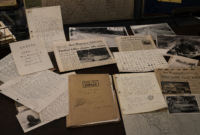
Hidden Frontiers uses AI-assisted tools as part of its content-production workflow, including research organization, drafting assistance, and visual development. The factual content of this article is based on reliable sources cited below, and disputed or uncertain information is identified where appropriate. Some visuals accompanying this article are AI-generated historical reconstructions created for illustrative purposes.
Who Was JonBenét Ramsey?
JonBenét Ramsey was a six-year-old girl living with her parents, John and Patsy Ramsey, and her older brother, Burke, in Boulder, Colorado. According to the Colorado Cold Case Files, JonBenét was born on August 6, 1990, and the homicide occurred on December 26, 1996, in Boulder County, with the Boulder Police Department listed as the investigating agency. The official state cold-case database identifies the case as a homicide and records JonBenét’s date of death as December 26, 1996.
The circumstances surrounding her death became national news almost immediately because the initial report suggested that JonBenét had been kidnapped from her home. A ransom note was discovered inside the residence, but JonBenét was ultimately found dead in a basement room rather than outside the house. Boulder Police continues to describe the case as an open and ongoing homicide investigation, meaning that the central question of who killed JonBenét has never been legally resolved.
What Happened on December 26, 1996?
On the morning of December 26, JonBenét’s parents reported her missing after a ransom note was discovered inside the family home. The note demanded $118,000 and instructed the family not to contact authorities, creating the appearance of a kidnapping for ransom. Instead, JonBenét’s body was discovered inside the residence later that day, transforming what initially appeared to be a missing-child case into a homicide investigation.
The autopsy performed the following day determined that JonBenét died from asphyxia caused by strangulation associated with craniocerebral trauma. The examination also documented a skull fracture and other injuries, establishing that her death involved both a serious head injury and strangulation. Boulder Police’s current public case page summarizes the official cause of death as strangulation, while the underlying autopsy information has been cited in subsequent court proceedings and reporting.
The physical circumstances of the death became central to the investigation because they had to be reconciled with the ransom note and the condition of the house. Investigators examined whether the evidence was consistent with an intruder, a crime committed by someone known to the family, or some other sequence of events. Those competing interpretations have remained part of the case’s history, but none has been established in court as the definitive explanation for JonBenét’s murder.
The Ransom Note
The ransom note became one of the most famous pieces of evidence in the investigation. It was unusually long for a ransom demand, was written inside the Ramsey home, and demanded an amount of money that attracted investigative attention because it was close to John Ramsey’s recent bonus. The note’s wording, handwriting and circumstances of its discovery generated extensive forensic and investigative analysis, but no court has established who wrote it.
Handwriting analysis became especially important because identifying the author of the note could potentially have provided a major investigative breakthrough. Patsy Ramsey was repeatedly compared with the handwriting, but the evidence did not produce a universally accepted forensic identification that established her as the writer. In a later federal civil case involving allegations that Patsy Ramsey had written the note, the court found that the opinion of one handwriting expert was outweighed by the limitations in his methodology and the contrary opinions of other experts.
The ransom note therefore illustrates one of the most important principles in this case: a suspicious or unusual piece of evidence is not automatically conclusive. The note unquestionably existed and was important to the investigation, but its authorship and purpose have remained disputed. Treating the note as proof that a particular person killed JonBenét would go beyond what the available legal and forensic record establishes.
The Initial Investigation and Suspicion of the Ramsey Family
The investigation quickly focused significant attention on the Ramsey family. John and Patsy Ramsey became subjects of intense public and investigative scrutiny, while police examined the possibility that the apparent kidnapping scenario had been constructed to conceal a homicide. The family’s behavior, the ransom note, the condition of the house, and questions surrounding the crime scene all contributed to competing interpretations of what had occurred.
The family’s public status in the investigation later became legally complicated. A Boulder County grand jury convened in 1998 and, in 1999, voted for charges against John and Patsy Ramsey relating to child abuse resulting in death and being an accessory to a crime. The documents were not made public until a judge ordered portions released in 2013, and the charges were never prosecuted because then-District Attorney Alex Hunter declined to sign or pursue the indictment, citing insufficient evidence for prosecution.
It is therefore inaccurate to say that John or Patsy Ramsey was convicted of a crime relating to JonBenét’s death. They were never tried or convicted for her murder, and no person has been formally charged with the homicide itself. The 1999 grand jury proceedings are important historical evidence about what some jurors believed the evidence could support at the probable-cause stage, but they do not constitute a criminal conviction or judicial finding that either parent killed JonBenét.
The 2008 DNA Development
DNA became one of the most important developments in the case. Investigators had identified male genetic material associated with JonBenét’s clothing, and later testing using newer techniques provided additional genetic evidence that prosecutors interpreted as pointing away from members of the Ramsey family. In July 2008, Boulder County District Attorney Mary Lacy announced that the available DNA evidence led her office to state that the immediate Ramsey family should no longer be considered under suspicion.
The 2008 announcement was significant because it represented a major change from the suspicion that had surrounded the family for years. Lacy stated that the DNA evidence was consistent with an unknown third party and that the office considered the profile to belong to the perpetrator. However, DNA evidence can be highly informative without automatically identifying the person who left it, and the existence of an unidentified male profile did not by itself produce a named killer.
The legal significance of the 2008 announcement also requires careful wording. Later Boulder County District Attorney Stan Garnett said that Lacy’s letter was not legally binding, while the current Boulder Police Department continues to describe the homicide as unsolved and says more evidence is required to solve it. The most accurate description is therefore that the 2008 prosecutor publicly cleared the immediate Ramsey family based on the DNA evidence available to her office, while the homicide itself remained unsolved and the subsequent investigation continued.
What the DNA Evidence Does — and Does Not — Establish
The DNA evidence is often presented as if it provides a complete answer to the case, but the official record supports a more cautious conclusion. Boulder Police has repeatedly emphasized the importance of continuing DNA work, including updating reference samples and examining whether newer technology can produce useful investigative information. In 2021, the department said it had processed more than 1,500 pieces of evidence and analyzed nearly 1,000 DNA samples, while also noting that DNA was being checked for new matches as technology improved.
DNA can potentially exclude individuals, establish biological relationships, or connect a person with evidence when a sufficiently reliable comparison exists. It cannot, however, answer every question about how biological material reached an object, when it was deposited, or whether a particular sample is directly connected to the homicide without appropriate contextual evidence. That distinction is particularly important in a decades-old case in which evidence provenance, transfer and technological limitations can affect interpretation.
The Boulder Police Department has continued working with the Colorado Bureau of Investigation, the FBI, state and local partners, and outside forensic laboratories. In its 2025 update, the department said investigators had collected new evidence and tested and retested other evidence in an effort to generate new leads, while declining to disclose the specific items or individuals involved because the investigation remains active.


The Intruder Theory
One major investigative theory holds that an unidentified intruder entered the Ramsey home and killed JonBenét. The theory gained particular significance after the DNA evidence was interpreted as pointing toward an unknown male and after later investigators continued examining evidence for indications that someone outside the immediate family could have been responsible. A federal judge in a 2003 civil case also concluded that the evidence before that court was more consistent with an intruder theory than with the proposition that Patsy Ramsey murdered her daughter, although that civil proceeding was not a criminal determination of who killed JonBenét.
The intruder theory should nevertheless be described as an investigative theory rather than a legally established fact. No identified intruder has been convicted, and Boulder Police has not publicly announced that it has identified the person responsible. The department’s continued testing of evidence demonstrates that investigators still regard unresolved physical and forensic questions as potentially important to determining what happened.
The existence of an unidentified DNA profile does not by itself establish exactly how an intruder entered the house or reconstruct the entire crime. Investigators must connect biological evidence with the broader physical evidence, timeline, witness information and other investigative findings before a criminal case could be established. Until that happens, the intruder explanation remains a theory supported by some evidence and disputed or questioned by interpretations of other evidence.
The 1999 Grand Jury and What It Actually Means
The 1999 grand jury is one of the most misunderstood elements of the JonBenét Ramsey case. The grand jury did vote for charges against John and Patsy Ramsey involving child abuse resulting in death and accessory allegations, but those charges were never prosecuted. The indictment documents did not establish who killed JonBenét, and the underlying proceedings did not result in a criminal trial against either parent.
A grand jury’s function is also different from a criminal trial. A grand jury can determine whether there is sufficient probable cause to return an indictment, while a criminal conviction requires proof beyond a reasonable doubt at trial. Contemporary legal reporting on the Ramsey proceedings emphasized this distinction, noting that the district attorney declined to prosecute because the available evidence was not considered sufficient to establish guilt beyond a reasonable doubt.
The released documents are nevertheless important because they reveal what prosecutors presented to the grand jury and what charges jurors believed could be supported. They should be treated as a historical record of one stage of the investigation, not as a finding that John or Patsy Ramsey murdered their daughter. No such murder conviction ever occurred, and the Boulder Police Department continues to investigate the homicide as an unsolved case.
The Crime Scene and Physical Evidence

The Ramsey home contained numerous pieces of physical evidence that investigators attempted to interpret together. The federal civil case record discussed items including a paintbrush associated with the ligature, duct tape, fibers, a rope, and other materials whose relationship to the Ramsey household was examined. Some evidence was consistent with an intruder theory, while other interpretations remained disputed, illustrating why the physical evidence has never produced a universally accepted reconstruction.
The condition of the crime scene also became controversial because the residence was not treated as a perfectly controlled forensic environment from the beginning. The presence of family members, police officers and other people inside the house complicated later efforts to determine whether certain traces were original to the crime or resulted from subsequent activity. Those early investigative problems became part of the case’s enduring controversy and have contributed to disagreements over how much weight should be assigned to individual pieces of physical evidence.
Modern investigators face a different problem: time. Materials collected in 1996 may be degraded, limited in quantity, or affected by previous testing, while witnesses’ memories and the availability of original investigators have changed over nearly three decades. Boulder Police has therefore emphasized technological advances and repeated testing as part of its continuing strategy for extracting new information from old evidence.
Why the Case Has Remained Unsolved
The JonBenét Ramsey investigation combines several characteristics that make a homicide difficult to resolve. The crime occurred inside a private residence, the victim was a child, the initial report involved an apparent kidnapping, and the investigation quickly became subject to intense public attention. At the same time, evidence had to be interpreted against competing possibilities involving the family, an unidentified outsider, the ransom note, biological material, and the physical condition of the home.
The sheer volume of investigation has not necessarily produced a corresponding increase in certainty. Boulder Police reported receiving more than 21,016 tips, letters and emails and speaking with or interviewing more than 1,000 people across 19 states. The department has also worked with federal and state partners and outside DNA laboratories, demonstrating the scale of the effort while also showing that a large number of investigative leads does not automatically yield a prosecutable suspect.
The case also illustrates how public theories can become detached from the underlying evidence. Individual suspects have been proposed repeatedly over the years, but a person being investigated, discussed publicly, or associated with a theory does not make that person the murderer. Unless investigators establish a reliable evidentiary connection and prosecutors can prove the case in court, those names must remain suspects or theories rather than established offenders.
The Case Today
The investigation remains active. Boulder Police’s current public case page states that the department continues to investigate the homicide and is working with DNA experts and law-enforcement partners, while its December 2025 update reported several new interviews, re-interviews, newly collected evidence, and testing or retesting of existing evidence. The department has deliberately withheld details about those investigative steps because the case remains ongoing.
The department’s use of updated forensic technology is especially important because DNA analysis has changed substantially since 1996. Boulder Police has previously described efforts to update reference samples, compare evidence against new DNA records, and investigate whether emerging genetic testing techniques can produce new leads. The 2023 Colorado Cold Case Review Team was specifically assembled to examine the investigation and determine whether updated technology or forensic testing could produce additional intelligence.
The 2025 update did not announce an arrest, identify a suspect, or state that the case had been solved. Instead, it confirmed that investigators are still working the case and that new and previously collected evidence continues to receive attention. That makes the current status straightforward despite the complexity surrounding the investigation: JonBenét Ramsey’s homicide remains an open, unsolved case.
What Remains Unresolved?
The most important unanswered question is who killed JonBenét Ramsey. Investigators have never publicly identified a person whose guilt has been established through a criminal prosecution, and no one has been convicted of her murder. The available evidence has generated competing interpretations, but none has produced the level of certainty required to close the case.
The identity and significance of the biological evidence remain important investigative questions. So does the authorship and purpose of the ransom note, the precise sequence of events inside the house, and the relationship between the physical evidence and the various theories that have emerged over the years. These questions are not interchangeable, and resolving one would not necessarily resolve all the others.
The 2025 investigation update suggests that authorities believe additional information may still be recoverable from the existing evidence. Detectives have continued conducting interviews and collecting or retesting evidence, while outside experts and law-enforcement partners remain involved. Until those efforts produce a sufficiently reliable identification and evidentiary case, the murder must remain classified as unsolved.
Why the JonBenét Ramsey Case Still Matters
The case remains important not simply because it is famous, but because it demonstrates the difficulty of reconstructing a homicide when evidence is incomplete and competing interpretations develop over decades. It also shows how public attention can influence the perception of suspects, evidence and investigative decisions long after the original crime. For a responsible true-crime account, the distinction between what is documented and what is merely theorized is therefore essential.
JonBenét should remain at the center of the story rather than becoming secondary to the people who have been investigated or the theories that have surrounded her death. She was a six-year-old child whose homicide has remained unresolved for nearly three decades, and the official investigation continues to pursue an answer. The Boulder Police Department’s repeated emphasis on evidence, DNA technology and investigative follow-up provides a more reliable framework for understanding the case than the many unsupported theories that have circulated publicly.
The case also demonstrates why old evidence should not automatically be considered useless. Advances in forensic science have changed what investigators can potentially learn from biological material and other evidence collected decades ago, even though technological advances cannot guarantee a result. The continuing review of the Ramsey evidence means that the investigation remains capable of producing new information, but until that information identifies a responsible person with sufficient proof, the central mystery remains unresolved.
Conclusion
The JonBenét Ramsey murder remains unsolved because the investigation has produced an enormous body of evidence without producing a legally established offender. The six-year-old was killed in her Boulder home on December 26, 1996, and her death was officially ruled a homicide caused by strangulation associated with craniocerebral trauma. A ransom note, biological evidence, physical evidence, handwriting examinations, witness information and decades of investigative work have all contributed to the case, but none has produced a final judicial answer.
The history of the case also requires careful treatment of the Ramsey family. John and Patsy Ramsey were the subjects of intense suspicion and a 1999 grand jury returned charges relating to child abuse resulting in death and accessory allegations, but those charges were never prosecuted and neither parent was convicted of a crime connected to JonBenét’s death. In 2008, District Attorney Mary Lacy publicly cleared the immediate family based on DNA evidence, although later prosecutors questioned the legal significance of that statement, while Boulder Police continued and continues to investigate the homicide.
Nearly three decades after JonBenét’s death, the investigation has entered another technological phase. Boulder Police reported in 2025 that detectives had conducted new interviews, collected new evidence, and tested or retested existing evidence, while continuing to consult outside experts and law-enforcement partners. Until those efforts establish who was responsible, the most defensible conclusion remains the same: JonBenét Ramsey’s murder is an open and unsolved homicide, and the identity of her killer has never been conclusively established.
FAQ
Who killed JonBenét Ramsey?
The killer has never been conclusively identified, and no person has been convicted of JonBenét Ramsey’s murder. Boulder Police continues to classify the homicide as an open and ongoing investigation and reported new investigative activity in 2025. Because the case remains unresolved, claims that a particular suspect is definitively responsible should be treated as theories unless supported by verified investigative or legal findings.
Were John and Patsy Ramsey charged with murdering JonBenét?
No criminal murder charges were successfully prosecuted against John or Patsy Ramsey. A 1999 grand jury voted for charges involving child abuse resulting in death and accessory allegations, but then-District Attorney Alex Hunter did not pursue the indictment, and neither parent was tried or convicted. The distinction matters because a grand jury finding is not equivalent to a criminal conviction beyond a reasonable doubt.
What did the DNA evidence show?
DNA evidence associated with JonBenét’s clothing became an important part of the investigation and was interpreted by the 2008 Boulder District Attorney’s Office as pointing away from the immediate Ramsey family. The evidence did not identify a named killer, and Boulder Police has continued evaluating DNA and other evidence as forensic technology has developed. In 2025, the department reported that old evidence was being retested and new evidence was also being examined.
Was the ransom note real?
The ransom note was a genuine piece of physical evidence discovered inside the Ramsey home, and investigators extensively examined its content and handwriting. Its authorship and purpose have remained disputed, and no court has established who wrote it. The note therefore cannot by itself be treated as proof that a particular member of the family or an unidentified intruder committed the murder.
Is the intruder theory proven?
No. The possibility that an unidentified intruder entered the Ramsey home has been an important investigative theory, and some evidence has been interpreted as consistent with that possibility. However, no specific intruder has been identified and convicted, so the theory should not be presented as an established fact.
Is the JonBenét Ramsey case still open?
Yes. Boulder Police currently describes the case as an open and ongoing homicide investigation, and its December 2025 update reported new interviews, newly collected evidence, and testing and retesting of existing evidence. The department has said the investigation remains a priority and continues to involve outside forensic and law-enforcement partners.
What is the most important unresolved question?
The central unresolved question is the identity of the person who killed JonBenét Ramsey. Closely related questions concern the meaning of the DNA evidence, the authorship and purpose of the ransom note, the sequence of events inside the house, and how the physical evidence should be interpreted as a whole. None of those questions has yet produced a legally established answer that closes the homicide investigation.
SOURCES & REFERENCES
- Boulder Police Department — JonBenét Ramsey Homicide. Official current case page describing the homicide, investigation status, investigative agencies and the December 2025 update. Boulder Police Department — JonBenét Ramsey Homicide
- Boulder Police Department — 2025 Investigative Update. Official information concerning new interviews, newly collected evidence, testing and retesting of existing evidence, and continuing DNA-related work. Boulder Police Department — JonBenét Ramsey Homicide Investigation
- Colorado Cold Case Files — JonBenét Ramsey. Official Colorado case database identifying the homicide, date, victim, agency and case details. Colorado Cold Case Files — JonBenét Ramsey
- Boulder Police Department — 25th Anniversary Statement. Official summary of evidence processing, DNA analysis, investigative leads and cooperation with state and federal partners. Boulder Police Department — 25th Anniversary Statement
- Boulder Police Department — December 2023 Investigation Update. Official information about the Colorado Cold Case Review Team and its review of potential new technologies and forensic testing. Boulder Police Department — December 2023 Update
- U.S. District Court — Wolf v. Ramsey. Federal court opinion containing discussion of the autopsy, physical evidence and competing interpretations of the evidence. Wolf v. Ramsey, 253 F. Supp. 2d 1323
- CBS News — Released 1999 Ramsey Grand Jury Documents. Reporting based on the documents released through court proceedings and describing the charges voted by the grand jury. CBS News — JonBenét Ramsey Grand Jury Documents
- ABC News — Release of Ramsey Grand Jury Documents. Reporting on the court-ordered release and the decision by District Attorney Alex Hunter not to prosecute the charges. ABC News — JonBenét Ramsey Grand Jury Documents
- CBS/AP — 2008 DNA Development. Contemporary reporting on District Attorney Mary Lacy’s 2008 statement regarding DNA evidence and the Ramsey family. CBS News — DNA Clears Family in JonBenét Slaying
- ABC News — 2025 Investigation Update. Contemporary reporting on Boulder Police’s 2025 confirmation that new evidence was collected and existing evidence was tested and retested. ABC News — Police Still Collecting and Testing Evidence