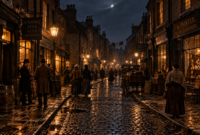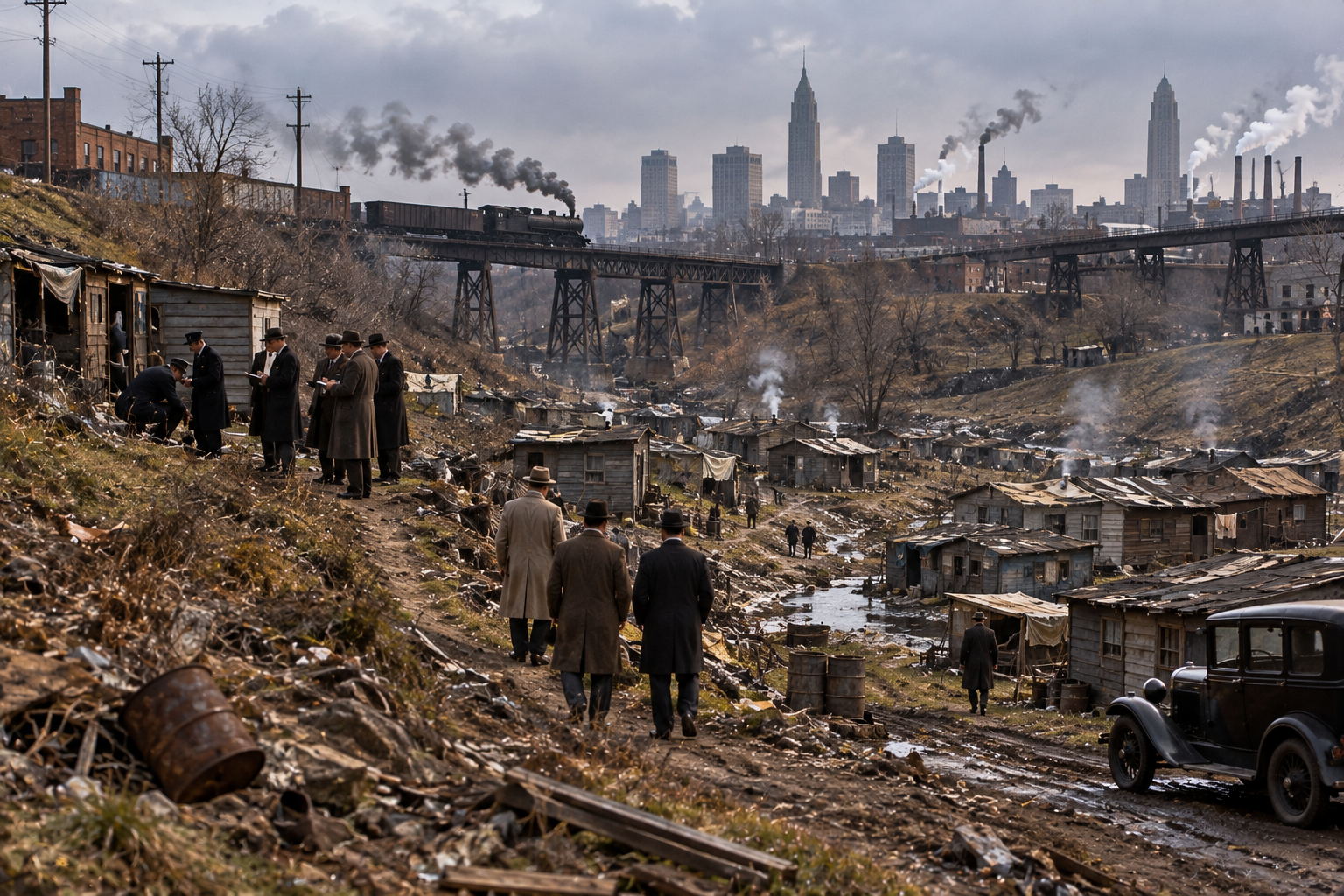
During the Great Depression, Cleveland was a major industrial city struggling with unemployment, poverty, and the displacement of people who had few stable places to live. Along Kingsbury Run, a deep ravine connected to the Cuyahoga River, makeshift communities housed transients and other people living on the margins of the city, and beginning in the mid-1930s the area became associated with a series of horrifying killings. The Cleveland Torso Murders, also called the Kingsbury Run Murders, ultimately produced twelve officially recognized victims in the core series, while some historical accounts include an earlier unidentified woman and count thirteen. Case Western Reserve University
AI & Editorial Note
Hidden Frontiers uses AI-assisted tools as part of its content-production workflow, including research organization, drafting assistance, and visual development. The factual content of this article is strictly grounded in verified, cited sources, and disputed or uncertain information is identified where appropriate. Visuals accompanying this article are AI-generated historical reconstructions created for illustrative purposes.
Kingsbury Run and the People Who Lived There
Kingsbury Run was a rugged natural valley extending toward the Cuyahoga River, and during the Depression it became home to shantytowns occupied largely by people with unstable housing and limited resources. Cleveland’s historical record describes an area where transients and other displaced residents lived in makeshift structures, often moving through the city by railroad in search of work or shelter. That social environment would later become crucial to the Torso Murders because many of the victims belonged to precisely the population that was hardest for investigators to identify. Case Western Reserve University
The first officially recognized killings associated with the series occurred in September 1935, when two dismembered bodies were discovered together in Kingsbury Run. One was subsequently identified through fingerprints as Edward Andrassy, a twenty-nine-year-old hospital orderly, while the identity of the other victim remained unknown. The discovery marked the beginning of a sequence that would continue through August 1938 and become one of the largest homicide investigations in Cleveland history. Case Western Reserve University
The question of exactly how many victims belong to the series requires some historical qualification. Case Western Reserve University’s Encyclopedia of Cleveland History describes twelve victims, seven men and five women, in killings committed between September 1935 and August 1938. The Cleveland Police Museum includes an unidentified woman known as the “Lady of the Lake,” discovered in 1934, and therefore presents the broader history as thirteen victims beginning in 1934. Case Western Reserve University
The First Bodies in Kingsbury Run
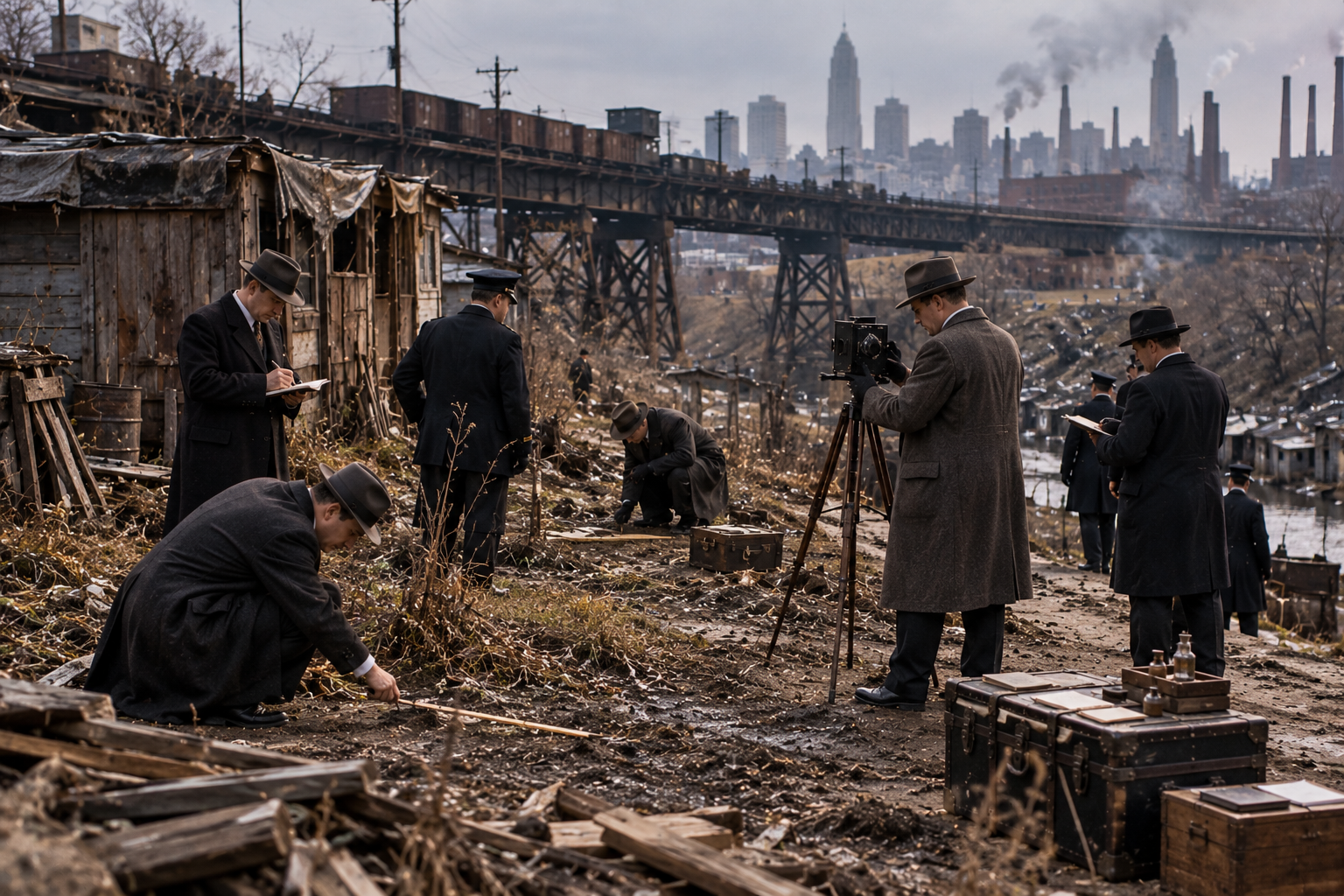
The discovery of the first two bodies in September 1935 immediately established several characteristics that would recur throughout the investigation. The victims had been decapitated and dismembered, and investigators noted similarities between the killings that suggested they might have been committed by the same person. The physical evidence led investigators to consider the possibility that the offender possessed significant knowledge of human anatomy, although that observation never identified a particular profession or individual. Case Western Reserve University
Edward Andrassy became one of the few victims whose identity was established with certainty. His fingerprints allowed investigators to connect the remains with an existing record, demonstrating how valuable even basic identification techniques could be in an era before DNA databases and modern forensic science. For most of the other victims, however, investigators did not have enough reliable information to establish who they had been. Case Western Reserve University
The third officially recognized victim was Florence Polillo, whose remains were discovered near Orange Avenue in January 1936. Like Andrassy, Polillo was ultimately identified, giving investigators at least some biographical information with which to reconstruct her life and associations. But the majority of the victims remained unidentified, a circumstance that would become one of the defining tragedies of the case. Case Western Reserve University
The Unidentified Victims
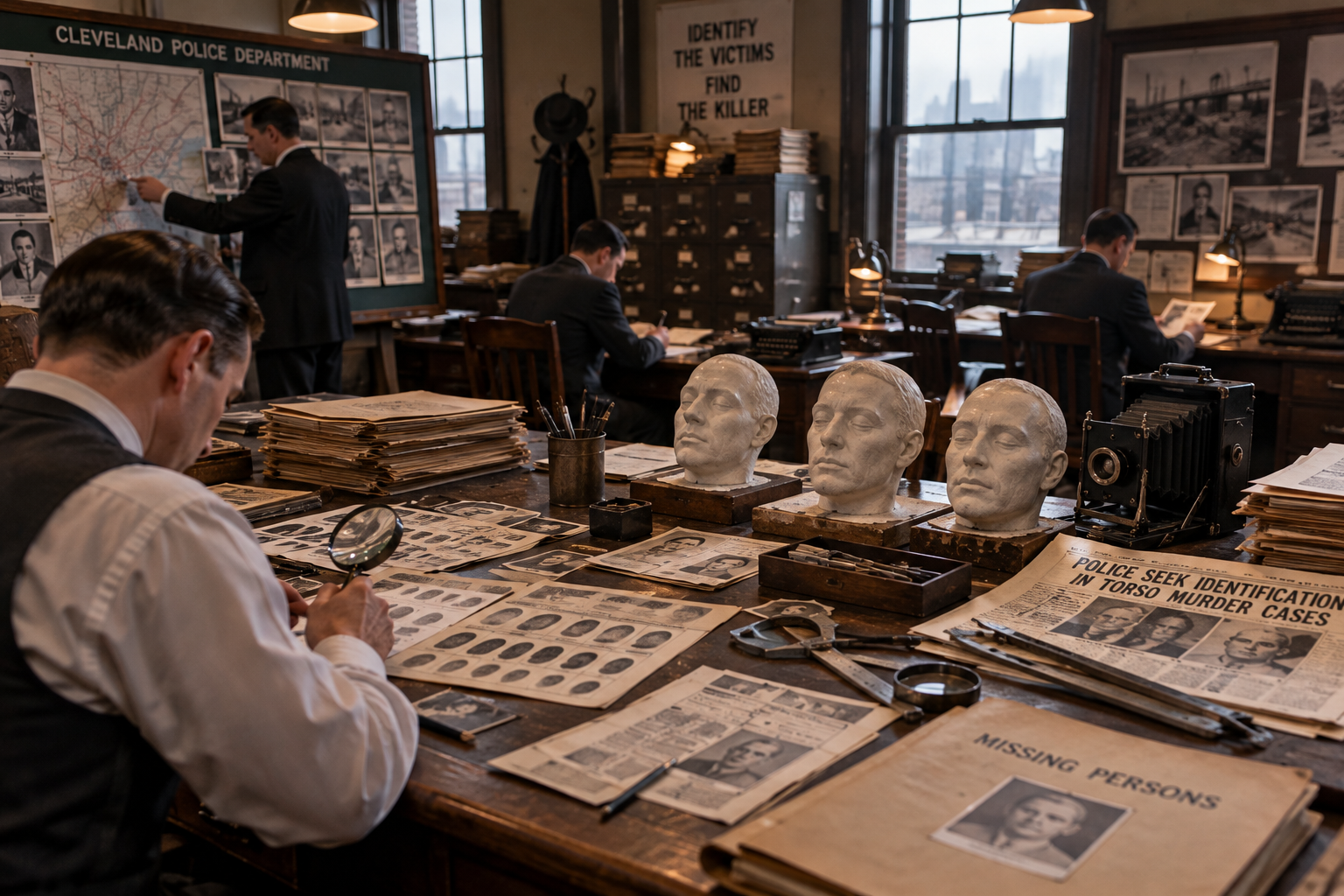
Identifying the victims became almost as difficult as identifying their killer. Cleveland police searched missing-person records, interviewed residents, examined fingerprints when usable prints survived, and appealed to the public through newspapers. Investigators also created plaster casts of several victims’ heads and displayed them publicly in hopes that someone would recognize them. Case Western Reserve University
One particularly famous unidentified victim became known as the “Tattooed Man.” His fingerprints were available, and investigators documented six distinctive tattoos, yet neither those clues nor public displays of a plaster reproduction of his head produced a confirmed identification. The death mask and tattoo information were even displayed at the Great Lakes Exposition of 1936, where enormous numbers of visitors could see them. Despite that extraordinary public effort, the man’s identity remained unknown. Cleveland Police Museum
The identification problem was not simply a technical failure. Many of the victims appear to have been transient or socially marginalized people whose disappearances might not have generated the same immediate attention as those of people with stable families, homes, and employment records. Their anonymity meant that investigators were often trying to reconstruct a person’s identity from physical remains without knowing where that person had lived, whom they knew, or when anyone had last seen them. Case Western Reserve University
The Investigation Expands
As more victims appeared, Cleveland police expanded the investigation dramatically. Detectives Peter Merylo and Martin Zelewski were assigned to work the case extensively, including undercover work in the neighborhoods surrounding Kingsbury Run. According to the Cleveland Police Museum, investigators interviewed more than fifteen hundred people in connection with the case, while the department as a whole interviewed more than five thousand witnesses and potential suspects. Cleveland Police Museum
The investigation was conducted in a very different forensic environment from the one available today. Police could use fingerprints, photographs, missing-person records, witness interviews, physical measurements, and other investigative techniques, but DNA profiling did not exist, and investigators did not have the digital databases or modern forensic laboratory systems available to contemporary homicide detectives. The surviving historical record therefore contains many investigative leads but comparatively little evidence capable of conclusively connecting a specific person to the killings. Cleveland Police Museum
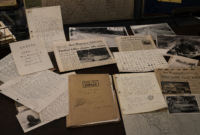
The Cleveland Memory Project preserves photographs and archival material from the investigation, including images documenting searches for victims, evidence associated with the case, and police activity around Kingsbury Run. These collections are valuable because they preserve a direct visual record of the investigation, but they also underscore how much of the original evidence has been lost or remains difficult to interpret after so many decades. Cleveland Memory Project
Eliot Ness Enters the Case
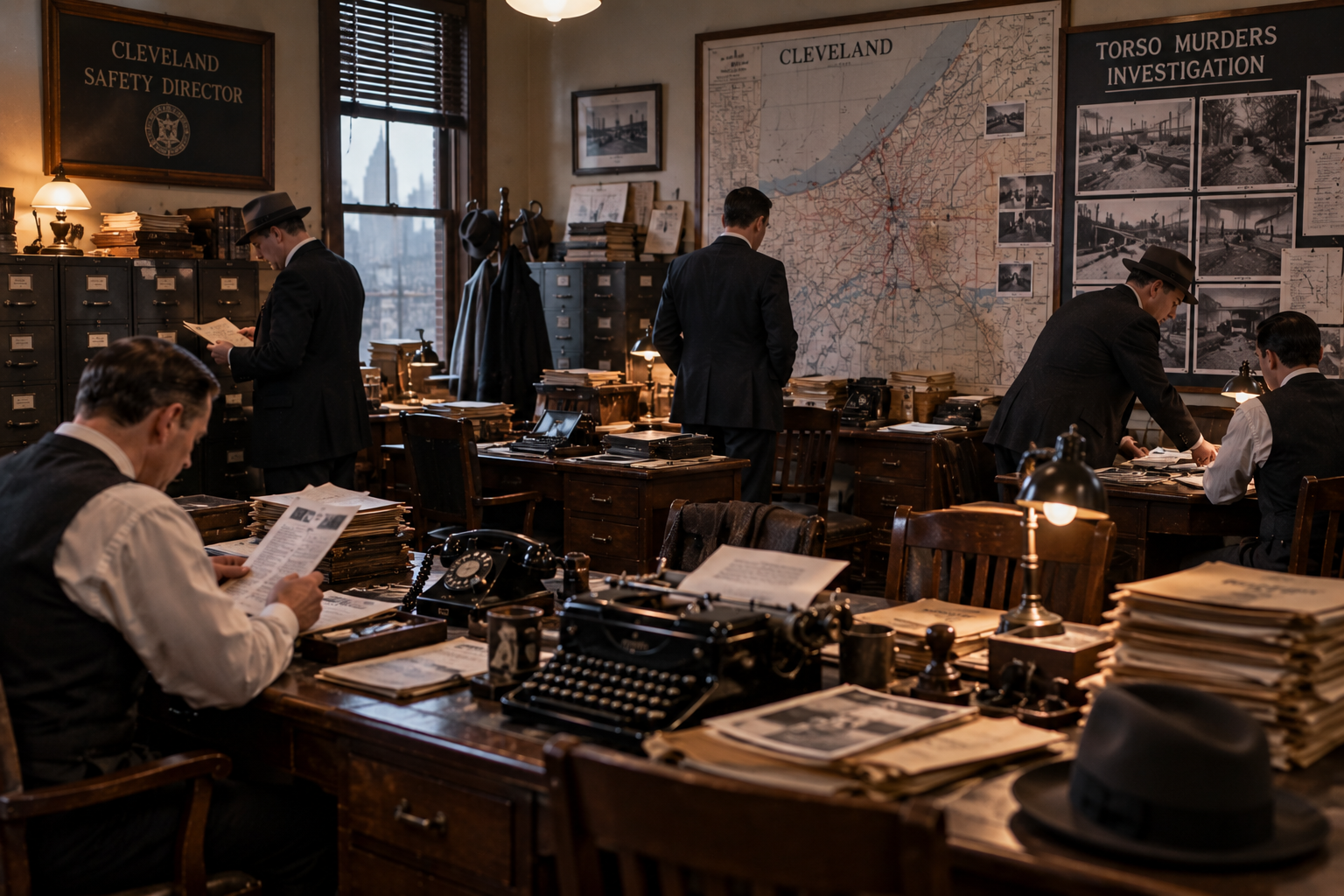
Eliot Ness became one of the most recognizable figures associated with the Cleveland Torso Murders after he was appointed Cleveland’s Safety Director in the 1930s. Ness had already achieved national fame through his work against organized crime in Chicago, and Cleveland expected him to bring similar effectiveness to the city’s public-safety problems. The Torso Murders instead became one of the cases that demonstrated the limits of his reputation when confronted with a largely unidentified killer and a difficult investigative environment. Cleveland Memory Project
As public pressure intensified, Ness became more deeply involved in the investigation. Coroner A. J. Pearse organized what newspapers called a “Torso Clinic,” bringing police and other experts together to examine the killings and consider characteristics of the offender. The effort reflected an early attempt to systematically interpret the physical similarities between crimes and develop an investigative profile, although the process did not produce an officially identified killer. Cleveland Police Museum
The investigation eventually placed considerable emphasis on Kingsbury Run itself. In August 1938, Ness ordered a major police operation against the shantytowns in the area, and the makeshift structures were subsequently burned. The action removed much of the settlement where several victims had been discovered, but it did not produce a definitive identification of the person responsible for the murders. Cleveland Police Museum
The Burning of Kingsbury Run
The destruction of the shantytowns remains one of the most controversial episodes connected with the investigation. Cleveland historical sources describe a large police raid in which dozens of people were detained while officers searched the settlement for evidence, followed by the destruction of the makeshift homes. The Cleveland Police Museum states that the operation was intended partly to remove potential victims from the area and partly to address the investigation, but the murders were not legally solved as a result. Cleveland Police Museum
The action also illustrates an important distinction between solving a crime and changing the environment in which a crime occurs. After the shantytowns were destroyed, the series of killings stopped, but that temporal connection does not establish that the destruction caused the killer to stop. It also cannot establish that the murderer lived in Kingsbury Run or that the victims were selected because of the settlement itself. Cleveland Police Museum
Ness’s involvement therefore became part of the mythology of the case, but the historical record is more complicated than the image of a famous crime fighter personally hunting down an unidentified killer. His administration conducted a major operation, investigators pursued thousands of leads, and the city attempted to respond to mounting fear, yet the central question remained unanswered. No person was officially identified as the Torso Murderer, and no prosecution resolved the series. Cleveland Police Museum
Frank Dolezal and the Florence Polillo Investigation
In 1939, after the main sequence of killings had ended, authorities arrested Frank Dolezal in connection with the murder of Florence Polillo. Dolezal had known Polillo and had reportedly lived with her, giving investigators a direct personal connection between a suspect and one of the identified victims. He confessed to killing Polillo, but the circumstances surrounding the confession and the reliability of his account became controversial. Cleveland Police Museum
Dolezal died in custody before he could be brought to trial. Historical records preserved by the Cleveland Memory Project document the investigation of physical evidence associated with his confession, including a bathtub connected to the case, while the Cleveland Police Museum records that an autopsy found multiple broken ribs sustained while Dolezal was in sheriff’s custody. Because Dolezal died before trial, his confession never produced a criminal conviction establishing him as the killer. Cleveland Memory
The Dolezal episode illustrates another problem that repeatedly affected the investigation: a statement by a suspect is not automatically equivalent to independently verified proof. His confession contained details investigators considered significant, but the historical record does not establish beyond dispute that he was responsible for the broader series of murders. Case Western Reserve University’s historical account likewise notes that Dolezal confessed to the Polillo murder but died before he could be tried, while emphasizing that investigators never developed sufficient evidence to establish another suspect. Case Western Reserve University
The Francis Sweeney Theory
The name most closely associated with the later theory about the Torso Murderer is Dr. Francis E. Sweeney, a Cleveland surgeon who became a focus of Eliot Ness’s investigation. The theory rests partly on Sweeney’s medical knowledge and his proximity to the area, characteristics that some researchers believe fit the apparent anatomical skill displayed in the killings. However, those characteristics are circumstantial, and the historical record does not contain physical evidence establishing Sweeney as the murderer. Cleveland Police Museum
The Cleveland Police Museum states that a man identified in historical accounts as “Dr. X” was interrogated by Ness but that no physical evidence linked him to the crimes. The museum identifies Francis Sweeney as the most likely candidate for that figure, while also acknowledging that Sweeney never confessed and was never officially identified as the killer. That distinction is critical because the Sweeney theory is historically significant without being a solved-case finding. Cleveland Police Museum
Later correspondence associated with Ness has added another layer to the theory. The Associated Press reported in 2003 that researchers hoped DNA testing might be possible on old letters and postcards sent to Ness, some of which carried the name “F.E. Sweeney, M.D.” The proposed testing was intended to examine whether biological material could provide evidence supporting or weakening the Sweeney theory, but the existence of such a proposal does not itself constitute a forensic identification. https://www.cleveland19.com
The case against Sweeney therefore remains circumstantial. He possessed characteristics that investigators and later researchers considered potentially relevant, Ness reportedly believed he had identified the murderer, and the killings stopped after Sweeney was committed to a mental institution according to the Cleveland Police Museum’s historical account. None of those facts establishes that Sweeney killed the victims, and no court ever convicted him of the Torso Murders. Cleveland Police Museum
What the Evidence Can Actually Establish
The physical evidence establishes a striking pattern across the core series. Multiple victims were decapitated and dismembered, and investigators observed similarities in the way the bodies had been handled. Those similarities were sufficiently strong that police believed the killings were probably connected, although the exact number of crimes attributable to one offender remains subject to historical qualification because the “Lady of the Lake” and other possible cases are treated differently by different sources. Case Western Reserve University
The evidence also establishes that identifying victims was a major investigative priority. Police used fingerprints when available, searched records, interviewed people, circulated information through newspapers, and created plaster masks for several victims. Edward Andrassy and Florence Polillo were positively identified, while Rose Wallace was tentatively identified through dental records according to the Cleveland Police Museum. Cleveland Police Museum
What the evidence does not establish is equally important. There is no universally accepted forensic record that connects Francis Sweeney, Frank Dolezal, or another named suspect to all of the killings, and there was no trial that established the identity of the Torso Murderer. The Cleveland Police Museum and Case Western Reserve University both continue to characterize the murderer as unidentified. Cleveland Police Museum
Why the Cleveland Torso Murders Remain Unsolved
The investigation faced a combination of forensic limitations, unidentified victims, unreliable or incomplete information, and the passage of time. Many victims were people living outside stable social networks, making their disappearances difficult to trace and reducing the amount of background information investigators could use. At the same time, the investigation produced thousands of interviews and leads, creating an enormous body of information without a single piece of evidence capable of conclusively identifying the killer. Cleveland Police Museum
The loss and fragmentation of historical records also complicate modern attempts to reconstruct the investigation. The Cleveland Police Museum states that official police records connected with the case were lost, destroyed, or removed, while surviving material is distributed among police collections, university archives, historical societies, newspapers, and other repositories. Researchers therefore have to compare sources that were created for very different purposes rather than relying on one complete investigative file. Cleveland Police Museum
The passage of time adds another barrier. People who witnessed events in the 1930s, participated in the investigation, knew the victims, or interacted with suspects are long deceased, while physical evidence from the period has either disappeared, degraded, or remained difficult to subject to modern testing. The possibility of new forensic analysis is therefore intriguing, but it cannot automatically overcome the limitations imposed by nearly a century of missing context and uncertain evidence preservation. https://www.cleveland19.com
The Victims Behind the Mystery
The enduring fascination with the Cleveland Torso Murders can sometimes obscure the people whose deaths created the case. Only a small number of victims were positively or tentatively identified, while others remain represented in historical records by numbers, physical descriptions, tattoos, plaster masks, or locations where their remains were found. That anonymity is itself part of the tragedy because a person whose name has been lost can easily become reduced to a clue in someone else’s murder mystery. Cleveland Police Museum
Edward Andrassy and Florence Polillo are among the victims whose names survived, while Rose Wallace was tentatively identified through dental evidence. The unidentified victims were nevertheless treated as individuals by investigators who attempted to reconstruct their identities through fingerprints, missing-person records, physical characteristics, and public appeals. The Cleveland Police Museum’s preservation of their masks and identification materials demonstrates how much effort went into giving names back to people whose lives had otherwise been erased from the official record. Cleveland Police Museum
That perspective changes how the case should be understood today. The central mystery is not simply the identity of an infamous killer, but also the historical disappearance of the victims themselves, many of whom came from communities that had limited power and visibility during the Great Depression. The fact that several still cannot be named nearly a century later is one of the most consequential unresolved aspects of the case. Case Western Reserve University
Conclusion
The Cleveland Torso Murders remain one of the most difficult unsolved investigations in American criminal history because the evidence tells a clear story about the existence of a connected series of killings without providing an equally clear answer about who committed them. From the first discoveries in Kingsbury Run to the enormous police investigation led in part by Eliot Ness, authorities pursued thousands of leads, attempted to identify unknown victims, examined potential suspects, and tried to respond to intense public pressure. Yet no person was ever officially identified and convicted as the Torso Murderer. Case Western Reserve University
Francis Sweeney remains the best-known historical suspect theory, but a theory is not the same thing as a proven identification. Frank Dolezal confessed to the killing of Florence Polillo but died before trial, while other suspects and possible connections never produced a definitive legal resolution. The surviving record therefore supports a conclusion of uncertainty rather than a retroactive conviction. Case Western Reserve University
The most important unresolved question may ultimately be broader than the killer’s name. It is why so many of the victims remained unidentified despite an investigation involving thousands of interviews, public appeals, fingerprints, plaster masks, and extensive archival effort. The Cleveland Torso Murders are remembered because of the brutality of the crimes, but the historical record also asks us to remember the people who were killed, including those whose names were never recovered. Cleveland Police Museum
FAQ
Who were the Cleveland Torso Murder victims? The core Cleveland Torso Murders are generally described as twelve killings committed between September 1935 and August 1938, involving seven men and five women. Only a small number of the victims were positively or tentatively identified, including Edward Andrassy, Florence Polillo and Rose Wallace, while several others remain known primarily through physical descriptions and investigative records. Some Cleveland historical sources also include the earlier unidentified “Lady of the Lake” discovered in 1934, producing a broader count of thirteen. Case Western Reserve University
Where did the Cleveland Torso Murders happen? Most of the bodies in the core series were discovered in or around Kingsbury Run, a rugged valley extending toward the Cuyahoga River in Cleveland. The area contained shantytowns where many impoverished and transient people lived during the Great Depression, and several victims were discovered in or near that environment. Other remains were found elsewhere in Cleveland, which means the investigation was never confined to a single crime scene. Case Western Reserve University
Did Eliot Ness solve the Cleveland Torso Murders? No. Ness became deeply involved in the investigation while serving as Cleveland’s Safety Director, and he later reportedly believed that he knew the identity of the killer. However, no suspect was officially identified or prosecuted for the series, and the Cleveland Police Museum continues to describe the case as unsolved. Ness’s involvement is historically important, but it should not be confused with a documented criminal resolution. Cleveland Police Museum
Was Francis Sweeney the Torso Murderer? Francis E. Sweeney is the most prominent suspect theory associated with the case, partly because he was a surgeon and therefore appeared to fit investigators’ observations about the offender’s apparent anatomical knowledge. Historical accounts state that Ness interrogated Sweeney, but no physical evidence was found linking him to the murders and Sweeney never confessed. He therefore remains a major historical suspect rather than a legally established killer. Cleveland Police Museum
Who was Frank Dolezal? Frank Dolezal was a Cleveland-area man arrested in 1939 in connection with the murder of Florence Polillo, whom he had known and reportedly lived with. He confessed to killing Polillo, but the circumstances and reliability of the confession became controversial, and he died in custody before he could be tried. Because there was no trial or conviction, Dolezal cannot be described as the legally established perpetrator of Polillo’s murder or the broader Torso Murders. Cleveland Police Museum
Why were so many Cleveland Torso victims never identified? Many of the victims appear to have lived on the margins of Cleveland society, including people who were transient or lacked stable housing and employment. Investigators nevertheless made extensive efforts to identify them through fingerprints, missing-person records, interviews, physical descriptions, dental evidence, plaster masks and public appeals. Those efforts succeeded only partially, leaving several victims without confirmed names even after decades of historical research. Cleveland Police Museum
How many people were killed by the Cleveland Torso Murderer? The most commonly cited official series contains twelve victims from 1935 through 1938. The Cleveland Police Museum uses a broader historical count of thirteen by including the “Lady of the Lake,” whose remains were discovered in 1934 and were later associated by some investigators with the series. Because different historical sources define the series differently, the safest description is twelve victims in the core series and thirteen in the broader historical account. Case Western Reserve University
Are the Cleveland Torso Murders solved today? No. The Cleveland Police Museum states that the killer remains officially unidentified, and the Encyclopedia of Cleveland History likewise says the murderer was never discovered. Later theories, particularly the theory involving Francis Sweeney, have generated extensive historical discussion, but no theory has produced the legal or forensic evidence necessary to establish a definitive identification. Cleveland Police Museum
SOURCES & REFERENCES
- Encyclopedia of Cleveland History — Torso Murders — Case Western Reserve University’s historical overview of the murders, victims, investigation and unresolved status. Case Western Reserve University
- Cleveland Police Museum — Torso Murders — Historical account covering Kingsbury Run, Eliot Ness, the investigation, Frank Dolezal and the Francis Sweeney theory. Cleveland Police Museum
- Cleveland Police Museum — Identifying the Victims — Documentation of victim-identification efforts, fingerprints, missing-person searches and plaster masks. Cleveland Police Museum
- Cleveland Memory Project — Crime Scene, Cleveland — Cleveland State University archival material and photographs concerning the Torso Murders. Cleveland Memory Project
- Cleveland Historical — Kingsbury Run — Historical context for Kingsbury Run and the Depression-era shantytowns. Cleveland Historical
- Associated Press report on possible DNA testing — Contemporary reporting on proposed DNA examination of historical correspondence associated with the Sweeney theory.