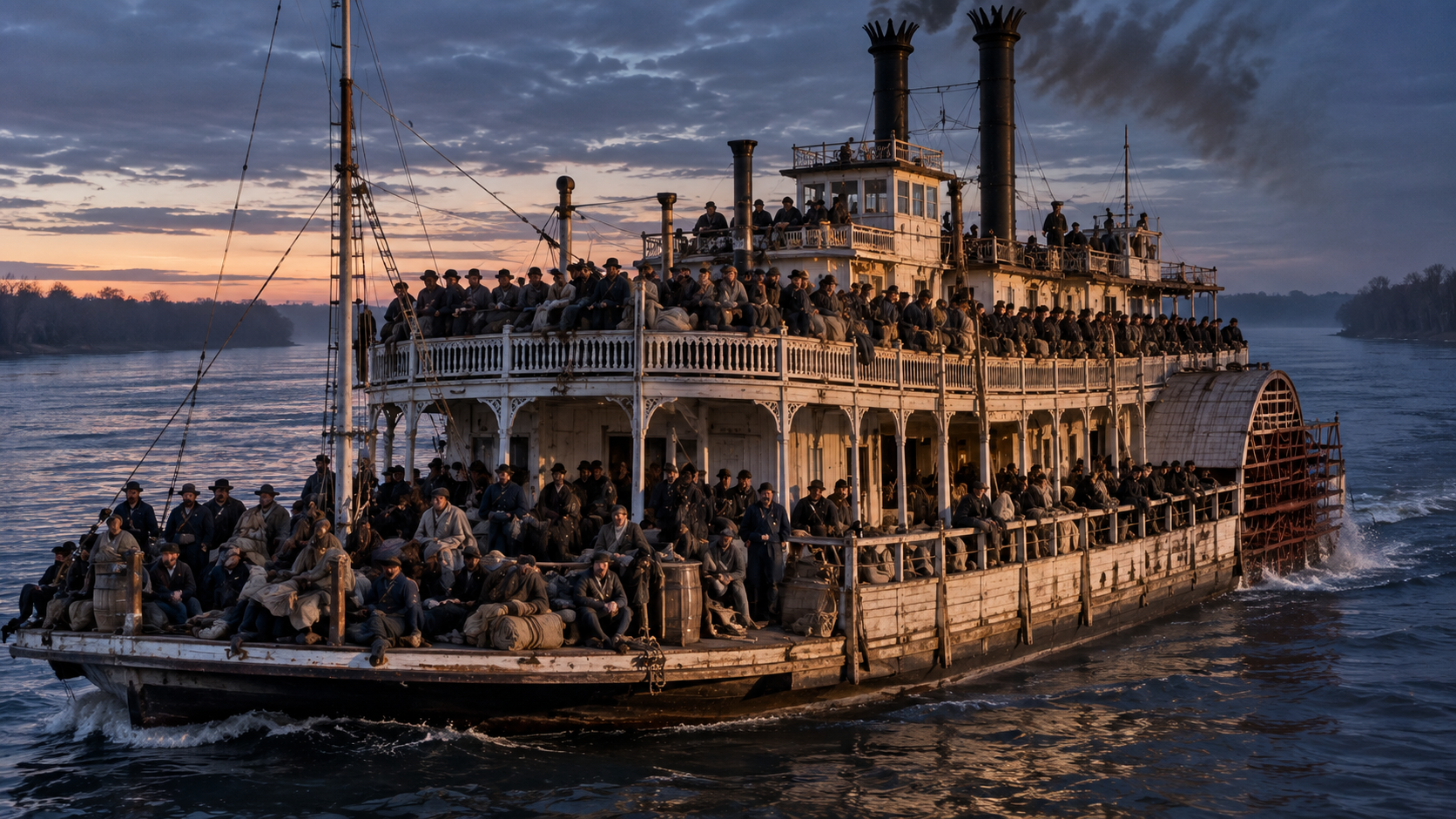
In the early morning darkness of April 27, 1865, the steamboat Sultana was moving north on the Mississippi River with an extraordinary number of people crowded onto its decks. Most were Union soldiers recently released from Confederate prison camps and finally on their way home after years of war and captivity. Then three of the vessel’s four boilers exploded, tearing through the crowded steamboat and setting its wooden superstructure ablaze. The Sultana disaster killed more than a thousand people and is described by the National Park Service as the worst maritime disaster in U.S. history, yet it remains remarkably obscure compared with other American catastrophes. National Park Service
AI & Editorial Note
Hidden Frontiers uses AI-assisted tools as part of its content-production workflow, including research organization, drafting assistance, and visual development. The factual content of this article is strictly grounded in verified, cited sources, and disputed or uncertain information is identified where appropriate. Visuals accompanying this article are AI-generated historical reconstructions created for illustrative purposes.
A Steamboat Carrying Men Who Thought the War Was Over
The Sultana was a wooden side-wheel steamboat operating on the Mississippi River during the final days of the Civil War. Her ordinary commercial role was suddenly transformed by the collapse of the Confederacy, when thousands of Union prisoners held in Southern camps needed transportation back toward the North. For men who had survived places such as Andersonville and Cahaba, the river journey was supposed to be the final stage between captivity and home. National Park Service
The timing could hardly have been more consequential. Robert E. Lee had surrendered the Army of Northern Virginia on April 9, Abraham Lincoln had been assassinated on April 14, and the Confederate government was rapidly collapsing. News traveled unevenly along the river, while military authorities were attempting to process and transport large numbers of released prisoners. The Sultana entered this chaotic environment at precisely the moment when transportation capacity was badly strained and thousands of men were desperate to leave the South. Smithsonian Magazine
The vessel itself was not designed to carry the extraordinary human load that eventually crowded onto her. Sources differ somewhat in their precise passenger and death totals, partly because records were incomplete and because some victims died after the initial explosion from drowning, burns and exposure. The broad historical picture, however, is clear: the ship was carrying far more people than would ordinarily have traveled on a vessel of her size, including roughly 1,800 to 1,900 released Union prisoners according to surviving historical records and later reconstructions. Library of Congress
The Prisoners Were Finally Going Home
Many of the soldiers aboard the Sultana had endured months of captivity under extremely harsh conditions. Andersonville, the Confederate prison in Georgia, had become notorious for overcrowding, disease, inadequate food and contaminated water, while Cahaba in Alabama had also held thousands of Union prisoners. When the war ended, release did not immediately mean that these men could simply return home; they first had to be processed, paroled and transported north through a region whose transportation system had been severely disrupted by four years of war. National Park Service
Vicksburg became an important staging point for these men. The federal government relied heavily on private steamboat operators to move released prisoners northward, creating financial incentives for captains and transportation officials to secure passengers. The arrangement was practical in principle, but the combination of government contracts, rapidly changing prisoner numbers and competition between steamboats created opportunities for decisions that prioritized speed and profit over safety. We’re History
The Sultana‘s captain, James Cass Mason, understood that transporting prisoners could be lucrative. The vessel had a certificate of inspection allowing only a fraction of the people eventually carried aboard, yet the prospect of receiving government payments for transporting soldiers created powerful incentives to take on a much larger load. Later investigations and historical studies would examine whether financial pressure, administrative decisions and personal arrangements contributed to the disaster, although the surviving evidence does not reduce the tragedy to a single individual’s action. Sultana Museum
The Boiler Was Already a Problem
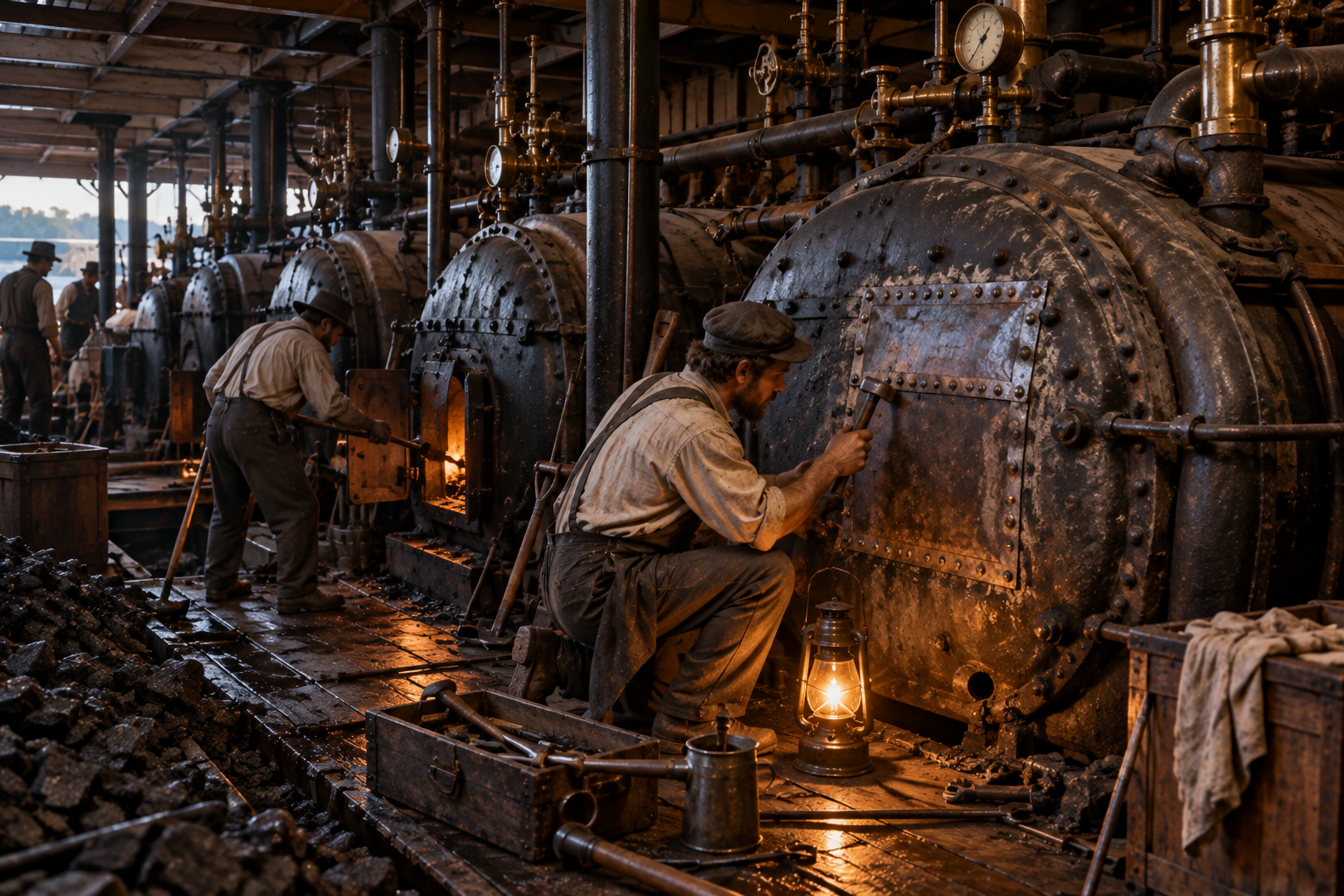
One of the most important facts about the disaster is that the Sultana was not operating with an entirely healthy propulsion system when she began the final stage of her journey. During the trip upriver, one of the vessel’s boilers developed a leak. The problem forced the steamboat to slow down and eventually reach Vicksburg, where a repair was made before the ship continued north. Sultana Museum
The repair became central to later explanations of the explosion. Contemporary testimony examined during the investigation indicated that boiler plate had been bulged and that the repair involved fitting a patch rather than replacing the damaged section entirely. A report quoted in later historical research described the repair as technically inadequate and noted that the boiler’s condition raised serious questions about the safety of operating it under pressure. US Deadly Events
This does not mean that the disaster can be explained simply by saying that someone knowingly caused the explosion. The historical record is more complicated because several people and institutions were involved in preparing the ship, arranging the prisoner transport and overseeing military transportation. The evidence does, however, make the condition of the boiler one of the central physical factors in understanding why the Sultana exploded. U.S. Naval Institute

The Ship Became Dangerously Crowded
The human load placed aboard the Sultana created a second major problem. Men were packed onto the decks so densely that many had little room to lie down, and the vessel’s already limited capacity was overwhelmed by the number of soldiers being transported. Historical accounts describe approximately 1,866 soldiers being placed aboard, in addition to civilian passengers and a crew, creating a total population aboard the vessel far beyond its normal passenger capacity. US Deadly Events
The overcrowding mattered even before the boilers failed. The ship’s stability was affected by the extraordinary concentration of people on its upper decks, while the crowded conditions made movement, firefighting and evacuation far more difficult. Once the explosion occurred, thousands of people were suddenly trapped on a wooden vessel in darkness, with portions of the superstructure collapsing and fire spreading rapidly across the decks. U.S. Naval Institute
There was another cruel irony in the situation. Many of the soldiers had survived years of warfare and imprisonment only to face a completely different kind of danger during what they believed would be their final journey home. Some had already endured the worst conditions the Civil War could inflict on prisoners, and now the river itself became the setting for a disaster that unfolded with extraordinary speed.
The Explosion on the Mississippi
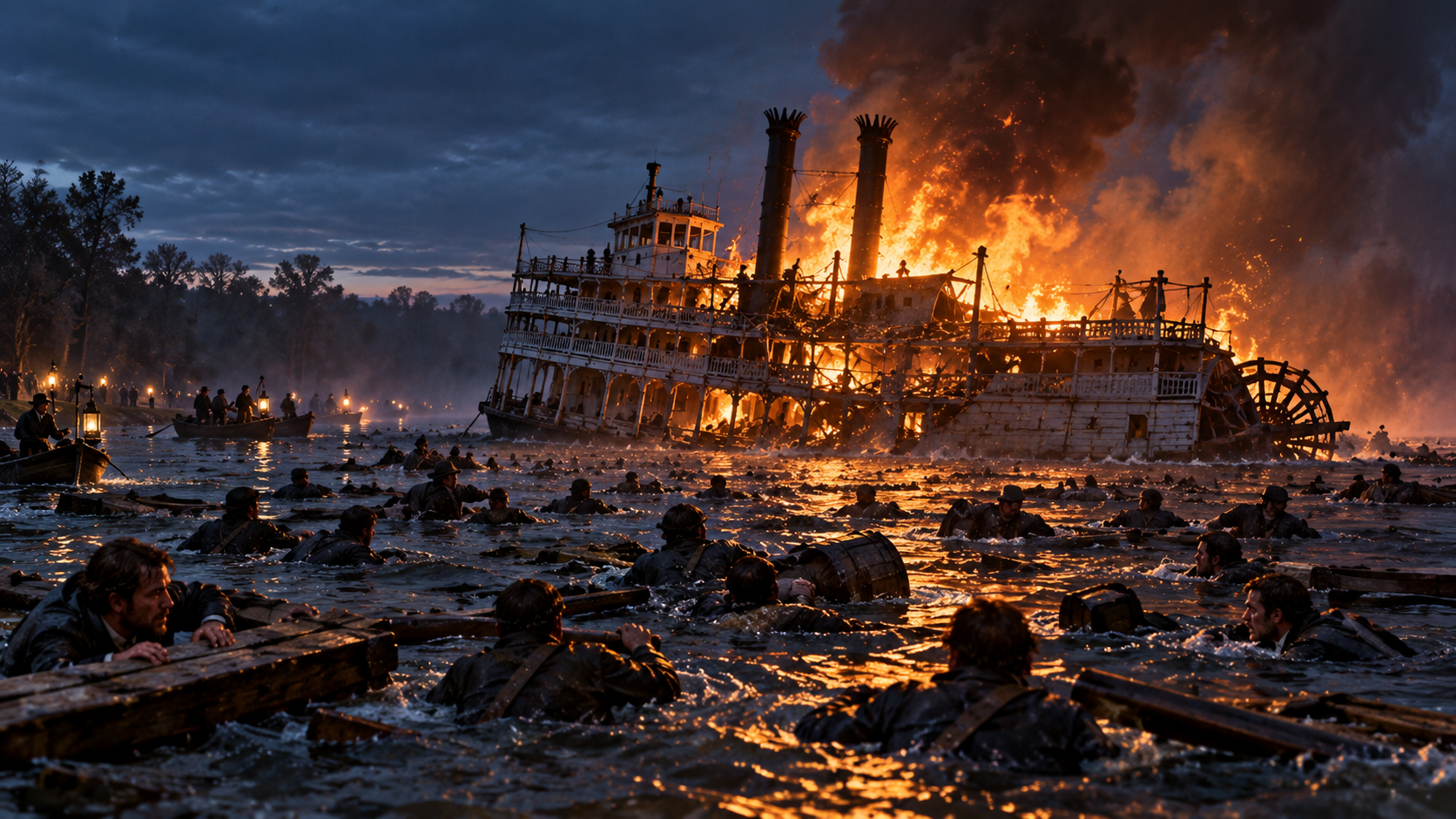
Shortly after two o’clock in the morning, while the Sultana was moving north of Memphis, three of the four boilers exploded. The blast tore through the center of the vessel, destroying portions of the upper decks and killing or severely injuring people who had been sleeping in the crowded spaces above and around the boilers. Fire quickly spread through the wooden structure, transforming the steamboat into a burning wreck in the darkness. National Park Service
The immediate physical circumstances were catastrophic. Some passengers were thrown into the river by the explosion, while others were trapped beneath collapsing sections of the ship or forced toward the edges of the burning decks. Those who escaped the flames faced the Mississippi’s cold spring water, strong currents and darkness, often without knowing which direction would lead to safety. U.S. Naval Institute
The Sultana did not simply disappear beneath the river in a single instant. The damaged vessel burned for hours, and survivors described a prolonged struggle in which sections of the ship continued to collapse while people attempted to cling to wreckage, lifeboats, ropes or anything else that might keep them above water. The disaster therefore involved multiple causes of death, including the initial explosion, fire, drowning and exposure. U.S. Naval Institute
The tragedy was recorded visually almost immediately. The Library of Congress preserves an 1865 engraving showing the burning Sultana surrounded by people in the river, while another Library of Congress photograph shows the vessel at Helena, Arkansas, just one day before the catastrophe. These records provide an unusually direct connection between the historical vessel and the final hours of its voyage. Library of Congress

Rescue Came From the Riverbank
The survivors’ situation after the explosion was desperate. People who reached the river had to swim or cling to fragments of the wreck while trying to avoid the burning sections of the vessel. Others reached the banks downstream, where residents and rescue workers attempted to pull survivors from the water and provide shelter to men suffering from burns, hypothermia and exhaustion. National Board
The river itself became both the means of escape and another deadly obstacle. Strong currents separated survivors from one another, and the darkness made it difficult to determine where the wreck had gone or where safe land could be reached. Many soldiers who had survived captivity and war were therefore forced into another struggle for survival only hours before they expected to be safely traveling toward their homes.
Some individuals displayed extraordinary courage during the rescue. The National Board of Boiler and Pressure Vessel Inspectors recounts the story of a woman associated with the Christian Commission who remained with frightened men on the burning vessel and tried to prevent panic as flames approached. Her identity was not preserved in the surviving account, but the story illustrates how chaotic the final moments became and how little organized control remained after the boilers exploded. National Board
How Many People Died?
The precise death toll remains more complicated than the simple figures often repeated online. The National Park Service has cited an estimate of 1,169 deaths, while other historical studies and contemporary records have produced higher totals, sometimes reaching 1,500, 1,700 or more depending on which later deaths and missing passengers are included. The disagreement exists because passenger lists were incomplete, survivors died after reaching shore, and records from the immediate aftermath were inconsistent. National Park Service
What is not disputed is the scale of the catastrophe. More than a thousand people died, making the Sultana disaster one of the deadliest single-vessel disasters in American history. The National Park Service explicitly describes it as the worst maritime disaster in U.S. history, while historical scholarship and maritime organizations have continued to debate the exact numerical total rather than the fundamental magnitude of the loss. National Park Service
The uncertainty surrounding the final number should not obscure the human scale of the event. These were not anonymous passengers in the abstract; many were young soldiers who had survived combat, imprisonment and disease, while others were civilian passengers and members of the ship’s crew. The disaster destroyed families and communities across several Northern states, with particularly large numbers of victims coming from Ohio, Michigan and other states whose veterans were returning from Confederate captivity. Knoxville History Project
The Investigation Raised Difficult Questions
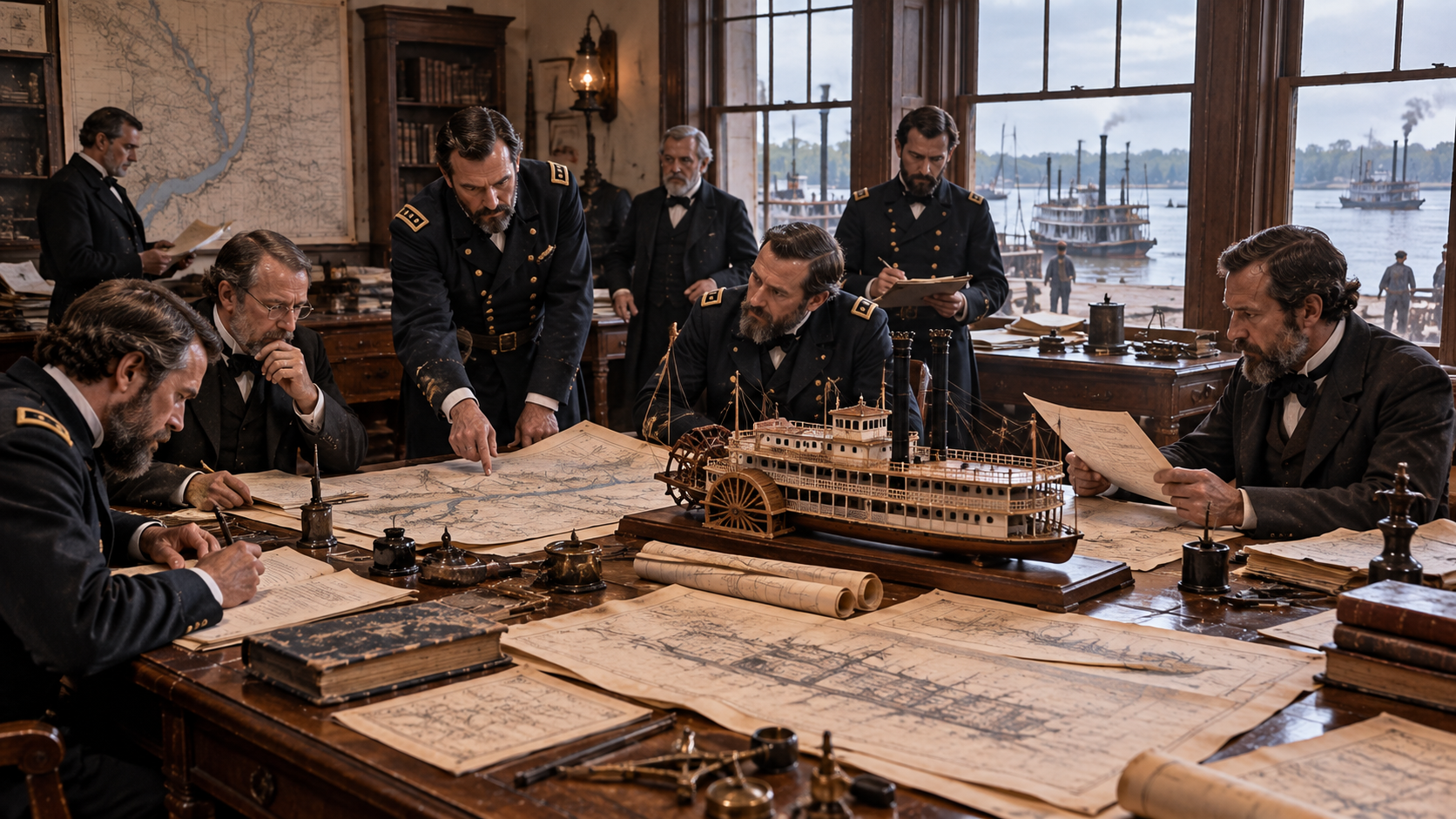
The federal government ordered multiple investigations into the disaster. Three military commissions examined different aspects of what had happened, but later historians have criticized the investigations for their limited scope and for failing to bring the broader chain of decisions fully into a single examination. The legal proceedings therefore became almost as controversial as the disaster itself. U.S. Naval Institute
Captain Frederick Speed, an Army officer involved in prisoner transportation, was the only person brought to court-martial. He was accused of neglect of duty connected with the overcrowding of the Sultana, was initially found guilty and then had the verdict overturned by the Army’s judge advocate general. Several important witnesses were no longer serving in the military and therefore could not easily be compelled to testify, further complicating the effort to establish responsibility. U.S. Naval Institute
Other figures who have frequently appeared in later accounts include Captain Reuben Hatch, a quartermaster involved in arranging prisoner transportation, and Captain Mason himself. Claims about kickbacks and financial arrangements became an important part of later historical interpretations, but individual allegations need to be separated from what was formally proven in court. The surviving record supports a picture of overlapping administrative failures, financial incentives and unsafe decisions rather than a simple, legally established conspiracy. Sultana Museum
Mason himself never faced a trial because he died in the disaster. According to the Sultana Disaster Museum, he was last seen assisting people after the explosion and was never recovered, although the details of his final moments come from survivor testimony and later recollections. The captain therefore became simultaneously one of the people most often blamed in historical accounts and one of the central victims of the disaster itself. Sultana Museum
Why the Disaster Was Quickly Overshadowed
The timing of the Sultana disaster helps explain its disappearance from popular memory. The explosion occurred only weeks after the Confederate surrender, less than two weeks after Lincoln’s assassination, and during the dramatic collapse of the Confederacy and the capture of John Wilkes Booth. American newspapers were overwhelmed by events that appeared to determine the future of the entire country. Knoxville History Project
The disaster was nevertheless reported nationally. The Library of Congress preserves contemporary newspaper material from April and May 1865, including reports describing the burning and sinking of the vessel and the enormous number of soldiers involved. The problem was not that Americans knew nothing about the event; rather, its news cycle competed against an extraordinary concentration of other historical events occurring simultaneously. Research Guides
This distinction matters when describing the Sultana as forgotten. The disaster was not erased immediately, nor did nobody remember it. Survivors and descendants continued to preserve its history, books were published about the disaster, and memorial efforts persisted in communities with large numbers of victims. What changed was its place in the national imagination, where the story gradually became less prominent than the better-known events surrounding the end of the Civil War. Knoxville History Project
A Disaster Buried Beneath the Mississippi
The physical fate of the Sultana contributed to its fading visibility. After burning and sinking in the Mississippi, the remains eventually disappeared beneath the changing river landscape. A later shift in the Mississippi’s course placed the wreck beneath land rather than open water, and the presumed wreck site became associated with agricultural ground near Marion, Arkansas. Knoxville History Project
That is an extraordinary ending for a disaster of such magnitude. A ship carrying thousands of people burned in one of America’s major rivers, yet the vessel itself eventually became difficult to locate because the river moved around it. The landscape effectively concealed the physical object that might otherwise have served as a permanent reminder of the catastrophe.
The disappearance of the wreck did not mean the disappearance of the people connected to it. Survivors returned to their communities, some carrying physical scars and memories of the explosion, while families continued to preserve names and stories. One of the most important surviving bodies of evidence is therefore not the wreck itself but the collection of photographs, newspapers, archival records, memoirs and family histories that document the people who were aboard. Library of Congress
The Memory That Survivors Refused to Lose
Some survivors were frustrated that the disaster seemed to disappear from public attention so quickly. In later decades, veterans and descendants organized commemorations, published recollections and worked to preserve the story of the men who died. The persistence of these efforts shows that the Sultana was never completely forgotten, even if its national profile declined. Knoxville History Project
Historical works have continued to reconstruct the disaster from different perspectives. The Smithsonian Libraries and Archives catalog, for example, preserves books devoted specifically to the Sultana, including Alan Huffman’s Sultana: Surviving Civil War, Prison, and the Worst Maritime Disaster in American History and Jerry O. Potter’s The Sultana Tragedy. Their continued presence in major research collections demonstrates that the event remains an established subject of historical study. Smithsonian Institution
Modern remembrance has also benefited from the preservation of primary visual evidence. The Library of Congress photograph showing the crowded Sultana before the explosion is particularly powerful because it captures the vessel when the people aboard still believed they were traveling toward home. The image turns an otherwise abstract historical statistic into something tangible: a real wooden steamboat, visibly overloaded, carrying hundreds upon hundreds of people only hours before disaster. Library of Congress
What the Sultana Disaster Reveals
The Sultana disaster is often described as a boiler explosion, but that phrase is too narrow to explain the scale of the loss. A mechanical failure alone does not account for why more than a thousand people died; the catastrophe became so deadly because the vessel was carrying an extraordinary number of passengers, one boiler had already suffered serious problems, the repair was questionable, emergency response was extremely difficult and the surrounding administrative system was under enormous pressure. US Deadly Events
The disaster therefore illustrates how large catastrophes rarely have a single cause. Mechanical weakness, human decisions, institutional incentives and extraordinary circumstances can interact until a relatively contained failure becomes a mass-casualty event. In the case of the Sultana, the end of the Civil War created an enormous population of prisoners requiring transportation at exactly the moment when normal systems of administration were being rebuilt.
It also demonstrates why historical memory can be selective. The Sultana disaster was enormous in human terms, documented in newspapers and investigated by the federal government, yet it became overshadowed by events that were politically and symbolically larger in the national story. The catastrophe survived mainly through descendants, historians, archives and local memorial efforts rather than through the national mythology that preserved the memory of better-known American disasters. Knoxville History Project
Conclusion
The Sultana left the Mississippi River carrying men who had already survived one of the most brutal chapters of the Civil War. Many believed that the worst part of their ordeal was over, but before sunrise the steamboat’s boilers exploded, the vessel caught fire and the river became the final resting place for more than a thousand people. The exact death toll remains disputed because nineteenth-century records were incomplete, but the scale of the disaster is beyond question. National Park Service
The tragedy was not caused by one isolated mechanical failure. Overcrowding, a damaged boiler, a questionable repair, transportation pressures and administrative decisions all formed part of the chain of circumstances that placed so many people aboard an unsafe vessel. Later investigations produced only limited accountability, leaving historians to reconstruct responsibility from testimony, official records and technical evidence rather than from a definitive judicial verdict. U.S. Naval Institute
Perhaps the most striking part of the story is how quickly the disaster became overshadowed. America was simultaneously witnessing the end of the Civil War, Lincoln’s assassination and the pursuit of his killer, leaving little room in the national memory for a riverboat tragedy that occurred at almost exactly the same historical moment. More than a century and a half later, the Sultana remains a reminder that some of the largest disasters in American history can disappear not because they were insignificant, but because history was already crowded with events competing for attention.
FAQ
What was the Sultana disaster?
The Sultana disaster was the catastrophic explosion, fire and sinking of a Mississippi River steamboat on April 27, 1865. The vessel was carrying a large number of recently released Union prisoners of war along with crew and other passengers when three of its four boilers exploded north of Memphis. More than a thousand people died, and the National Park Service describes the event as the worst maritime disaster in U.S. history. National Park Service
Why was the Sultana carrying so many people?
The Sultana was transporting Union soldiers who had recently been released from Confederate prison camps at the end of the Civil War. The federal government relied on private steamboats to move these men north, creating financial incentives for operators to carry large numbers of passengers. The vessel eventually carried roughly 1,800 to 1,900 released prisoners in addition to other passengers and crew, far beyond its ordinary certified passenger capacity. Library of Congress
What caused the Sultana to explode?
Three of the Sultana‘s four boilers exploded shortly after two o’clock in the morning on April 27, 1865. One boiler had already developed a leak during the vessel’s journey, and contemporary testimony raised serious questions about the repair made at Vicksburg before the steamboat continued upriver. The mechanical failure occurred in combination with extreme overcrowding, which greatly increased the human consequences of the explosion. US Deadly Events
How many people died in the Sultana disaster?
There is no single universally accepted death toll. The National Park Service has cited an estimate of 1,169 deaths, while other historical investigations have produced totals of roughly 1,500 to 1,800 or more depending on how missing passengers and people who died later from injuries are counted. Regardless of the precise figure, the disaster killed more than a thousand people and ranks among the deadliest maritime catastrophes in American history. National Park Service
Were the people aboard the Sultana mostly Civil War prisoners?
Yes. The overwhelming majority of the extraordinary passenger load consisted of Union soldiers who had been released from Confederate captivity. Many had been held at camps including Andersonville and Cahaba and were traveling north after the collapse of the Confederacy. Their presence is central to the history of the disaster because the enormous prisoner transport operation created the circumstances in which the Sultana became dangerously overcrowded. National Park Service
Was anyone held responsible for the Sultana disaster?
The federal government conducted several investigations and Captain Frederick Speed was court-martialed for neglect of duty related to the overcrowding. Speed was initially convicted, but the Army’s judge advocate general later overturned the verdict. Captain James Cass Mason died in the disaster, while other officials and witnesses were not ultimately subjected to a definitive criminal judgment establishing responsibility for the catastrophe. U.S. Naval Institute
Why is the Sultana disaster so little remembered?
The disaster occurred during one of the most extraordinary weeks in American history. The Confederacy had collapsed, Abraham Lincoln had been assassinated less than two weeks earlier, and the nation was following the pursuit of John Wilkes Booth, creating an enormous competing news cycle. The Sultana was widely reported at the time, but its national prominence gradually declined as other events became central to the historical memory of the Civil War. Knoxville History Project
Where is the Sultana wreck today?
The wreck sank into the Mississippi River after burning, but later changes in the river’s course altered the surrounding landscape. Historical research has associated the wreck site with land near Marion, Arkansas, where the former river channel eventually became dry ground. The physical remains have therefore been difficult to access, contributing to the importance of archival photographs, newspapers, survivor accounts and other documentary evidence. Knoxville History Project
SOURCES & REFERENCES
- National Park Service — The Sultana Disaster: official National Park Service account describing the April 27, 1865 disaster, the prisoner passengers and the estimated death toll. National Park Service — Sultana Disaster
- National Park Service — Valmore Lambert: biographical record documenting the experience of a Union veteran who survived Andersonville before dying aboard the Sultana. National Park Service — Valmore Lambert
- Library of Congress — Explosion of the Steamer Sultana: preserved 1865 engraving depicting the burning vessel and people in the river. Library of Congress — Sultana Explosion
- Library of Congress — Ill-Fated Sultana: contemporary photograph of the Sultana taken at Helena, Arkansas, one day before the disaster. Library of Congress — Ill-Fated Sultana
- Library of Congress — Chronicling America: Sultana Research Guide: collection of contemporary newspaper reports documenting the disaster and its immediate aftermath. Library of Congress — Sultana Newspaper Research
- Smithsonian Libraries and Archives — Sultana: Surviving Civil War, Prison, and the Worst Maritime Disaster in American History: catalog record for Alan Huffman’s historical study of the disaster. Smithsonian Libraries — Sultana
- Smithsonian Libraries and Archives — The Sultana Tragedy: America’s Greatest Maritime Disaster: catalog record for Jerry O. Potter’s historical study. Smithsonian Libraries — The Sultana Tragedy
- U.S. Naval Institute — “Death on the River”: historical examination of the investigations, court-martial and accountability following the disaster. U.S. Naval Institute — Death on the River
- National Board of Boiler and Pressure Vessel Inspectors — Sultana Explosion History: technical and historical discussion of the boiler explosion and surviving testimony. National Board — Sultana Explosion