

North Sentinel Island: Why Nobody Can Visit
In the Bay of Bengal, a forested island rises from the sea behind a narrow fringe of reef and pale sand. From the air, North Sentinel Island looks almost untouched: dense tropical forest occupies most of its roughly 60 square kilometers, while the coastline is broken by beaches, reefs and shallow water. Yet the island is not empty. It is home to the Sentinelese, an Indigenous community whose population has never been reliably counted and whose language remains largely unknown to outsiders. India has designated the island and surrounding coastal waters as a tribal reserve, and ordinary outsiders are prohibited from entering.
That is why North Sentinel Island has become one of the most famous places on Earth that most people will never see at ground level. Satellite imagery makes the island easy to observe from a distance, but physical access is another matter entirely. The restriction is not a tourist gimmick, nor simply a consequence of the islanders’ reputation for defending their territory with bows and arrows. It is the result of a long and uncomfortable history in which contact between isolated Indigenous communities and outsiders repeatedly brought disease, coercion, exploitation and cultural disruption.
The Sentinelese have also made their preference unmistakable. When boats approach too closely, islanders have often appeared on the shore carrying bows and arrows, warning intruders away. Yet describing them simply as “hostile” misses the larger story. Their behavior takes place against a historical background in which outsiders have repeatedly arrived without being invited. The island’s most important secret, therefore, may not be a hidden city, an unknown treasure or a lost civilization. It is the reason a modern state has concluded that leaving a community alone may be the least dangerous form of contact.
An Island Known Long Before the Modern Headlines
North Sentinel Island lies within the Andaman and Nicobar archipelago, in the northeastern Indian Ocean between the Indian subcontinent and Southeast Asia. It is heavily forested and ringed by reefs that make approaching the coast hazardous. Its geography has always offered a natural barrier, although isolation should not be confused with complete separation from surrounding peoples. The Sentinelese have almost certainly had some interaction with neighboring island populations over the centuries, even though sustained relationships with the outside world never developed.
One of the earliest recorded European observations came in 1771, when a British survey vessel reported seeing lights on the island at night. That brief observation is important because it establishes that outsiders knew the island was inhabited long before colonial officials began trying to study its people. The island was never an unoccupied mystery discovered in modern times; it was a known inhabited place whose residents remained largely beyond the reach of outside institutions.
The nineteenth century changed the surrounding region dramatically. British colonial rule expanded through the Andamans, most notoriously through the penal colony established after the Indian Rebellion of 1857. Other Indigenous peoples in the archipelago experienced disease, violence, displacement and efforts to reshape their societies according to colonial ideas of civilization. National Geographic’s historical reporting on the Andamans describes the devastating consequences that followed British intrusion into communities that had previously lived with varying degrees of autonomy.
North Sentinel’s relative inaccessibility meant that the Sentinelese experienced less sustained colonial penetration than several neighboring peoples. That does not mean they were left entirely alone.
In 1880, Maurice Vidal Portman, a British colonial administrator in the Andamans, led an armed expedition onto North Sentinel Island. His party found abandoned settlements and pathways before capturing six islanders, an elderly couple and four children, and taking them to Port Blair. The adults became ill and died, after which the children were returned to the island with gifts. The episode would become one of the most consequential encounters in the island’s recorded history because it demonstrated the enormous danger that even apparently benevolent “contact” could create.
The episode also exposes a fundamental difference between how colonial officials viewed the encounter and how it can be understood today. Portman’s expedition was framed as an attempt to learn about the people living on the island. From the perspective of the islanders, armed outsiders had entered their home, taken family members away and returned them only after the adults had become fatally ill.
That history does not prove that every later act of resistance was directly motivated by memories transmitted from 1880. The evidence is too limited to establish a simple cause-and-effect chain across generations. It does show, though, that the relationship between the island and the outside world was never a neutral meeting between two unfamiliar groups. One side possessed ships, guns, colonial authority and access to medicine and transportation. The other side defended a small island whose inhabitants had little control over who might arrive.
The 1960s and the Attempt to Make Contact Peacefully

After Indian independence, the approach changed. Indian officials and anthropologists began attempting to establish friendlier contact with the Sentinelese, particularly from the 1960s onward. Among those involved was anthropologist T. N. Pandit, who later described years of carefully staged encounters in which officials approached the shoreline and left gifts such as coconuts and metal objects.
These expeditions were very different from Portman’s nineteenth-century operation, but they still carried a basic assumption: that contact was desirable and that trust could gradually be built.
Sometimes the islanders accepted objects.
That did not necessarily mean they wanted the relationship to deepen.
The contact program eventually produced some rare direct observations, but it never resulted in sustained communication. The Sentinelese remained unwilling to establish the kind of continuing relationship anthropologists had developed with other Indigenous communities in the Andamans. By the 1990s, India’s policy had moved decisively away from trying to establish routine physical contact.
That shift was influenced by the experience of other Andaman communities. Contact had brought devastating consequences to groups such as the Great Andamanese and Onge, among others, as diseases and colonial disruption contributed to severe population decline and social transformation. The precise history differs from group to group, but the broader lesson was unmistakable: a small population with little previous exposure to common outside diseases can be extremely vulnerable to new infections.
By the late twentieth century, the goal was no longer to discover what the Sentinelese were like.
It was to keep outsiders away.
Why India Makes the Island Off-Limits
The legal status of North Sentinel Island is unusually strict.
Under the Andaman and Nicobar Islands (Protection of Aboriginal Tribes) Regulation, 1956, the island is designated as a tribal reserve. The Indian government has stated that the entire island, together with a surrounding coastal zone extending five kilometers from the high-water mark, is protected. Entry by outsiders is prohibited without authorization, while official policy has emphasized surveillance rather than physical intervention.
The modern policy is frequently summarized by Indian authorities as “eyes-on and hands-off.”
The phrase captures a delicate compromise. The government does not simply ignore the island. Coast Guard, police and other authorities monitor the surrounding area, while circumnavigation protocols are intended to discourage illegal approach, fishing and unauthorized contact. At the same time, officials avoid routine landings that would turn surveillance into another form of intrusion.
This is also why the relaxation of India’s Restricted Area Permit system in 2018 did not make North Sentinel Island an ordinary destination. The Ministry of Home Affairs later clarified that the island remained a tribal reserve and that separate permissions continued to be required for protected tribal areas. In other words, easing one category of travel restriction did not open the island to tourism.
The Andaman and Nicobar Tourism Department continues to state that photographing Indigenous tribal people in tribal reserves is prohibited and that such restrictions carry legal consequences. Its public visitor guidance also does not list North Sentinel among islands open to normal foreign tourism.
The legal prohibition exists for two overlapping reasons.
The first is the protection of the Sentinelese themselves.
The second is the protection of outsiders from a confrontation that neither side needs.
A modern visitor might arrive believing that curiosity is harmless. For the Sentinelese, the arrival of an unfamiliar boat or helicopter may represent something very different: an intrusion into a territory they have repeatedly defended.
The Sentinelese Are Not a Mystery Because They Are “Primitive”
Descriptions of the Sentinelese often rely on language that belongs more to nineteenth-century anthropology than modern human rights thinking. They are sometimes called a “Stone Age tribe,” “primitive,” or “frozen in time.” Such phrases may sound dramatic, but they create a misleading picture.
The Sentinelese are a contemporary Indigenous society.
They hunt, fish, gather food and use tools suited to their environment. They have bows, arrows, boats and other material technologies adapted to life on a small tropical island. Observers have also documented the reuse of materials from outside sources, including metal recovered from shipwrecks. Their technological system is not evidence of an inability to innovate; it is evidence that societies develop technologies around the environments and resources available to them.
More importantly, outsiders do not possess enough knowledge of Sentinelese society to describe it comprehensively. Their population is unknown, their language is not understood, and much of what researchers believe about their social organization comes from brief observations made at a distance.
The Indian government itself acknowledged in 2017 that there had been no direct population survey capable of establishing an exact number of Sentinelese. Estimates have varied considerably, which is why confident statements claiming a precise population should be treated cautiously.
This lack of knowledge is not necessarily an investigative failure.
In this case, ignorance can be protective.
The less aggressively outsiders try to extract information from the community, the less chance there is of transforming curiosity into another episode of unwanted contact.
The 2004 Tsunami Gave the World a Rare Glimpse

On December 26, 2004, an enormous earthquake beneath the Indian Ocean generated a tsunami that devastated coastlines across the region. North Sentinel Island was affected both by the tsunami and by the dramatic geological changes caused by the earthquake itself.
Satellite imagery showed that the island had been uplifted, exposing portions of its surrounding coral reef above the waterline. Some shallow lagoons and fishing grounds were altered, potentially changing the coastal environment on which the islanders depended.
The disaster presented an extraordinary dilemma.
Should outsiders intervene?
From a conventional humanitarian perspective, an isolated population facing a massive natural disaster might appear to require assistance. But no one could know whether the Sentinelese had survived, whether they needed food or medicine, or whether approaching them would create greater danger.
Indian authorities conducted aerial reconnaissance rather than a direct landing.
Images reportedly showed people on the island, demonstrating that the community had survived. One widely circulated image showed a Sentinelese man aiming a bow toward a Coast Guard helicopter. It became one of the defining images of the island, but the meaning was simpler than the sensational headlines suggested: the Sentinelese had survived and were making it clear that they did not want the aircraft to come closer.
The event also revealed the limits of outside knowledge.
Satellite imagery could show the coastline changing.
It could not tell researchers how the Sentinelese understood the disaster, how many people had died, what they knew about the earthquake or how they reorganized their lives afterward.
The island remained physically visible but socially inaccessible.
That distinction has become central to its modern mythology.
The 2006 Fishermen and the Danger of Accidental Contact
Two years after the tsunami, another incident demonstrated why the exclusion zone exists.
In 2006, two fishermen were killed after their boat drifted toward the island. National Geographic reported that the men had been operating illegally in the surrounding waters and that attempts to recover the bodies were abandoned after Sentinelese archers confronted a helicopter sent toward the shore.
The episode was tragic, but it also illustrates something that is often lost in stories about the island.
The Sentinelese do not have to deliberately seek confrontation to make approaching the island dangerous.
A drifting boat, an unauthorized fishing trip or a curious visitor can produce an encounter that neither side knows how to control.
For authorities responsible for the reserve, preventing that first encounter is therefore more sensible than attempting to negotiate every crisis after it begins.
It is also why the surrounding waters matter. The protected area is not simply a circle drawn around the beach. Government policy has included the coastal sea because marine resources are part of the Sentinelese’s subsistence and because approaching by boat is the most obvious route into the reserve.
The boundary protects both geography and distance.
The 1974 Arrow That Became an Icon
One of the most famous modern encounters occurred in 1974, when a National Geographic documentary crew attempted to film the Sentinelese from the coast.
The expedition did not produce sustained contact. Instead, a member of the film crew was struck by an arrow in the thigh. The incident became part of the visual mythology surrounding the island, reinforced by photographs showing islanders standing on the beach with bows drawn.
Today, those photographs are often reproduced without context.
The context matters.
The crew was not merely photographing an empty landscape. It was approaching a community that had repeatedly rejected outside contact. The camera crew’s goals may have been journalistic or documentary, but the islanders had no obligation to accept them.
This is one reason the term “hostile tribe” is inadequate.
Hostility normally implies aggression without provocation. The available record instead shows a pattern of territorial defense. The Sentinelese have repeatedly signaled that they do not want outsiders approaching. Their methods can be violent, and that violence has caused deaths, but the encounters usually begin with outsiders entering an area where they are not wanted.
That does not make every Sentinelese response harmless or morally uncomplicated.
It does make the historical context impossible to ignore.
John Allen Chau and the Modern World Meets the Island Again
In November 2018, the story entered international headlines once more when American missionary John Allen Chau attempted to reach North Sentinel Island.
Chau had paid local fishermen to take him toward the island and then used a kayak to approach the shore. According to reports from the fishermen and Indian authorities, he made repeated attempts to reach the Sentinelese and was attacked. He was presumed killed after returning to the island, and fishermen later reported seeing his body on the shore.
The case was unusual because Chau had deliberately sought contact.
The reasons for his decision are documented in his journal and contemporary reporting, and his actions were not simply those of a traveler who accidentally drifted ashore. He had been warned about the dangers and knew the island was protected. Indian officials subsequently arrested people accused of helping him reach the restricted area.
Authorities also faced an extraordinary decision about his remains.
A recovery operation risked another confrontation with the Sentinelese. After personnel observed armed islanders along the shore, authorities pulled back. Officials ultimately decided not to force a recovery that could trigger further violence or direct contact.
The Chau case illustrates the contradiction at the center of the island.
The modern world has aircraft, satellites, cameras, helicopters and global communications.
And yet, when those technologies approach North Sentinel Island, the most responsible action may still be to turn around.
What Is Actually Known About the Sentinelese?
What We Know
The Sentinelese inhabit North Sentinel Island in India’s Andaman and Nicobar Islands. They are an Indigenous community with little sustained contact with modern outside society. Their territory is protected as a tribal reserve, and the Indian government maintains an official policy of surveillance without routine physical intervention.
They hunt, fish and gather, and their material culture is adapted to the island’s tropical environment. Their population cannot currently be established with precision because authorities do not carry out ordinary censuses through direct contact.
Historical records show repeated encounters with outsiders, including colonial expeditions, shipwrecks, anthropological visits, documentary crews and illegal approaches. Some encounters were peaceful for brief periods; others ended in injury or death.
What Remains Uncertain
Almost everything that would require sustained conversation remains uncertain.
The Sentinelese language is not understood by outsiders. Their political organization, religious beliefs, population structure and detailed social customs cannot be described confidently from the limited observations available.
Even basic demographic questions remain unresolved.
How large is the community?
How is authority organized?
How far do members travel?
How do they manage long-term food security?
What do they know about neighboring islands?
What stories do they tell about outsiders?
Researchers can make hypotheses, but these questions do not have reliable, comprehensive answers.
That uncertainty is not simply a scientific inconvenience.
It is part of the reason the current policy exists.
Major Theories About Their Long Isolation
One explanation is geography. North Sentinel is small, heavily forested and surrounded by reefs, making sustained outside occupation difficult. Its location reduced the economic incentives for colonization compared with larger or more accessible islands.
Another explanation is deliberate resistance. Once the Sentinelese had experienced or observed repeated intrusions, defending their coastline would have helped reinforce their independence.
A third factor is demographic and epidemiological vulnerability. Other isolated Andaman communities suffered severe consequences after exposure to outside diseases and colonial disruption, providing a powerful historical warning about what sustained contact could do to a small population.
The most likely explanation is not one theory but a combination of all three.
Geography created distance.
History gave that distance meaning.
Resistance preserved it.
Why Scientists Do Not Simply “Study” Them
From an academic perspective, North Sentinel Island is tempting.
A community that has maintained unusually limited contact with the outside world could potentially offer information about language, subsistence, social organization and human adaptation.
But the scientific value of such information does not automatically create an ethical right to collect it.
That distinction has become increasingly important in anthropology.
Studying a community changes the community.
A researcher arriving with medicine changes disease exposure. A camera changes behavior. Gifts can create new expectations. Continued contact can encourage trade, dependency or outside migration. Even apparently harmless visits can introduce pathogens against which a small population may have limited immunity.
The historical example of Portman’s expedition demonstrates how badly a well-intentioned contact strategy can go.
The two adults taken to Port Blair died after becoming ill.
The surviving children were sent back.
That single episode cannot establish exactly what diseases were involved or whether infection was transferred to other Sentinelese afterward. It does establish that outsiders underestimated the risks of contact long before modern epidemiology developed a detailed vocabulary for those risks.
The ethical question has therefore changed.
The question is no longer, “How can we reach them?”
It is, “What gives us the right to?”
The Island’s Greatest Secret May Be How Little We Need to Know
The title “The Secrets of North Sentinel Island” invites speculation.
There are plenty of things outsiders would like to know. The language remains largely undeciphered. Population estimates are uncertain. We cannot describe the community’s institutions in detail. We cannot confidently reconstruct every stage of its history.
But a responsible historical account should resist turning those gaps into fantasy.
There is no credible evidence that North Sentinel Island hides a lost ancient city, advanced technology or some forgotten civilization. The island is not mysterious because it contains supernatural secrets.
It is mysterious because access to firsthand information is deliberately limited.
That is an important distinction.
The absence of knowledge does not give journalists permission to invent.
It gives historians a reason to be cautious.
Even claims about the Sentinelese being “the oldest people on Earth” should be treated carefully. Scientific and archaeological evidence strongly suggests deep human settlement in the Andaman region, but exact timelines for the Sentinelese themselves cannot be established with confidence because direct archaeological and genetic research on their population is necessarily constrained. ESA has described them as part of one of the world’s oldest surviving communities, while broader popular claims about tens of thousands of years of uninterrupted isolation go far beyond what can be demonstrated directly.
This is where the island’s real historical significance lies.
It shows the limit of our right to know.
A Comparison With Other Hidden Places in History
North Sentinel Island belongs to a larger category of places that became mysterious because outside observers could not easily reach them.
That does not make the stories identical.
The people of Roanoke, for example, left written and physical clues before disappearing from the English documentary record. The Roanoke Colony mystery is a problem of incomplete evidence about people who once intended to participate in a much larger colonial world.
North Sentinel is almost the reverse.
The evidence is incomplete because outsiders are intentionally kept at a distance.
That difference is worth remembering.
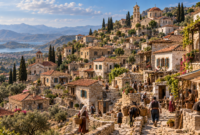
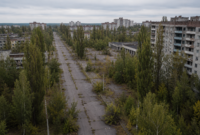
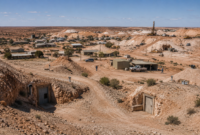
Another HiddenFrontiers article, Why People Live in the World’s Most Isolated Villages, examines remote communities where isolation is created by geography, history, culture and economics. North Sentinel represents a more unusual case because isolation has become not merely a consequence of geography, but a protected condition.
The Roanoke Colony mystery asks what happened when a settlement disappeared from the historical record.
North Sentinel asks a different question:
What happens when a community deliberately refuses to become part of that record?
What Happens Next?
There is no obvious sign that North Sentinel Island will suddenly open to tourists, researchers or ordinary visitors.
The opposite is more likely.
India’s established policy is to protect the islanders while monitoring the surrounding waters. The approach is practical as much as philosophical. A direct landing would create risks that cannot be easily reversed, while there is no compelling public necessity to make contact.
The Sentinelese do not need to become a tourist attraction to prove that they exist.
They do not need to explain themselves to satellite cameras.
And they do not need to give outsiders access simply because the outside world is curious.
The greatest challenge may actually be maintaining that distance as technology makes the planet feel smaller.
Satellite imagery can reveal coastlines.
Long-range aircraft can cross the ocean in hours.
Drones can fly where boats cannot.
Social media can turn an obscure location into a viral destination overnight.
Yet technology does not erase consent.
A place can be visible without being open.
That may be the most important distinction to preserve.
The Island Nobody Needs to Conquer
North Sentinel Island has been described in countless ways: forbidden island, lost world, prehistoric society, dangerous tribe and human time capsule.
Most of those labels reveal more about outsiders than about the Sentinelese.
The island is not outside history. It has its own history, even if outsiders have documented only fragments of it. British colonialism reached its shores. Indian anthropologists attempted contact. Shipwrecks brought unexpected encounters. The 2004 tsunami changed its physical landscape. The deaths of fishermen in 2006 and John Allen Chau in 2018 reminded the wider world that the protected boundary was real.
The Sentinelese have also repeatedly demonstrated that they do not want ordinary outside contact.
That should not be romanticized. Their methods of defense have caused deaths, and their society is not fully understood. But neither should their resistance be reduced to savagery or irrational hostility. A community that has remained largely outside the systems of colonial power has good historical reasons to be cautious about strangers arriving by sea.
In the end, North Sentinel Island remains difficult to understand precisely because the people who live there have retained something increasingly rare: meaningful control over who gets to enter their world.
That control is protected by geography, by law and, when necessary, by the islanders themselves.
There are still many unanswered questions about their history, their language and their society. We may never obtain satisfactory answers to all of them. But perhaps the most responsible conclusion is also the simplest: not every mystery exists to be solved.
Some mysteries survive because people have chosen to keep them private.
SOURCES & REFERENCES
Government of India, Ministry of Home Affairs — “Sentinelese Tribe.” 2019.
Primary source for the tribal-reserve status, five-kilometer coastal protection zone, surveillance policy and government approach to the Sentinelese.
https://www.pib.gov.in/newsite/PrintRelease.aspx?lang=2®=48&relid=188079
Government of India, Ministry of Home Affairs — “Population of Sentinelese in the Andaman and Nicobar Islands.” 2017.
Used to verify that the Sentinelese population has not been established through a conventional direct survey.
https://www.mha.gov.in/MHA1/Par2017/pdfs/par2017-pdfs/rs-27122017/1029.pdf
India Code — The Andaman and Nicobar Islands (Protection of Aboriginal Tribes) Regulation, 1956.
Primary legal document underlying the protected tribal-reserve framework.
https://www.indiacode.nic.in/bitstream/123456789/19311/1/pat_regualtion_1956.pdf
Andaman & Nicobar Administration — “About.”
Used to cross-check current administrative descriptions of the Sentinelese and the island’s approximate area.
https://andamannicobar.gov.in/about
Andaman & Nicobar Tourism — Frequently Asked Questions.
Used to verify current public guidance concerning tribal reserves and photography restrictions.
https://www.andamantourism.gov.in/faq.php
European Space Agency — “Earth from Space: North Sentinel Island.” 2005.
Used for the island’s geography, early recorded European observation, 2004 earthquake effects and post-tsunami satellite observations.
https://www.esa.int/Applications/Observing_the_Earth/Earth_from_Space_North_Sentinel_Island
NASA Earth Observatory — “North Sentinel Island, Andaman Sea.” 2009.
Used for satellite evidence concerning the 2004 earthquake, uplifted reefs and the island’s continuing protected status.
https://science.nasa.gov/earth/earth-observatory/north-sentinel-island-andaman-sea-42136/
National Geographic — “They live in isolation on North Sentinel Island—but the world won’t leave them alone.” 2023.
Used for historical context, the 1880 Portman expedition, disease risk, 1974 encounter and 2006 fishermen incident.
https://www.nationalgeographic.com/culture/article/north-sentinel-islanders-live-in-isolation
National Geographic — “Andaman Islands’ isolated tribes’ independence may be in danger.” 2018.
Used to cross-check 1974, 2006 and 2018 encounters and the medical risks of outside contact.
https://www.nationalgeographic.com/premium/article/andaman-islands-tribes
Smithsonian Magazine — “Inside the Story of John Allen Chau’s Ill-Fated Trip to a Remote Island.” 2018.
Used for the history of contact attempts and the 2018 Chau case.
https://www.smithsonianmag.com/history/inside-story-john-allen-chaus-ill-fated-trip-remote-island-180970971/
Indian Express — “It took some coconuts, and 25 years.” 2018.
Used for T. N. Pandit’s account of Indian contact attempts and the gift-giving expeditions of the late twentieth century.
https://indianexpress.com/article/india/andaman-north-sentinel-island-tribesmen-t-n-pandit-it-took-some-coconuts-and-25-years-5463013/


3 comments