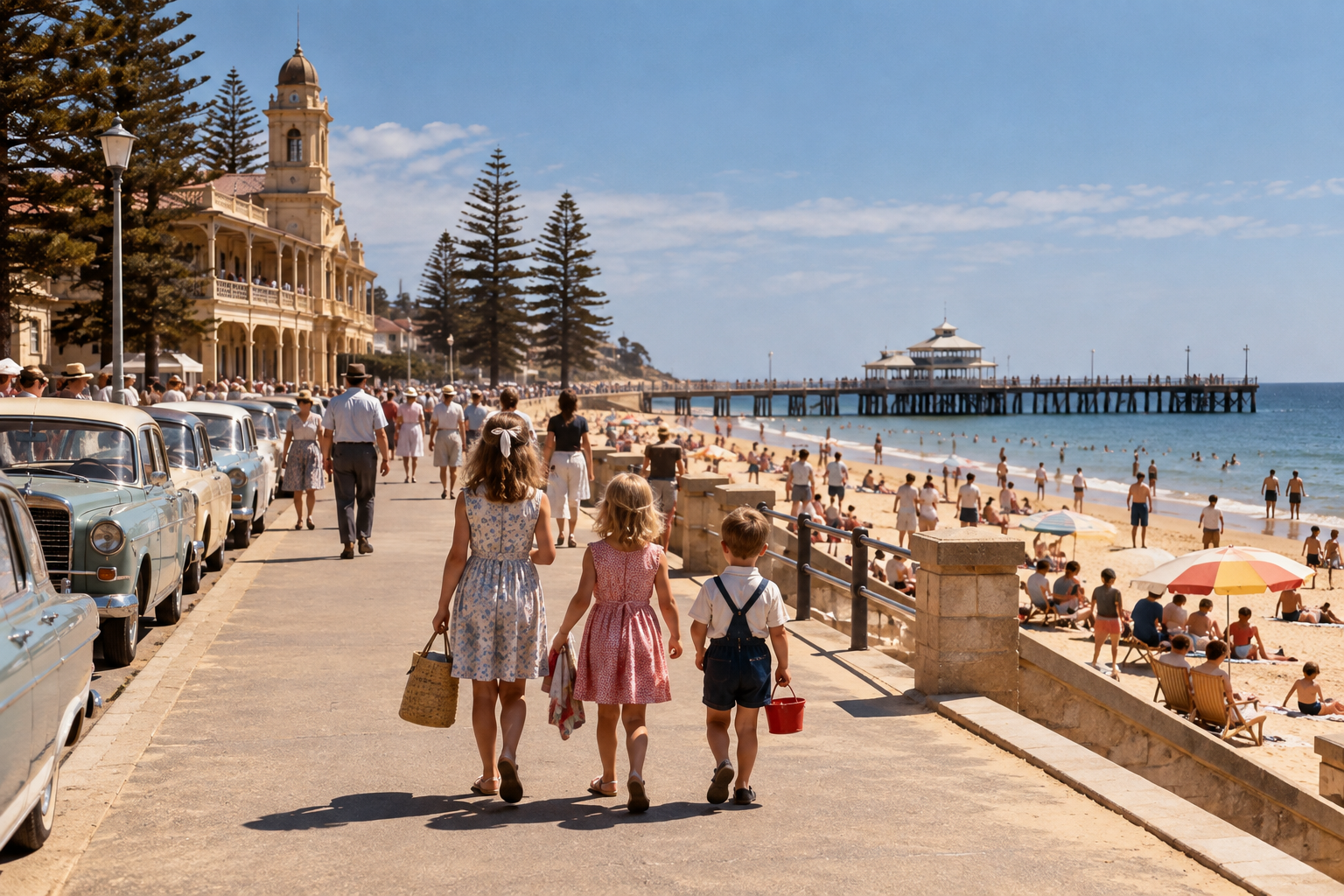
On the morning of January 26, 1966, three siblings left their home in Somerton Park, Adelaide, for a day at Glenelg Beach. Jane Beaumont was nine, Arnna was seven, and Grant was four, and their trip was not considered unusual by the standards of the time. They were expected to return home that afternoon, but none of the three children came back, beginning one of Australia’s most enduring missing-person investigations. ABC News
The initial search rapidly expanded as police learned that the children had been seen at Glenelg and reportedly in the company of an unidentified man. Witness accounts described a tall, thin-faced, tanned man with short blond hair, while another important lead involved Jane purchasing food with a one-pound note even though the children were believed to have left home carrying only a small amount of money. Those observations helped shape the investigation, but they never produced a confirmed identity or established exactly what happened after the children’s last known movements. ABC News
Six decades later, the Beaumont children have still not been found. A major private excavation at the former Castalloy site in North Plympton in 2025 removed large quantities of soil but produced no remains, while South Australia Police maintained that the theory behind the search was not supported by the available evidence. The disappearance therefore remains unresolved, with the central questions still unanswered: who took Jane, Arnna, and Grant, what happened to them after they vanished from Glenelg, and where, if anywhere, their remains might be found. ABC News
AI & Editorial Note
Hidden Frontiers uses AI-assisted tools as part of its content-production workflow, including research organization, drafting assistance, and visual development. The factual content of this article is strictly grounded in verified, cited sources, and disputed or uncertain information is identified where appropriate. Visuals accompanying this article are AI-generated historical reconstructions created for illustrative purposes.
Who Were Jane, Arnna, and Grant Beaumont?
Jane, Arnna, and Grant Beaumont were three siblings from Somerton Park, a suburb of Adelaide, whose ordinary family outing became one of Australia’s most widely known missing-person cases. Jane was nine years old, Arnna was seven, and Grant was four when they disappeared on Australia Day in 1966. Their ages and identities have remained consistent throughout decades of police records, public appeals, anniversary coverage, and renewed searches. ABC News
The children were familiar with Glenelg and had been allowed to spend time there without their parents, something that was not considered extraordinary in the social environment of mid-century Australia. Their disappearance consequently did not begin with an obviously suspicious departure from home, but with a normal family expectation that three children would spend the day at a popular beach and return later. That ordinary beginning is one reason the case had such a lasting effect on Australian parents and public attitudes toward children being unsupervised in public places. ABC News
The Beaumont family’s loss also continued long after the initial investigation. Their mother, Nancy Beaumont, died in 2019 without knowing what had happened to her children, while their father, Grant “Jim” Beaumont, died in 2023. Both parents therefore spent most of their remaining lives without a definitive explanation, and the absence of answers became part of the tragedy itself. ABC News
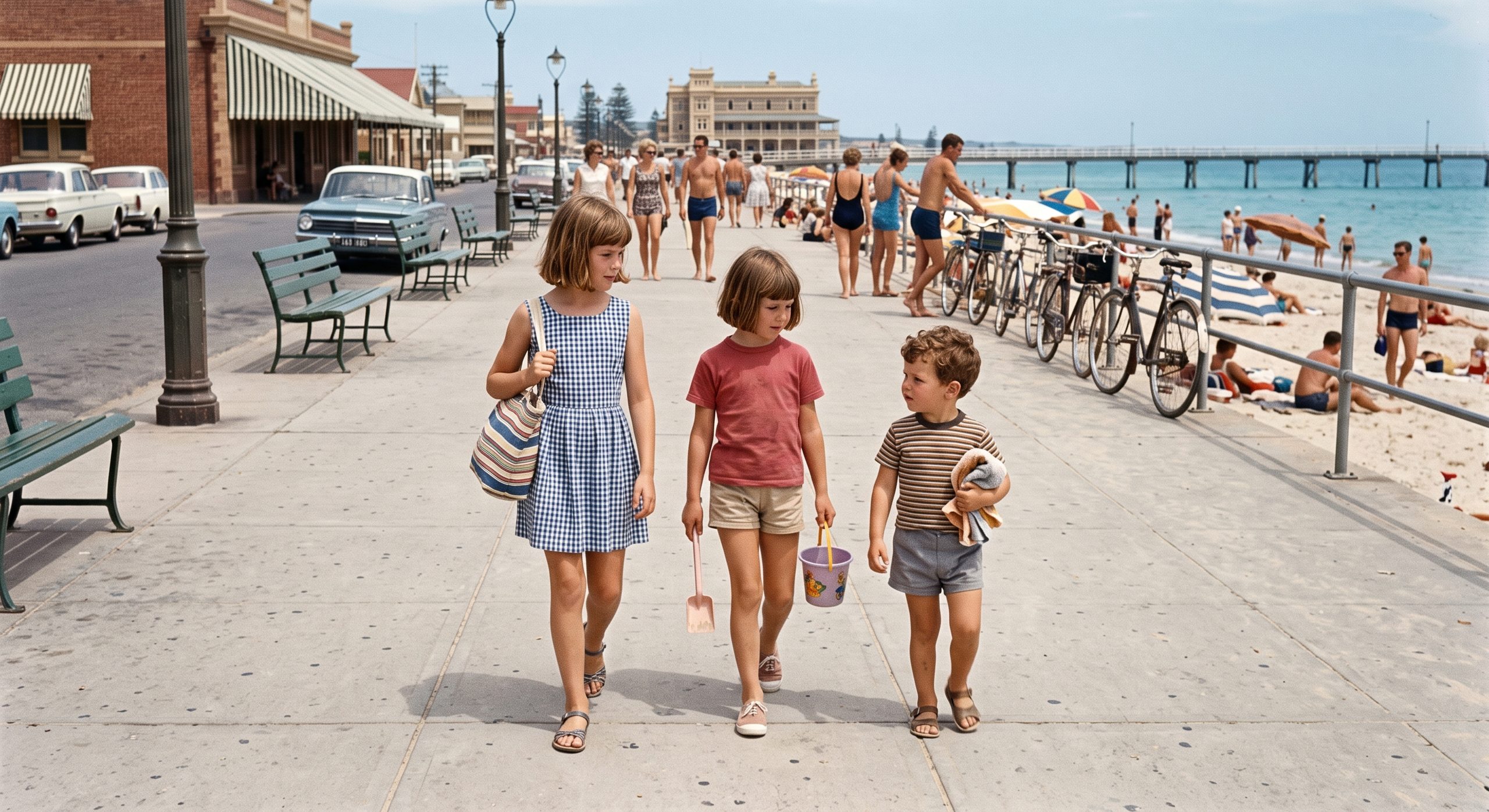
The Morning the Beaumont Children Disappeared
The children left their Somerton Park home on Australia Day and traveled to Glenelg Beach, where they were expected to spend the day. Contemporary police records later made public by South Australia Police documented the response after their disappearance was reported, while subsequent reconstructions have established that the children were last known to be in the Glenelg area. Their disappearance was not immediately understood as a completed crime, so the first response focused heavily on finding children who might simply have become separated from their expected route home. ABC News
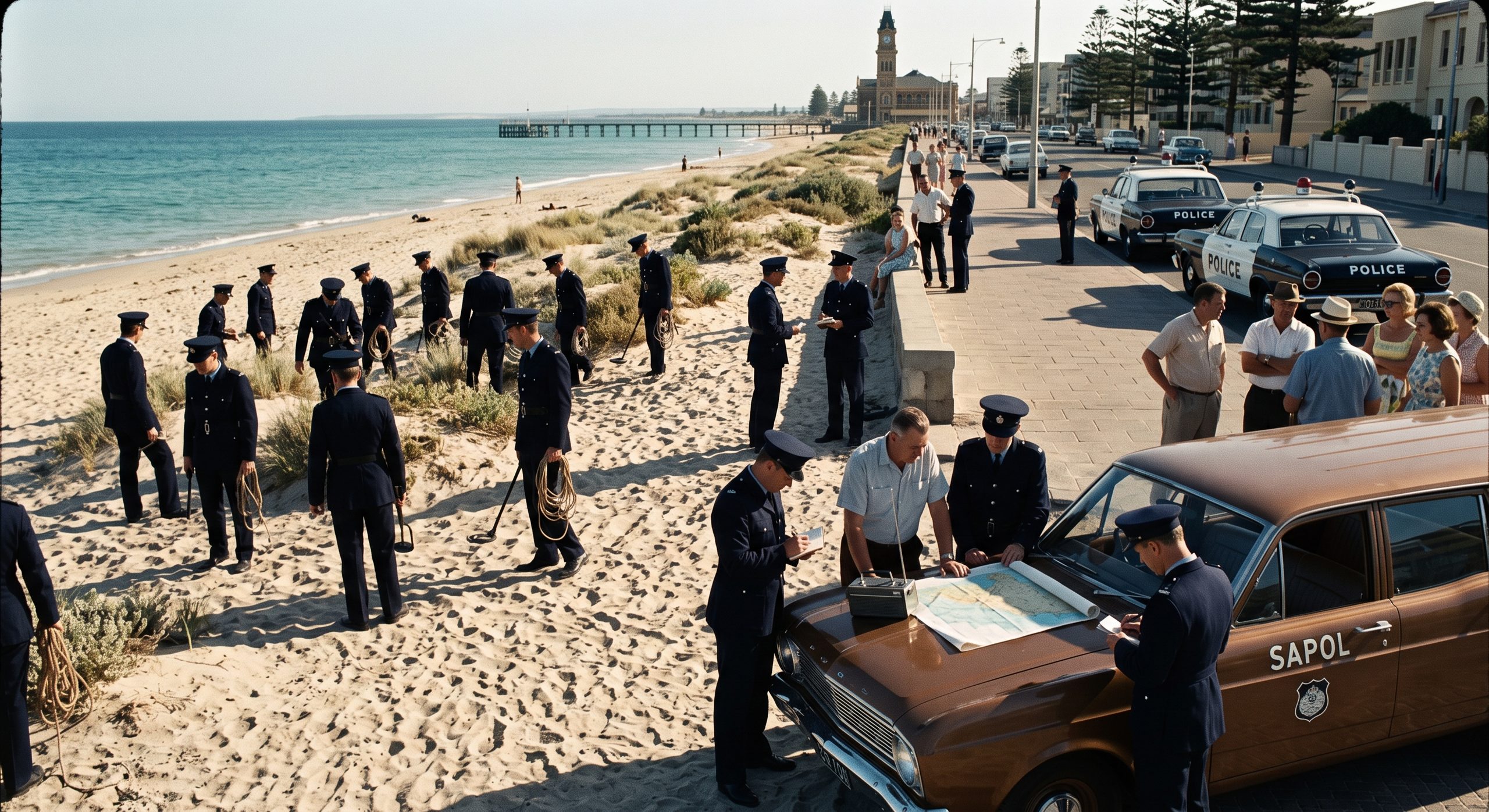
When the children failed to return, the family began searching and contacted police. By the evening, officers were searching Glenelg and surrounding coastal areas, while further searches extended toward Brighton, West Beach, and Henley Beach. Police also checked boats and surrounding areas near Boat Haven, illustrating how quickly the response expanded beyond the immediate beach after it became clear that the siblings could not be located. ABC News
The operational log released decades later provides an unusually detailed picture of those first hours. At 7:20 p.m., the children’s father reported them missing to Glenelg Police, and police began a thorough search of the beach area; later searches expanded along the coast and into nearby locations. The scale of the response reflected growing concern that the children had not simply lost track of time but had disappeared from an area where numerous people had been present. ABC News
The Witnesses and the Unknown Man
One of the most important investigative details emerged from witnesses who reported seeing the children with an unfamiliar adult male. The descriptions varied in wording but produced a recognizable composite profile: a tall, thin-faced, tanned man with short blond hair, described as being around his mid-thirties. Police eventually produced a composite sketch in the hope that someone could identify him. ABC News
The reported sightings were important because they placed the children in the company of an adult shortly before their disappearance. That does not, by itself, establish that the man abducted them, and the identity of the individual has never been conclusively established. The distinction remains important because the unidentified man is one of the strongest recurring elements in public accounts of the case, yet the available evidence has never produced a definitive criminal identification. ABC News
Another unusual detail involved food purchased during the day. Police and the family understood that the children had left with a relatively small amount of money, while a shopkeeper recalled Jane buying pasties and a meat pie using a one-pound note. Investigators considered the possibility that the unidentified man had supplied the money, but the surviving evidence does not establish exactly where it came from or what relationship, if any, existed between the children and the man. ABC News
The Investigation Expands
The disappearance quickly became a national story, and the investigation grew to an extraordinary scale. Police searched beaches, drains, coastal areas, boats, and other locations, while witnesses continued to come forward with possible sightings and information. Over time, the number of proposed suspects and theories expanded dramatically, making the case increasingly difficult to separate into established evidence and speculation. ABC News
The public response also produced false leads and extraordinary claims. One of the most famous episodes occurred in 1966, when Dutch clairvoyant Gerard Croiset traveled to Adelaide and claimed the children had been buried beneath a newly constructed warehouse on a former factory site. Money was raised for an excavation despite police and government reservations, but the search produced no answer. ABC News
The episode demonstrated a recurring problem that would follow the case for decades. Every proposed explanation could attract public attention, but attention was not the same as evidence, and many theories could not withstand investigation. The persistence of unsupported claims also created additional pain for the family, whose hopes could repeatedly be raised and then destroyed by information that failed to lead to the children. ABC News
The Long List of Persons of Interest
Over the decades, numerous people were suggested as possible perpetrators or persons of interest, but the case never produced a defendant who could be charged and prosecuted. South Australian police repeatedly investigated individuals proposed by witnesses, members of the public, journalists, and other sources. By 2016, police said hundreds of people had been put forward over the years and that many had been investigated and excluded. ABC News
The identity of the unidentified man seen with the children remained particularly important because it represented a potential link to their final known movements. Yet the existence of witness descriptions did not produce sufficient evidence to establish who the man was or what he did. Even after decades of inquiries, police continued to emphasize that a new credible piece of information could potentially alter the investigation. ABC News
Among the people later associated with the case was Adelaide businessman Harry Phipps, whose name became particularly prominent in connection with the former Castalloy site at North Plympton. Phipps was described by police as a person of interest, but he was never convicted or charged in connection with the disappearance, and the theory that the children were buried at his former property remained disputed. It is therefore important not to convert a historical person of interest into an established offender when the evidence did not result in a criminal charge. ABC News
The Castalloy Theory
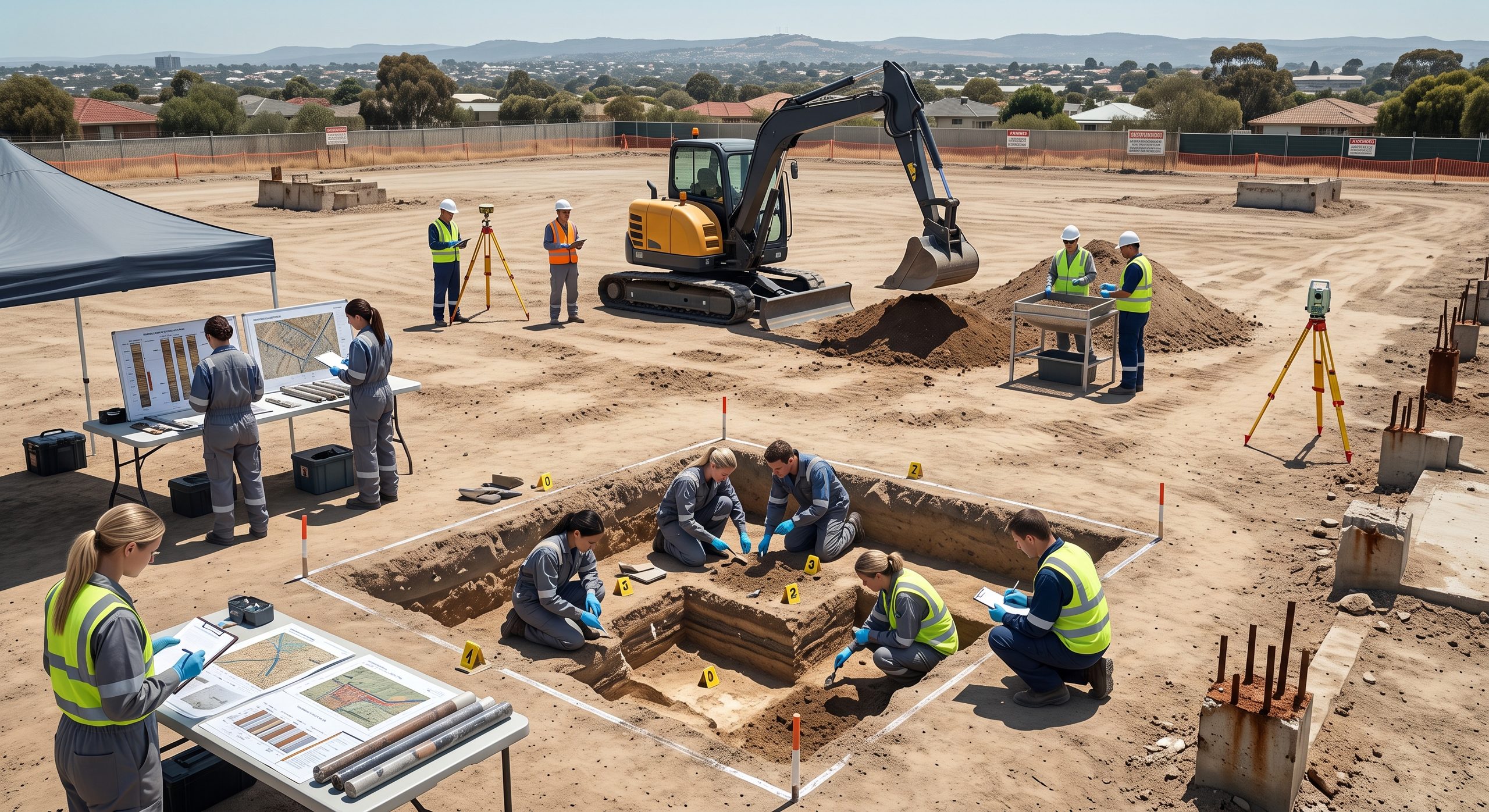
The North Plympton site became significant after information emerged concerning a hole that two brothers said they had been paid to dig for Phipps around the period of the children’s disappearance. Later reporting described the hole as potentially grave-sized, although the men themselves did not initially understand it in that context. The information eventually prompted police to investigate the property, transforming an old industrial site into one of the most closely watched locations in the Beaumont investigation. ABC News
Police searched the property in 2013 after receiving the information, but nothing connected to the children was found. Further geophysical testing later identified an anomaly, and investigators returned to the site in 2018, excavating another area in the hope of finding evidence. The 2018 search also failed to produce human remains linked to the Beaumont children, although non-human bones were recovered. ABC News
The site remained controversial because supporters of the theory argued that changes in the ground level over the decades could have affected earlier searches. Former workers reportedly provided information suggesting that substantial quantities of fill had been added to the property since 1966. Police, however, did not endorse the theory as established fact, and the distinction between “worth investigating” and “supported by evidence” remained crucial. ABC News
The Twenty Twenty-Five Search
In February 2025, another privately organized search began at the former Castalloy property. Independent South Australian MP Frank Pangallo organized the effort with earth-moving specialists and forensic archaeologists, arguing that new information about the site’s changing ground levels justified a more extensive examination. South Australia Police had been informed of the plans but explicitly stated that the theory motivating the excavation was not supported by the evidence and information available to police. ABC News
The excavation lasted approximately a week and involved the removal of a substantial amount of soil from the former industrial site. The search was closely followed because supporters believed it could finally determine whether the children had been buried there, while police maintained a more cautious position about the underlying theory. The excavation ultimately failed to uncover any remains of Jane, Arnna, or Grant. ABC News
The unsuccessful search did not solve the case, but it demonstrated that the disappearance remains capable of generating new investigative activity nearly six decades later. Pangallo said additional information had emerged during the renewed attention and that he intended to pass credible material to Major Crime investigators. Those claims should be distinguished from verified evidence: the 2025 excavation itself did not produce the physical breakthrough the search organizers had hoped for. ABC News
What the Evidence Actually Establishes
The strongest established facts are remarkably simple. Three Beaumont siblings left their home for Glenelg Beach on January 26, 1966, were seen in the Glenelg area, were reportedly seen with an unidentified adult male, and never returned home. Despite extensive searches and decades of investigation, their whereabouts after their final confirmed sightings have never been established. ABC News
The evidence does not establish exactly how the children disappeared or whether they were killed at a particular location. Their remains have never been recovered, and no court has determined the identity of a perpetrator. The case is therefore best described as an unresolved disappearance that is widely treated as an abduction and presumed fatal crime, rather than as a solved murder with an identified offender. ABC News
The distinction matters because the Beaumont story has accumulated an enormous amount of speculation. Suspect theories, psychic claims, alleged sightings, proposed burial locations, and later accusations have repeatedly entered public discussion, but they do not all carry the same evidentiary weight. A responsible account must keep the confirmed timeline separate from theories that investigators have investigated but never established. ABC News
Why the Case Changed Australian Childhood
The Beaumont disappearance had consequences that reached far beyond the investigation itself. Before 1966, it was relatively common in Australia for children to travel short distances or spend time at public places without constant adult supervision, particularly when the destination was familiar. The disappearance of three siblings from a busy beach challenged that assumption and contributed to a growing national awareness that children could face serious risks even in ordinary public settings. ABC News
The change was not simply about one family becoming more cautious. The Beaumont case became embedded in Australian discussions about child safety, parental supervision, stranger danger, and the responsibilities of communities toward children. Contemporary and later observers have described the case as a major cultural turning point, although broad claims that it literally “ended Australia’s innocence” should be understood as shorthand for a more complicated social change rather than as a precise historical measurement. ABC News
The legacy is especially powerful because the children themselves remain absent from the historical record in the most painful sense. There is no grave to visit, no confirmed final location, and no established account of their final hours. Their disappearance instead survives through photographs, police records, witness statements, family memories, investigative files, and the continuing hope that someone who knows what happened will eventually come forward. ABC News
The Beaumont Parents Never Got an Answer
Jim and Nancy Beaumont lived with the uncertainty for the rest of their lives. Their children disappeared when they were young, and neither parent ever received the certainty that comes with recovering a missing child or seeing a criminal conviction. Nancy died in September 2019 at age 92, while Jim died in April 2023 at age 97, meaning the parents ultimately passed away without knowing what had happened to Jane, Arnna, and Grant. ABC News
Their experience is an important part of understanding why the case remains more than a historical mystery. Every new theory, excavation, alleged sighting, or public claim potentially reopened an old wound for the family. The investigation’s long history therefore contains not only questions about evidence and suspects but also the enduring consequences of unresolved loss. ABC News
The death of the parents also changed the emotional landscape surrounding the investigation. The original family members who spent decades waiting for answers are now gone, while the public and investigators remain with the same fundamental questions. The continuing search is consequently not simply about solving an old mystery but about establishing, as far as evidence allows, what happened to three children whose lives ended or disappeared from view on an ordinary summer day. ABC News
The Case Remains Open
The Beaumont children’s disappearance has never reached a conventional legal resolution. No suspect has been convicted, the children have not been found, and the 2025 North Plympton excavation did not produce remains. South Australian reporting in 2026 continued to describe the case as an enduring unsolved mystery, demonstrating that the passage of six decades has not brought an official answer. ABC News
A significant reward has also existed for information capable of resolving the disappearance. South Australian authorities had increased the reward to $1 million, and police continued to encourage people with credible information to come forward. The existence of a reward does not mean investigators have a confirmed theory; rather, it reflects the continuing value placed on information that could establish what happened to the children. ABC News
In 2026, a proposal was made for a permanent memorial at Glenelg Beach to remember Jane, Arnna, and Grant as well as other missing people. The proposal illustrates how the case has moved beyond a police file and into Australian cultural memory, where each anniversary renews public attention. Six decades after the disappearance, the children remain remembered not because their mystery has been solved, but because the absence of an answer has never erased them from the public consciousness. ABC News
Conclusion
The Beaumont children disappearance remains one of Australia’s most painful unsolved cases because the basic facts are both simple and devastating. Jane, Arnna, and Grant Beaumont went to Glenelg Beach on Australia Day in 1966, were seen during the day, and then vanished without leaving behind a confirmed trail to their final destination. Extensive police work, public appeals, proposed suspects, repeated searches, and decades of investigation have failed to establish what happened to them. ABC News
The case has produced many theories, but the strongest responsible account is narrower than the mythology surrounding it. An unidentified man was reportedly seen with the children, but he was never conclusively identified; Harry Phipps became a person of interest, but was never charged; and the former Castalloy site was searched repeatedly, including during a major private excavation in 2025, without recovering the children. These facts leave the central mystery unresolved rather than providing a basis for naming an offender. ABC News
The Beaumont story also demonstrates why missing-person cases should be told with care. Behind the famous composite sketch and decades of speculation were three individual children with names, ages, parents, routines, and a family that spent the rest of its life waiting for answers. Until credible evidence establishes otherwise, Jane, Arnna, and Grant remain missing, and the most important unresolved question is still the simplest one: what happened to them after they disappeared from Glenelg?
FAQ
What happened to the Beaumont children?
Jane, Arnna, and Grant Beaumont disappeared from Glenelg Beach in Adelaide on January 26, 1966, after leaving their Somerton Park home for a day at the beach. Witnesses reported seeing the children in the Glenelg area, including with an unidentified man, but investigators never established what happened after their last known sightings. None of the three children has ever been found, and the case remains unresolved. ABC News
Who were the Beaumont children?
Jane Beaumont was nine years old, Arnna Beaumont was seven, and Grant Beaumont was four when they disappeared. They were siblings from Somerton Park, Adelaide, and had gone to Glenelg Beach on Australia Day in 1966. Their disappearance became one of Australia’s most prominent missing-person cases and had a lasting effect on public attitudes toward children’s safety. ABC News
Who was the man seen with the Beaumont children?
Several witnesses described a tall, thin-faced, tanned man with short blond hair who was reportedly seen with the children around Glenelg. Police produced a composite sketch in an effort to identify him, but the individual was never conclusively identified as the person responsible for the disappearance. The existence of the sightings is part of the established investigative history, but they do not by themselves establish that the man abducted the children. ABC News
Were the Beaumont children ever found?
No. Jane, Arnna, and Grant have never been recovered, and no confirmed remains have been identified as belonging to them. Multiple searches have taken place over the decades, including investigations at the former Castalloy site in North Plympton, but the 2025 excavation also failed to uncover their remains. ABC News
Was Harry Phipps responsible for the Beaumont children’s disappearance?
Harry Phipps was identified by police as a person of interest in the broader investigation, but he was never charged or convicted in connection with the Beaumont children’s disappearance. Claims connecting him to the former Castalloy property led to repeated searches of the site, but those searches did not establish that the children had been buried there. It would therefore be inaccurate to describe Phipps as the children’s killer based on the available evidence. ABC News
What happened during the 2025 Beaumont children search?
A privately organized excavation began at the former Castalloy site in North Plympton in February 2025, based on a theory that the children might have been buried there. The excavation lasted about a week and removed substantial quantities of soil, but no remains of the Beaumont children were found. South Australia Police had monitored the effort while stating that the theory behind the search was not supported by the evidence and information available to police. ABC News
Is the Beaumont children case still unsolved?
Yes. As of 2026, the disappearance remains unresolved, with no confirmed account of what happened to Jane, Arnna, and Grant and no person convicted for their disappearance. A 2026 ABC report described the case as an ongoing mystery and reported a proposal for a permanent memorial at Glenelg Beach, demonstrating that the case remains part of South Australia’s public memory six decades later. ABC News
SOURCES & REFERENCES
- ABC News — Beaumont children: Marking the 50th anniversary of Adelaide’s enduring unsolved mystery
- ABC News — Beaumont children search continues to capture the nation 52 years after their disappearance
- ABC News — The Beaumont children’s disappearance almost 60 years ago ‘fundamentally changed society’
- ABC News — Private search begins at North Plympton site in hopes of finding remains
- ABC News — Seven-day search for Beaumont children concludes at former Castalloy site
- ABC News — Call for memorial to Beaumont children, 60 years after they disappeared