
On November 29, 1970, a man and his two daughters hiking in Isdalen, a mountainous area outside Bergen, Norway, came upon the burned body of an unidentified woman. She carried no ordinary form of identification, and investigators soon discovered that many of the labels and markings on her belongings had been removed, while two suitcases linked to her at Bergen railway station contained wigs, clothing, foreign currency and records of movements made under multiple names. More than five decades later, modern forensic science has reconstructed fragments of her childhood, travel history and biological background, but the woman still has no confirmed identity, and the precise circumstances of her death remain unresolved. University of Bergen
AI & Editorial Note
Hidden Frontiers uses AI-assisted tools as part of its content-production workflow, including research organization, drafting assistance, and visual development. The factual content of this article is strictly grounded in verified, cited sources, and disputed or uncertain information is identified where appropriate. Visuals accompanying this article are AI-generated historical reconstructions created for illustrative purposes.
The Woman Found in Isdalen
The location gave the unidentified woman her enduring name. Isdalen, meaning Ice Valley, lies beneath Mount Ulriken outside Bergen, and the discovery occurred in a rugged landscape that made the scene difficult to interpret and investigate. The woman was badly burned, and the condition of her body initially made identification through ordinary visual recognition impossible. Bergen police opened an investigation and began working backward from the physical evidence, personal effects and witness accounts left behind. University of Bergen
The forensic findings were disturbing but did not provide a simple explanation for what happened. Later scientific accounts of the case report soot in her airways and carbon monoxide in her blood, indicating that she was breathing while the fire was burning, while barbiturates were also detected in her remains. These findings are consistent with the fact that she had been alive during the fire, but they do not by themselves establish whether she intentionally caused her death or whether another person was involved. The University of Bergen has emphasized that the competing explanations surrounding the case should not be confused with established facts. University of Bergen
Investigators also encountered an unusual absence of ordinary personal information. Identifying labels had been removed from clothing and other belongings, and the woman had no confirmed passport or other document that could establish who she was. The removal of identifying marks strongly indicates deliberate concealment, but it does not reveal the reason for that concealment. It could have been connected to criminal activity, personal circumstances, an attempt to avoid detection, or something else entirely, and no publicly established evidence proves one explanation over another. University of Bergen
The Suitcases and the Trail of False Names
A major breakthrough came when police connected the unidentified woman to two suitcases left at Bergen railway station. The connection was made through fingerprints, allowing investigators to examine belongings that had not been found at the death scene. Instead of revealing a straightforward identity, the luggage created a second mystery because it contained clothing and personal items whose identifying marks had also been removed. The contents suggested a woman accustomed to moving between places while maintaining considerable control over the information she left behind. Bergens Tidende
Among the most striking discoveries were wigs, glasses, cosmetics, foreign currency, travel information and a notebook containing combinations of letters and numbers. The notebook initially appeared to contain a secret code, but investigators eventually interpreted its entries primarily as a record of dates and destinations. When those entries were compared with hotel registrations and other records, police were able to reconstruct portions of the woman’s movements through Norway and elsewhere in Europe. The notebook therefore provided a travel history rather than the definitive intelligence message that later retellings sometimes imply. Historiske Mysterier
Hotel records produced another layer of uncertainty. Investigators found that the woman had registered under several names, with different personal details, occupations and dates of birth appearing on different forms. At least eight recorded aliases are commonly associated with the case, and the identities could not be established as genuine. She frequently presented herself as Belgian and used French or German on registration documents, while witnesses described a woman who appeared capable of communicating in several languages. Historiske Mysterier
The aliases are among the strongest reasons the Isdal Woman case became associated with espionage. A person deliberately moving through hotels under changing identities, altering her appearance and removing labels from her possessions can easily be interpreted through the lens of Cold War intelligence operations. But the evidence establishes concealment, not espionage, and the University of Bergen has specifically warned against allowing the spy narrative to become a substitute for evidence. No publicly established intelligence record has identified her as an operative for a particular government or agency. University of Bergen

What Happened Before Her Death?
The woman’s final known movements provide one of the most important gaps in the investigation. Hotel records indicate that she checked out of Room 407 at the Hotel Hordaheimen in Bergen on November 23, 1970, paying in cash and arranging transportation. Her body was discovered six days later in Isdalen, leaving investigators without a confirmed account of what happened during the intervening period. That missing interval has remained central to every later attempt to reconstruct her final days. Historiske Mysterier
Witness accounts offered fragments but not a complete timeline. Hotel employees remembered a woman who kept largely to herself, while other witnesses described her speaking German, English or another language that they could not confidently identify. Some accounts placed her in contact with other people, but none produced a verified acquaintance who could provide her real name or explain her movements. The evidence therefore creates a detailed outline of her mobility while leaving the most important relationships in her life unknown. The Guardian
The case attracted international attention partly because of the woman’s apparent ability to move between countries without leaving behind a conventional identity. She had traveled through several Norwegian cities and had connections to European destinations, while her registrations repeatedly supplied information that could not be verified. The combination of travel, aliases, wigs, foreign currency and missing labels created an unusually strong impression of deliberate secrecy. What remains uncertain is whether that secrecy was connected to professional activity, personal circumstances, illegal activity, or simply a private life the woman did not want authorities to reconstruct. Historiske Mysterier
The Police Investigation and the Suicide Finding
Bergen police investigated the death extensively and circulated descriptions of the unidentified woman in an attempt to find someone who recognized her. Her physical description, dental characteristics and other information were distributed beyond Norway, including through international police channels. Despite those efforts, no confirmed family member or missing-person report established her identity. The investigation ultimately failed to answer the fundamental question of who she was. Bergens Tidende
Police eventually treated suicide as the most likely explanation for the death. That conclusion was based on the forensic circumstances known at the time, including the presence of barbiturates and the evidence that she had been alive while burning, but the decision did not resolve the uncertainties surrounding her movements or identity. The University of Bergen’s later analysis stresses that the police conclusion, homicide theories and espionage theories occupy different evidentiary categories. The case is therefore better described as an unexplained death with an official historical suicide finding than as a proven murder. University of Bergen
The distinction matters because the Isdal Woman has frequently been described in popular culture as a murdered spy. That formulation goes beyond what the available evidence establishes. There is no publicly confirmed perpetrator, no court proceeding establishing homicide, and no intelligence record publicly demonstrating that she worked for a particular agency. The unresolved nature of the case is precisely what makes disciplined separation between evidence and theory so important. University of Bergen
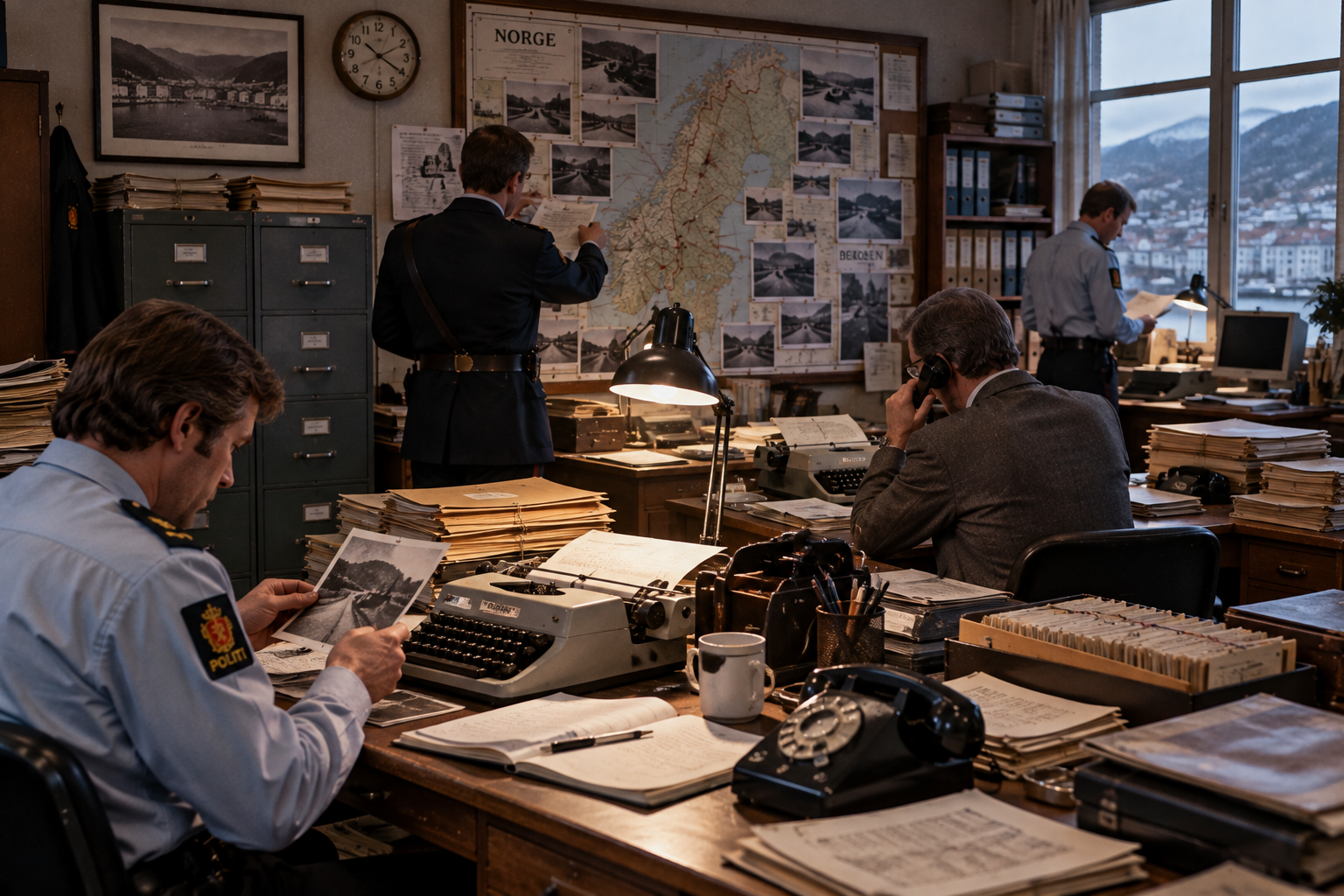
The Cold War Spy Theory
The espionage theory did not emerge from a single piece of evidence. It grew from the cumulative impression created by the woman’s multiple identities, extensive travel, changing appearance and presence in Norway during the Cold War. Norway was strategically important during that period, and Bergen itself was a significant military and maritime location, making the broader historical context fertile ground for speculation. Yet historical context cannot establish an individual’s occupation or affiliation without independent evidence connecting that person to an intelligence organization. University of Bergen
The theory became particularly compelling in later retellings because some of the woman’s movements were interpreted as potentially coinciding with sensitive military activity. Those claims have helped sustain the idea that she may have been involved in intelligence work, but the distinction between coincidence and evidence remains critical. Researchers and journalists have proposed different explanations for the same travel patterns, and the University of Bergen has criticized the tendency to build a complete spy narrative from ambiguous clues. No publicly documented intelligence agency has confirmed that the woman was one of its agents. University of Bergen
The spy theory is therefore best treated as a historical hypothesis rather than a solution. It is possible to acknowledge why the theory arose without presenting it as established fact. The same evidence that appears compatible with intelligence tradecraft could also be interpreted as evidence of someone deliberately concealing her private life, avoiding authorities or participating in an undocumented form of criminal activity. Without a reliable identity or independent documentary evidence, the reason for her secrecy remains unknown. University of Bergen
Modern DNA Evidence
Decades after the original investigation, material preserved from the woman provided investigators with opportunities that did not exist in 1970. In 2016, old biological samples were located in archives at Haukeland University Hospital, and Norwegian forensic investigators succeeded in obtaining a full DNA profile. Contemporary reporting emphasized that the profile was not itself an identification, but rather a new biological reference that could potentially be compared with international databases or relatives. Bergens Tidende
The DNA work significantly improved the scientific record without solving the mystery. Reporting associated with the later investigation described the woman as having European ancestry, while subsequent research focused on narrowing her geographical background through other biological evidence. A DNA profile can distinguish one individual from another and can potentially support familial identification, but without a matching reference or relative it cannot supply a name by itself. As of 2026, no publicly confirmed DNA match has identified the Isdal Woman. Bergens Tidende
This is one of the most important lessons of the case’s modern investigation. The discovery of a usable DNA profile sounded like the kind of breakthrough that should end a decades-old mystery, but forensic identification depends on comparison. A biological profile becomes decisive only when investigators can connect it to another verified person, family line or authoritative record. In the Isdal Woman case, the profile remains evidence belonging to an unidentified individual rather than a biological name tag. Bergens Tidende

What Her Teeth Revealed
The woman’s preserved teeth provided another extraordinary source of information. Modern researchers were able to apply isotope and other forensic techniques to material that had survived for decades, allowing them to investigate aspects of her early life that could not be recovered from her false documents. Stable isotopes in tooth enamel can preserve chemical signatures associated with the environments in which a person lived while the teeth were developing. This approach does not identify an individual directly, but it can narrow the geographical possibilities. University of Canberra Research Portal
The isotope research associated with the modern investigation suggested that the woman spent her early years in southeastern Germany, with later movement toward western Europe, potentially including the France-Germany border region. The findings were significant because they offered a biological clue independent of the identities written on her hotel forms. They did not prove that she was German, French or Belgian, however, and they should not be treated as a precise birthplace certificate. Instead, they provided a probabilistic geographical history that helped researchers understand where her childhood may have occurred. Norwegian American
A separate peer-reviewed forensic study published in Biomolecules revisited the remains using radiocarbon and aspartic-acid racemization techniques. The researchers classified the Isdal Woman as Case 16 and estimated an average birth date of approximately 1932.4 from the teeth examined, while explicitly noting methodological limitations, including the possible effect of fire exposure on the analysis. The study concluded that the case remained unsolved, demonstrating that even sophisticated modern forensic science could narrow the woman’s biological profile without resolving her identity. PMC
The age findings also complicated the assumptions made during the original investigation. Contemporary descriptions generally placed the woman at a younger apparent age, while modern dental analysis suggested she may have been born substantially earlier than some of the dates she had provided under her aliases. That discrepancy reinforces the conclusion that the biographical information she supplied to hotels cannot safely be treated as genuine. It also illustrates how modern science can recover aspects of a person’s life even when documentary records were deliberately misleading. PMC
The Mystery of Her Identity
The most remarkable feature of the Isdal Woman case is that investigators recovered so much information about her without discovering her name. They reconstructed hotel stays, linked her to luggage, matched fingerprints, examined handwriting, documented physical characteristics and eventually developed a full DNA profile. Modern science has also narrowed her probable childhood geography and provided an independent estimate of her birth period. Yet none of those discoveries has produced the one piece of information that would transform the investigation: a confirmed identity. Bergens Tidende
Her aliases remain useful because they show investigators how she presented herself, but they cannot safely be treated as clues to her real name. The registrations varied in dates, addresses and biographical details, while several identities were clearly unverifiable. What they establish most strongly is that the woman was deliberately maintaining an identity that authorities could not easily trace. What they do not establish is who she was hiding from, why she needed the aliases, or whether anyone else helped her maintain them. University of Bergen
The notebook presents a similar problem. Once investigators understood that its entries corresponded to dates and destinations, it became an important travel record, but it did not reveal a definitive motive. Describing it as an intelligence code suggests more than the evidence proves, while dismissing it as meaningless would ignore its value in reconstructing her movements. The most defensible description is that the notebook preserved a coded or abbreviated record of travel that investigators were able to interpret as an itinerary. Historiske Mysterier
Why the Case Remains Unsolved
The Isdal Woman mystery persists because several separate questions remain intertwined. Her identity is unknown, the reason for her multiple aliases is unknown, her activities during the final days of her life are only partly documented, and the exact sequence that produced her death cannot be reconstructed with certainty. Each unanswered question has encouraged theories that attempt to solve all of them simultaneously. The problem is that none of those theories has been supported strongly enough to become an established explanation. University of Bergen
The strongest evidence is considerably more modest than the mythology surrounding the case. A woman died in Isdalen in 1970, she had concealed identifying information, she had traveled under multiple names, she left behind luggage containing records of extensive movement, and later scientific analysis revealed clues about her biological background. The police treated her death as suicide, but modern researchers have not established an authoritative explanation that answers every question surrounding the death. Her identity remains publicly unresolved. Historiske Mysterier
The case also demonstrates why unidentified-person investigations can remain difficult even when evidence survives. DNA can establish a profile without producing a match, isotope analysis can indicate a region without identifying a town, and travel records can reconstruct movements without revealing a motive. Every new discovery may reduce uncertainty while leaving the central mystery intact. In the Isdal Woman case, modern science has made the unknown woman more scientifically visible without making her personally identifiable. Bergens Tidende
Remembering the Isdal Woman
More than fifty years after her death, the woman remains known primarily by the place where she was found rather than by a name she chose for herself. That is an unusually stark form of historical anonymity. The investigation recovered pieces of her life, but the surviving record contains no verified family relationship, confirmed home address or definitive occupation that allows the public to reconstruct her as an ordinary person. The result is a case in which the mystery can easily overshadow the individual who actually lived that life.
The most responsible way to approach the Isdal Woman is therefore to resist the temptation to turn uncertainty into certainty. She may have been involved in intelligence activity, but that has not been established; she may have been the victim of another person, but homicide has not been proven; she may have intentionally ended her own life, which remains consistent with the historical police finding, but the complete sequence of events is still uncertain. What can be stated with confidence is that an unidentified woman died in Isdalen in 1970 and that decades of investigation have failed to restore her name. University of Bergen
Conclusion
The Isdal Woman mystery has survived because it combines a documented death with an almost total absence of personal identity. Police knew where the woman died, investigators recovered her luggage and fingerprints, hotel records revealed a pattern of aliases, and forensic scientists preserved biological material that could eventually be studied using techniques unavailable in 1970. Yet the accumulated evidence has never crossed the final threshold from description to identification. Bergens Tidende
Modern science has nevertheless changed what can be said about her. DNA produced a usable biological profile, dental and isotope research provided clues about her ancestry and childhood geography, and peer-reviewed forensic analysis estimated a birth period around the early 1930s while acknowledging important limitations. These findings have narrowed the field of possibilities, but they have not produced a verified name or demonstrated that she was a spy, a murder victim or anything else beyond what the evidence can support. Norwegian American
The central mystery therefore remains remarkably simple. Who was the woman who traveled through Europe under false identities, arrived in Bergen in 1970 and died in Isdalen? Until a reliable identification or new evidence explains the final days of her life, the Isdal Woman will remain not a solved espionage story or a confirmed murder, but one of Norway’s most enduring unexplained deaths. Her real name is still missing from the record, even though much of the evidence she left behind has survived. University of Bergen
FAQ
Who was the Isdal Woman? The Isdal Woman is the name given to an unidentified woman whose burned body was discovered in Isdalen near Bergen, Norway, on November 29, 1970. Investigators determined that she had traveled under multiple identities and had removed identifying information from many of her belongings, but no genuine name was established. Modern forensic research has provided clues about her probable age and geographical background, yet she remains publicly unidentified as of 2026. University of Bergen
How did the Isdal Woman die? Forensic findings showed that she had barbiturates in her system and that she had been breathing while the fire burned, based on soot in her airways and carbon monoxide findings. Bergen police ultimately treated suicide as the most likely explanation for her death. However, those findings do not independently prove every detail of the sequence, and later homicide theories have never produced a publicly established perpetrator or definitive alternative explanation. University of Bergen
Why did the Isdal Woman use so many names? Hotel records showed that the woman registered under multiple identities, with changing personal details and addresses that investigators could not verify. Her clothing and other possessions also had identifying labels or marks removed, demonstrating that concealing her identity was a deliberate part of her behavior. The evidence does not establish why she did this, so espionage is only one hypothesis among several possible explanations. Historiske Mysterier
Was the Isdal Woman a spy? The spy theory developed because of her aliases, international travel, wigs, changing appearance and the Cold War setting in which she died. Those circumstances can appear consistent with clandestine activity, but they do not establish membership in an intelligence agency, and no publicly documented intelligence source has confirmed that she was an operative. The University of Bergen has specifically highlighted the danger of turning the spy narrative into a conclusion when the underlying evidence remains incomplete. University of Bergen
What did the Isdal Woman’s DNA reveal? Norwegian investigators obtained a full DNA profile from preserved biological material in 2016, giving researchers a valuable reference for future comparisons. The profile did not itself identify the woman, and subsequent reporting associated her ancestry with Europe rather than producing a confirmed family match. As of 2026, there is no publicly verified DNA identification that provides her real name. Bergens Tidende
Where was the Isdal Woman probably from? Modern isotope research on her teeth has pointed toward southeastern Germany as an important part of her early-life geographical history, with evidence suggesting movement toward western Europe during childhood. Other forensic work estimated her birth around 1932, although the researchers emphasized limitations associated with the analysis and the effects of fire exposure. These findings narrow the possible background of the woman but do not establish a precise birthplace or nationality. Norwegian American
What was found in the Isdal Woman’s suitcases? Police recovered two suitcases connected to her at Bergen railway station, containing items including clothing, wigs, glasses, cosmetics, foreign currency and travel information. Identifying labels and marks had been removed from many of the possessions, while a notebook contained abbreviated entries that investigators interpreted as dates and destinations. The luggage helped reconstruct her movements but did not reveal her genuine identity. Bergens Tidende
Has the Isdal Woman been identified? No publicly confirmed identification has been established as of 2026. DNA profiling, dental analysis, isotope research and modern forensic age estimation have produced substantially more information about her than investigators had in 1970, but none has yielded a verified name. The case therefore remains an unresolved unidentified-person investigation and unexplained death rather than a solved espionage or homicide case. Hearst Networks EMEA
SOURCES & REFERENCES
- University of Bergen — “Kronikk om isdalsaken” — Academic discussion of the evidence, competing theories and limitations of the spy narrative. University of Bergen
- Bergens Tidende — “Har Isdalskvinnens DNA-profil” — Contemporary reporting on the 2016 recovery of a full DNA profile from preserved material. Bergens Tidende
- Biomolecules / PMC — “Analysis of 14C, 13C and Aspartic Acid Racemization in Teeth and Bones” — Peer-reviewed forensic research including the Isdal Woman as Case 16 and its estimated birth period. PMC
- University of Canberra Research Portal — Jurian Hoogewerff — Academic profile documenting Hoogewerff’s forensic geochemical expertise and involvement in the Isdal Woman research. University of Canberra Research Portal
- NRK — archival material concerning the Isdal Woman investigation — Norwegian public broadcaster material documenting the 1970 mystery and later investigative project. NRK Info
- BBC World Service — “The Isdal Woman’s DNA clues” — BBC World Service material from Death in Ice Valley concerning the investigation and modern DNA evidence.