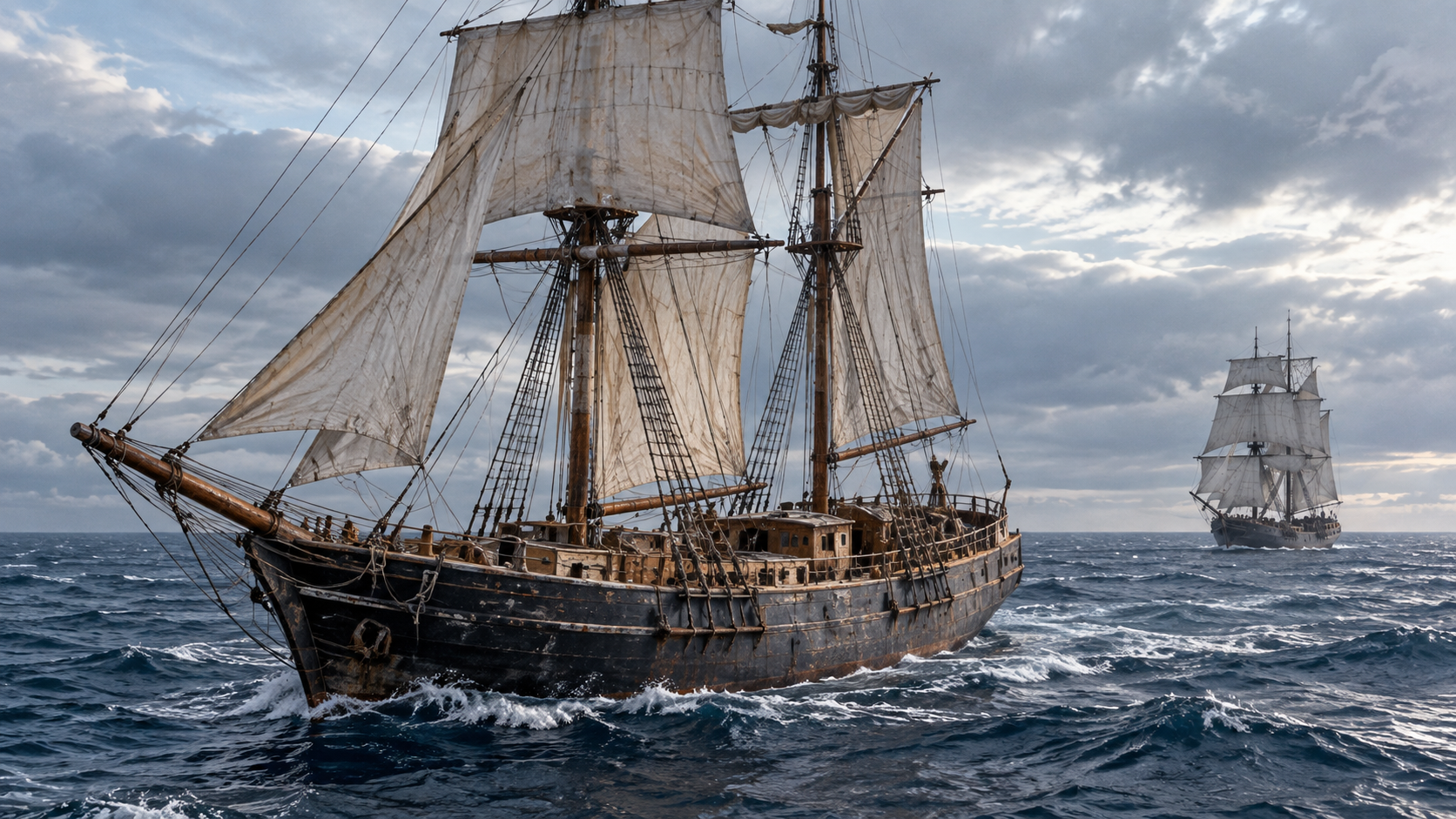
On December 4, 1872, the crew of the British brigantine Dei Gratia sighted another sailing vessel behaving strangely in the Atlantic, about 400 miles east of the Azores. When they drew close, they recognized the ship as the Mary Celeste, an American brigantine that had left New York for Genoa less than a month earlier. The vessel was still afloat and sufficiently seaworthy to be taken under control, but nobody answered the signals, and not a single person remained aboard. The Mary Celeste mystery had begun with an unsettling contradiction: a ship carrying food, water and a valuable cargo was still sailing, yet the ten people who had been aboard had vanished. Smithsonian Magazine
AI & Editorial Note
Hidden Frontiers uses AI-assisted tools as part of its content-production workflow, including research organization, drafting assistance, and visual development. The factual content of this article is strictly grounded in verified, cited sources, and disputed or uncertain information is identified where appropriate. Visuals accompanying this article are AI-generated historical reconstructions created for illustrative purposes.
The Voyage That Became a Mystery
The ship that became famous as the Mary Celeste was built in Nova Scotia in 1861 under the name Amazon. After several early accidents and changes in ownership, the vessel was repaired and eventually renamed Mary Celeste. By the autumn of 1872, she was an American-owned merchant brigantine engaged in the Atlantic trade, and Captain Benjamin Spooner Briggs had taken command of what would become her final voyage. Smithsonian Magazine
Briggs sailed from New York on November 7, 1872, with a crew of seven men, his wife Sarah, and their two-year-old daughter Sophia. The destination was Genoa, Italy, and the cargo consisted of 1,701 barrels of industrial alcohol intended for the European wine trade. The voyage was not immediately unusual, although the ship encountered rough weather on its way toward the Azores, and the final surviving navigation records would later become crucial to attempts to reconstruct what happened. Smithsonian Magazine
The Dei Gratia, commanded by Captain David Morehouse, had left New York several days after the Mary Celeste and was traveling on a broadly similar Atlantic route. The two ships were therefore not strangers to the same stretch of ocean, although there is no evidence that Morehouse was deliberately searching for Briggs’s vessel. When the Dei Gratia encountered the Mary Celeste, Morehouse’s crew initially had no way of knowing that the empty ship would become one of the most famous maritime mysteries in history. Smithsonian Magazine
What the Rescue Crew Found
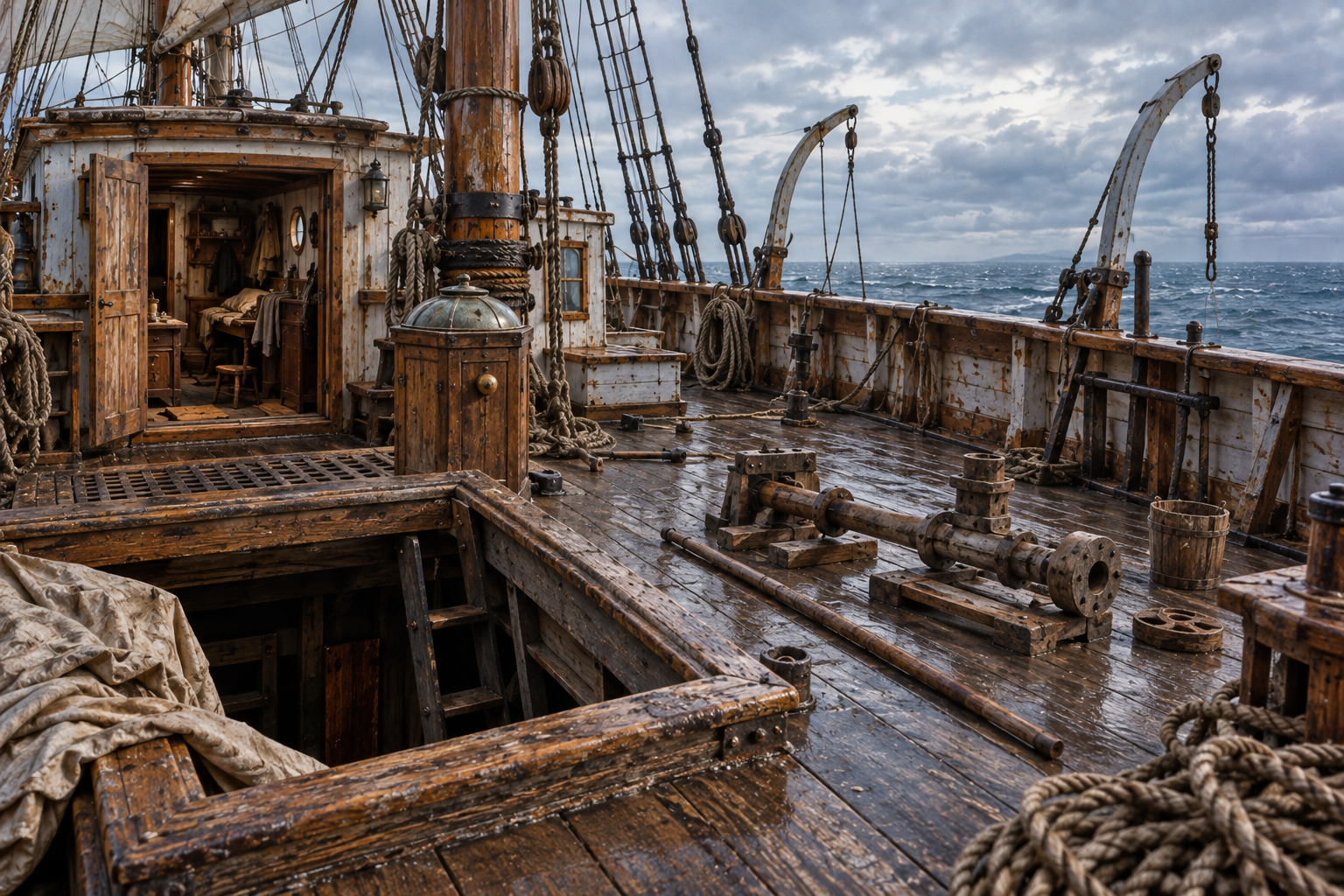
The boarding party from the Dei Gratia discovered a ship that was disordered but not obviously destroyed. The sails were partly set, some rigging was damaged or hanging loose, and water had entered parts of the vessel, but there was no scene resembling a catastrophic sinking or a violent struggle. One of the ship’s two pumps had been disassembled, and the single lifeboat was missing, an especially important clue because it suggested that the people aboard had left the Mary Celeste voluntarily or under perceived emergency conditions. Smithsonian Magazine
There was water in the hold, estimated at about three and a half feet, but the boarding crew did not regard the vessel as immediately sinking. The cargo of 1,701 barrels of industrial alcohol was largely intact, and substantial food and water supplies remained aboard. The condition of the provisions is one of the reasons the case became so puzzling: the ship had not obviously been stripped by pirates, and there was no straightforward indication that its occupants had prepared for a long absence. Smithsonian Magazine
The ship’s papers were incomplete, and some navigational instruments were missing, while the log and other records provided only a partial account of the voyage. The final surviving navigation entry was dated November 25, when the vessel was near Santa Maria Island in the Azores. Ten days later, the Dei Gratia found the Mary Celeste hundreds of miles farther east, creating a crucial gap in the historical record. Smithsonian Magazine
What investigators did not find was equally important. There was no confirmed evidence of a massacre, no established sign that pirates had boarded the vessel, and no surviving witness capable of explaining why the crew had entered the missing lifeboat. The physical evidence pointed toward an evacuation, but it could not explain what convinced an experienced captain to leave a vessel that later proved capable of continuing under sail. Smithsonian Magazine

The Ten People Who Disappeared
The missing group consisted of ten people: Captain Briggs, his wife Sarah, their two-year-old daughter Sophia, and seven crewmen. Their disappearance was especially unsettling because the ship itself survived. The Mary Celeste was not discovered smashed against rocks, burned to the waterline or sinking beneath heavy seas; it continued to exist as a functioning vessel after its human occupants had gone. Smithsonian Magazine
The absence of survivors also created a permanent evidentiary problem. There was nobody who could describe the final conversation aboard the ship, explain what the captain believed, or say whether the occupants entered the lifeboat intending to remain near the Mary Celeste. Every later explanation therefore has to be reconstructed from the ship’s condition, surviving records, weather information and the testimony of people who encountered the vessel after its abandonment. Smithsonian Magazine
This is why the mystery has proved unusually resistant to definitive explanation. A conventional historical investigation often becomes clearer when witnesses can be interviewed or physical evidence can be compared with firsthand accounts. In the Mary Celeste case, the people best positioned to explain the disappearance disappeared themselves, leaving later investigators with evidence but no final testimony.
The Gibraltar Investigation
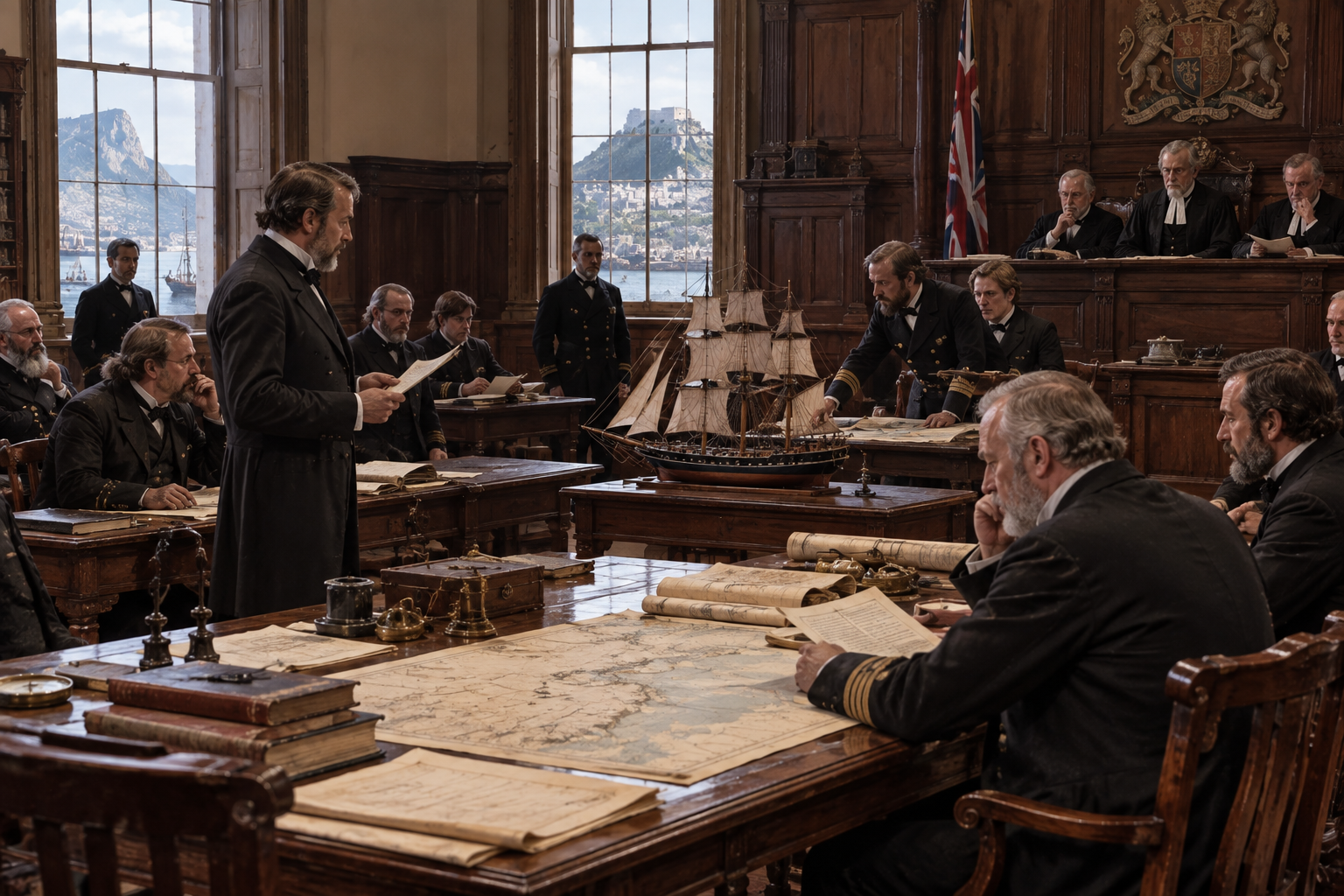
The Dei Gratia crew did not simply take the Mary Celeste and sail away without official scrutiny. The vessel was brought to Gibraltar, where a British Vice-Admiralty Court examined the circumstances surrounding the abandonment and considered the salvors’ claim. The inquiry was formally concerned with salvage, but Frederick Solly-Flood, the attorney general involved in the case, also investigated the possibility that something criminal had happened aboard the ship. Smithsonian Magazine
The existence of surviving archival material makes this stage particularly important. The Phillips Library at the Peabody Essex Museum holds material from the Benjamin Spooner Briggs Papers relating to the Mary Celeste, including testimony connected with the Gibraltar Vice-Admiralty Court, a letter with attached testimony from 1873, and evidence concerning the examination of the vessel. These records demonstrate that the mystery was investigated contemporaneously rather than being invented decades later by storytellers. Atlas Systems
The inquiry did not establish a convincing case of foul play. The salvors ultimately received a salvage award, but it was substantially less than the value of the ship and cargo, reflecting the unusual circumstances surrounding the case and the authorities’ continuing uncertainty. A reference account records the final award as £1,700 on March 25, 1873. Smithsonian Magazine
That distinction is important. The court did not solve the mystery by proving what happened to Briggs and the others, nor did it produce evidence establishing a single alternative explanation. Instead, the investigation failed to uncover sufficient evidence to prove foul play, leaving the central question unresolved. Smithsonian Magazine
Why the Alcohol Cargo Became Part of the Story
The cargo of industrial alcohol quickly attracted suspicion because 1,701 barrels were aboard and nine were later found to be empty. That fact helped generate theories that alcohol vapors might have created an explosive danger or that the crew had consumed some of the cargo. Yet the physical evidence does not support the more dramatic versions of those stories. The empty barrels were made from red oak, which was more porous than the white oak used for the majority of the cargo barrels, providing a mundane possible explanation for their condition. Smithsonian Magazine
There was also no reliable evidence that the crew had been drinking the industrial alcohol in a way that caused a mutiny or mass intoxication. The cargo was commercial material rather than a shipboard supply intended for consumption, and the condition of the vessel did not reveal evidence of a drunken struggle. The alcohol therefore remains relevant to the case because of its physical properties and possible leakage, not because there is evidence that the crew drank its contents. Smithsonian Magazine
The distinction illustrates a recurring problem with the Mary Celeste legend. A real detail can be transformed into a much larger story once repeated through newspapers, fiction and later retellings. The existence of alcohol aboard the ship is documented; the claim that alcohol intoxication caused the disappearance is speculation.
The Missing Lifeboat May Be the Most Important Clue
Among all the objects missing from the Mary Celeste, the lifeboat is particularly significant because it provides a plausible physical connection between the ship and the people who vanished. If Briggs and the others had been murdered or forcibly removed by strangers, investigators would need to explain how the attackers left without obvious evidence of violence. If the occupants voluntarily abandoned ship, however, the missing boat becomes exactly what would be expected. Smithsonian Magazine
The problem is that abandoning a seaworthy merchant ship in the open Atlantic was an extraordinarily dangerous decision. A captain would normally regard the vessel itself as the safest place to remain unless he believed that the ship was about to become more dangerous than the open sea. The question is therefore not simply why the crew disappeared, but what circumstances could have made Briggs believe that leaving the Mary Celeste was the safer choice.
The surviving evidence cannot answer that question directly. It can only constrain the possibilities. The missing lifeboat, the disassembled pump, the water in the hold and the weather conditions together make an emergency evacuation more plausible than many sensational alternatives, but they do not prove exactly what happened.
A Modern Theory Involving the Pumps
One of the more carefully developed modern explanations emerged from a reconstruction of the vessel’s route and the physical circumstances surrounding the abandonment. Smithsonian’s account of Anne MacGregor’s investigation describes an analysis using historical ocean and weather data to determine whether the unmanned Mary Celeste could have drifted from the Azores toward the location where the Dei Gratia discovered it. The analysis concluded that the ship could have traveled that distance without anyone aboard actively steering it. Smithsonian Magazine
That finding matters because it removes one apparent obstacle from the story. The Mary Celeste did not necessarily need a crew to explain its position when it was discovered. If the vessel had been abandoned near the Azores, prevailing winds and currents could have carried it eastward until another ship encountered it. The empty ship therefore does not require a supernatural explanation or an unknown crew secretly returning aboard. Smithsonian Magazine
The same investigation proposed that problems with the ship’s pumping system may have contributed to Briggs’s decision. The Mary Celeste had previously carried coal and had undergone substantial refitting, raising the possibility that coal dust or construction debris had interfered with the pumps. If the captain could not reliably measure how much water was entering the hull, the apparent danger could have seemed greater than it actually was. Smithsonian Magazine
That scenario also fits several otherwise puzzling details. The ship had encountered rough weather, one pump had been disassembled, a sounding device was found on deck, and the captain had recently navigated through the Azores area under difficult conditions. An experienced captain could conceivably have ordered everyone into the lifeboat temporarily, expecting to remain close enough to return once the ship’s condition was understood. Smithsonian Magazine
But this remains a reconstruction, not a solved case. There is no surviving statement from Briggs saying that he believed the ship was sinking, and there is no surviving witness to explain what happened to the lifeboat afterward. The pump theory offers a coherent sequence of events, but it cannot establish the final fate of the ten people.
The Navigation Problem
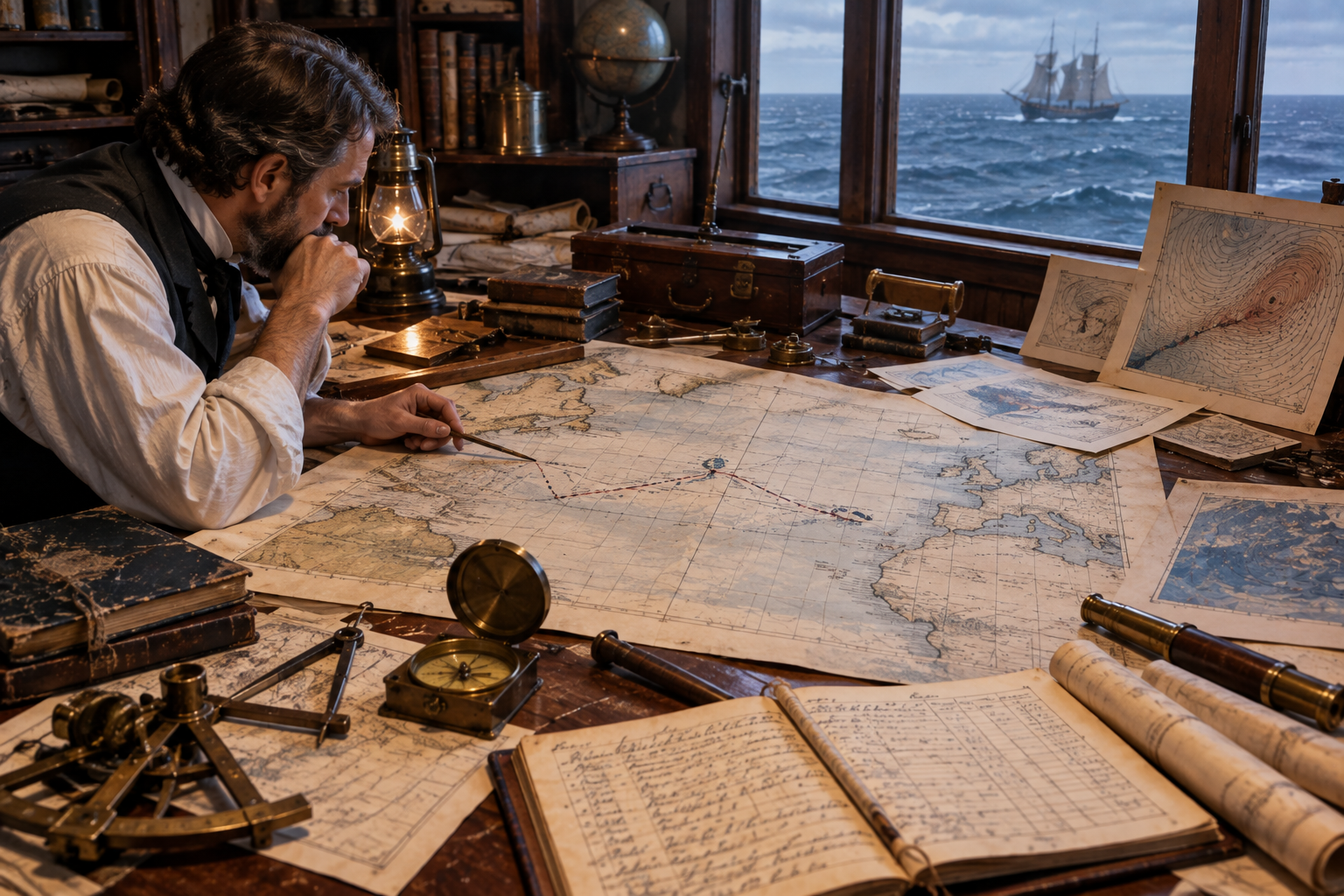
The surviving records also suggest that Briggs may not have known his precise position. The modern reconstruction described by Smithsonian found that the captain’s estimated position could have been significantly wrong, potentially because of an inaccurate chronometer. That would have mattered greatly in the final approach to the Azores, because a captain expecting land to appear could become increasingly concerned when the coastline failed to materialize. Smithsonian Magazine
According to the reconstruction, Briggs changed course while approaching Santa Maria, perhaps attempting to find safer waters. The vessel then experienced rough weather, with winds exceeding 35 knots on the night before the final surviving entry. None of these facts proves that the crew abandoned ship because of navigational error, but they establish a credible background of uncertainty, rough conditions and concern about the vessel’s position. Smithsonian Magazine
The last recorded position is therefore more important than it might first appear. It provides the final fixed point from which investigators can reconstruct the ship’s movements, while the later discovery position establishes where the unmanned vessel eventually traveled. The gap between those two points is where the central mystery remains.
Theories That Became More Famous Than the Evidence
The Mary Celeste attracted extraordinary speculation almost immediately. Pirates, mutiny, murder, alcohol, sea monsters and violent waterspouts all became part of the expanding mythology. Some of these ideas were published or repeated long after the original investigation, when the absence of a definitive answer created room for increasingly elaborate explanations. Smithsonian Magazine
Arthur Conan Doyle played an important role in transforming the case from a maritime incident into popular mystery literature. In 1884, he published “J. Habakuk Jephson’s Statement,” a fictional story inspired by the Mary Celeste case. Doyle changed major details and invented a dramatic explanation, but later readers sometimes blurred the boundary between his fiction and the documented historical event. Smithsonian Magazine
That process helped create some of the details now commonly associated with the story. The idea that the ship contained warm meals, for example, has been repeated widely, although contemporary evidence does not establish the famous image of a breakfast abandoned moments before the crew vanished. The actual evidence was considerably less theatrical: supplies remained, the ship was deserted, and the lifeboat was gone.
The difference between the historical case and its popular mythology is crucial. The Mary Celeste does not need a sea monster, supernatural force or cinematic murder plot to be fascinating. The documented facts are stranger in a quieter way: an experienced captain apparently left a functioning ship, and every person who could explain why disappeared.
What Happened to the Crew?
The fate of Briggs, Sarah, Sophia and the seven crewmen remains unknown. No confirmed survivor emerged, and no definitive physical evidence established where the lifeboat went after leaving the Mary Celeste. The absence of the lifeboat strongly suggests that the missing people were not simply lost from the deck during an ordinary storm, but the evidence cannot tell us whether they drowned shortly after leaving, drifted away from the ship or experienced some other disaster. Smithsonian Magazine
The most plausible broad reconstruction is therefore narrower than many versions of the legend. The crew probably left the ship deliberately, most likely because they believed circumstances had made remaining aboard unsafe. The ship later continued drifting without them and was eventually recovered by the Dei Gratia, while the people who had left it were never found.
That conclusion still leaves the central mystery intact. It explains how a seaworthy ship could be found empty, but it does not establish the exact emergency that prompted the evacuation or the precise fate of the people in the lifeboat. The distinction between a plausible explanation and a proven solution is essential when discussing the case more than 150 years later.
Why the Mary Celeste Mystery Survived
The enduring fascination of the Mary Celeste comes from the unusually small gap between what is known and what cannot be known. Investigators possess a physical ship, a final set of navigational records, testimony from the men who boarded her, evidence from the Gibraltar inquiry and later reconstructions using historical weather information. Yet the most important moment in the entire story occurred without a surviving witness. Atlas Systems
The case also became a lesson in how historical mysteries are manufactured. Each retelling can preserve the basic fact while adding details that were never present in the original evidence. Once fiction, newspaper sensationalism and popular culture become attached to a real event, separating the surviving record from later invention becomes almost as important as reconstructing the event itself. Smithsonian Magazine
The Mary Celeste is consequently best understood neither as a supernatural mystery nor as a case that has been definitively solved. It is a documented maritime disappearance with a surprisingly coherent physical explanation for the abandonment, but with no reliable evidence establishing the final fate of the ten people involved. That unresolved boundary is precisely why the ship continues to attract historians, maritime researchers and curious readers.
Conclusion
The ship found drifting in the Atlantic in December 1872 was not a ghost ship in the supernatural sense. It was a real merchant vessel carrying a real cargo, with evidence of a hurried departure and a missing lifeboat, later brought safely toward Gibraltar by another crew. The historical record supports the conclusion that the Mary Celeste was abandoned, but it does not reveal exactly why Captain Briggs made that decision or what happened after the ten people left the ship. Smithsonian Magazine
Modern reconstructions involving navigation errors, rough weather, pumping difficulties and fear that the vessel was taking on water provide a reasonable framework for understanding the abandonment. They are more grounded in the surviving evidence than stories about pirates, monsters or elaborate murders, yet they remain interpretations rather than proven facts. The missing lifeboat and the absence of every member of the crew prevent the final sequence from ever being reconstructed with certainty.
More than a century later, that is what makes the Mary Celeste mystery unusually durable. The ship itself survived long enough to tell investigators part of the story, but the people who could have explained the rest were never found.
FAQ
What was the Mary Celeste?
The Mary Celeste was an American merchant brigantine that sailed from New York toward Genoa in November 1872. Captain Benjamin Spooner Briggs was aboard with his wife, their two-year-old daughter and seven crewmen, making ten people in total. The ship was discovered abandoned in the Atlantic in December, still carrying most of its cargo and supplies. Smithsonian Magazine
When was the Mary Celeste found?
The Dei Gratia encountered the Mary Celeste on December 4, 1872, although some historical accounts use December 5 because of differences in maritime and land dating conventions. The discovery occurred roughly 400 miles east of the Azores. The Dei Gratia crew approached after noticing that the vessel was behaving strangely and appeared to have nobody aboard. Smithsonian Magazine
How many people disappeared from the Mary Celeste?
Ten people disappeared from the vessel. They were Captain Benjamin Spooner Briggs, his wife Sarah, their two-year-old daughter Sophia, and seven crewmen. None of the ten was subsequently confirmed alive, and no definitive evidence has established what happened to them after they left the ship. Smithsonian Magazine
Was the Mary Celeste sinking?
The evidence does not show that the ship was on the verge of sinking when it was found. There was approximately three and a half feet of water in the hold, and one of the pumps had been disassembled, but the vessel remained sufficiently seaworthy for the Dei Gratia crew to sail it to Gibraltar. A modern theory proposes that Briggs may nevertheless have believed the ship was in greater danger because of uncertainty about the pumping system and the amount of water entering the hull. Smithsonian Magazine
Was there evidence of murder or piracy?
The Gibraltar investigation did not establish convincing evidence of foul play. The condition of the ship, the largely intact cargo and the missing lifeboat are more consistent with an evacuation than with a straightforward seizure by pirates, although the evidence cannot completely reconstruct the final events. Later stories of murder and piracy became part of the legend but are not established historical explanations. Smithsonian Magazine
Did the crew drink the alcohol cargo?
There is no reliable evidence that the crew became intoxicated by drinking the industrial alcohol. Nine barrels were empty, but those barrels were made of red oak, which was more porous and therefore more likely to leak than the white-oak barrels used for most of the cargo. The alcohol remains relevant to some theories about the ship, but the evidence does not support the popular image of the crew drinking the cargo and then disappearing. Smithsonian Magazine
Has the Mary Celeste mystery been solved?
No definitive solution has been established. Modern investigations have produced plausible explanations involving navigation errors, rough weather and possible problems with the ship’s pumps, and these ideas can explain why a captain might have ordered an evacuation. They cannot establish exactly what happened to the ten people afterward, so the case remains unresolved. Smithsonian Magazine
Did Arthur Conan Doyle write about the Mary Celeste?
Yes. Doyle published “J. Habakuk Jephson’s Statement” in 1884, using the Mary Celeste case as inspiration for a fictional story. His version changed important details and introduced an invented explanation, but its popularity helped turn the real maritime incident into a much larger cultural mystery. Smithsonian Magazine
SOURCES & REFERENCES
- Smithsonian Magazine — “Abandoned Ship: The Mary Celeste.” Jess Blumberg, November 2007. Detailed historical account of the discovery, Gibraltar inquiry, surviving evidence and later reconstruction of the ship’s route and possible abandonment. Smithsonian Magazine — Abandoned Ship: The Mary Celeste
- Smithsonian Magazine — “An Abandoned Merchant Ship Was Discovered Floating in the Atlantic in 1872.” Eli Wizevich, December 2024. Recent historical overview distinguishing the documented case from later theories and popular mythology. Smithsonian Magazine — Mary Celeste, 1872
- Peabody Essex Museum, Phillips Library — Benjamin Spooner Briggs Papers. Archival collection containing material concerning the Mary Celeste, including testimony and evidence associated with the Gibraltar Vice-Admiralty Court inquiry. Peabody Essex Museum — Benjamin Spooner Briggs Papers
- Peabody Essex Museum, Phillips Library — Mary Celeste Court Testimony. Finding aid for testimony and evidence from the Gibraltar Vice-Admiralty Court concerning the abandonment and subsequent discovery of the ship. Peabody Essex Museum — Court Testimony and Evidence
- Central Intelligence Agency Reading Room — historical intelligence record concerning the Mary Celeste. The archive provides access to declassified historical material relevant to the case and its contemporary documentation. CIA Reading Room
- Library of Congress — historical newspaper record concerning the Mary Celeste. A digitized historical newspaper document contains contemporary retrospective discussion of the investigation, the examination of the ship and the fate of the crew. Library of Congress Digital Collections
- Encyclopedia.com — Mary Celeste reference entry. Reference material summarizing the ship’s abandonment, Gibraltar salvage proceedings and later literary treatment, with references to Charles Edey Fay and other historical works. Encyclopedia.com — Mary Celeste