
The strange food traditions that surprise foreign visitors often have histories far more practical and meaningful than their appearance suggests. A fermented fish that smells overwhelmingly strong, a fertilized duck egg served as street food, cheese transformed by insects, or roasted insects sold as a familiar snack can look startling when encountered without cultural context. Yet these foods often emerged from ordinary human concerns: preserving seasonal harvests, making use of available resources, adapting to local environments, or maintaining traditions passed between generations.
Food is also one of the clearest ways people encounter a culture different from their own. Travelers may carry deeply familiar ideas about what should be eaten, how it should be prepared, and which animals or ingredients are considered acceptable, only to discover that those boundaries are not universal. Anthropologists have long examined food taboos because eating practices can reveal relationships between environment, social organization, belief, identity, and cultural memory.
The result is a fascinating paradox: the very foods that can seem most unusual to visitors may be among the clearest expressions of local history. Understanding them does not require pretending that every food will appeal to every palate. It simply requires recognizing that unfamiliar does not automatically mean irrational, primitive, or inferior.
AI & Editorial Note
Hidden Frontiers uses AI-assisted tools as part of its content-production workflow, including research organization, drafting assistance, and visual development. The factual content of this article is strictly grounded in verified, cited sources, and disputed or uncertain information is identified where appropriate. Visuals accompanying this article are AI-generated historical reconstructions created for illustrative purposes.
Why Unfamiliar Food Can Feel So Strange
People do not approach food with taste alone. Before a bite reaches the mouth, the brain has already interpreted its appearance, smell, texture, preparation method, and cultural meaning. Something that appears perfectly ordinary in one society can therefore trigger hesitation in another because the visitor has learned a different set of expectations about what food is supposed to look and smell like.
Food taboos are particularly revealing because they demonstrate how deeply cultural boundaries can become embedded in everyday life. Research in archaeology and anthropology has examined food taboos for more than a century, while archaeological evidence suggests that some food-related cultural restrictions can persist across very long periods. The historical record is not always sufficient to explain exactly why a particular taboo began, but it shows that food choices are connected to broader systems of cultural organization rather than being determined solely by nutrition.
This is why descriptions such as “gross,” “crazy,” or “disgusting” can be misleading when applied to traditional foods. They usually describe the visitor’s reaction rather than the food’s cultural significance. A better historical question is often much simpler: Why did this food make sense here?
When Preservation Created an Unforgettable Flavor
Few foods demonstrate the relationship between necessity and culinary tradition more clearly than Sweden’s surströmming. The dish consists of Baltic herring that is salted and fermented before being packed into cans, where fermentation continues. According to Visit Sweden, the tradition is associated with northern Sweden and developed during a period when salt was scarce, making fermentation an important way to preserve fish.
The resulting smell is so powerful that surströmming has become internationally famous as one of the world’s most challenging foods for unfamiliar visitors. Yet the smell is not the point of the tradition. The food belongs to a broader northern Swedish culinary heritage in which seasonal ingredients, preservation, and communal eating are closely connected. Visit Sweden describes the traditional celebration surrounding the dish as a social occasion known as a surströmmingsskiva, showing that the food is not simply a novelty designed to shock outsiders.
The traditional timing of the dish also illustrates how preservation practices can become cultural calendars. Visit Sweden notes that the traditional premiere takes place on the third Thursday of August, turning the opening of the seasonal supply into an event with its own social customs. What a visitor may encounter as an unusually strong-smelling can of fish is therefore connected to geography, history, seasonality, and communal identity.
Strange Food Traditions and the Logic of Fermentation
Fermentation is especially important when considering why certain foods seem strange to modern travelers. From a contemporary supermarket perspective, consumers are accustomed to refrigeration, industrial packaging, and ingredients that remain stable for long periods. Earlier communities had fewer options, so microorganisms, salt, drying, smoking, and other preservation methods became essential technologies as well as culinary techniques.
Over generations, preservation could change from a practical necessity into a preferred flavor. The smell, acidity, texture, or appearance produced by fermentation could become something people expected and enjoyed because it was associated with familiar foods and family traditions. Visitors arriving from cultures with different fermentation traditions may experience the same characteristics as unexpected or even alarming, while local diners recognize them as signs of a familiar preparation.

This distinction matters because culinary traditions are rarely frozen snapshots of survival. Once a technique becomes part of everyday life, it can acquire ceremonial, social, and emotional meaning. A method that originally helped a community preserve food can eventually become something people gather around, teach to children, associate with particular seasons, and defend as part of local identity.
Balut and the Cultural Meaning of Familiar Street Food
In the Philippines, balut provides another example of how a food can appear startling to outsiders while occupying a recognizable place within local food culture. Balut is a fertilized duck egg that is incubated for a period before being boiled and eaten, and the Philippine National Nutrition Council describes it as a common Filipino street food. The Philippine Department of Tourism specifically highlights Pateros as a place associated with the long-standing culinary heritage of balut and presents experiences that teach visitors about its preparation and cultural significance.
For a visitor who has never encountered it, the sight of a developed embryo inside an egg can be difficult to reconcile with familiar ideas about eggs as food. That reaction reflects a cultural difference in how the boundaries between ordinary ingredients and unusual food forms are understood. Within the Philippine context, however, balut is not merely an attraction for tourists; it has a history as a recognizable food product and remains connected to local culinary practice.
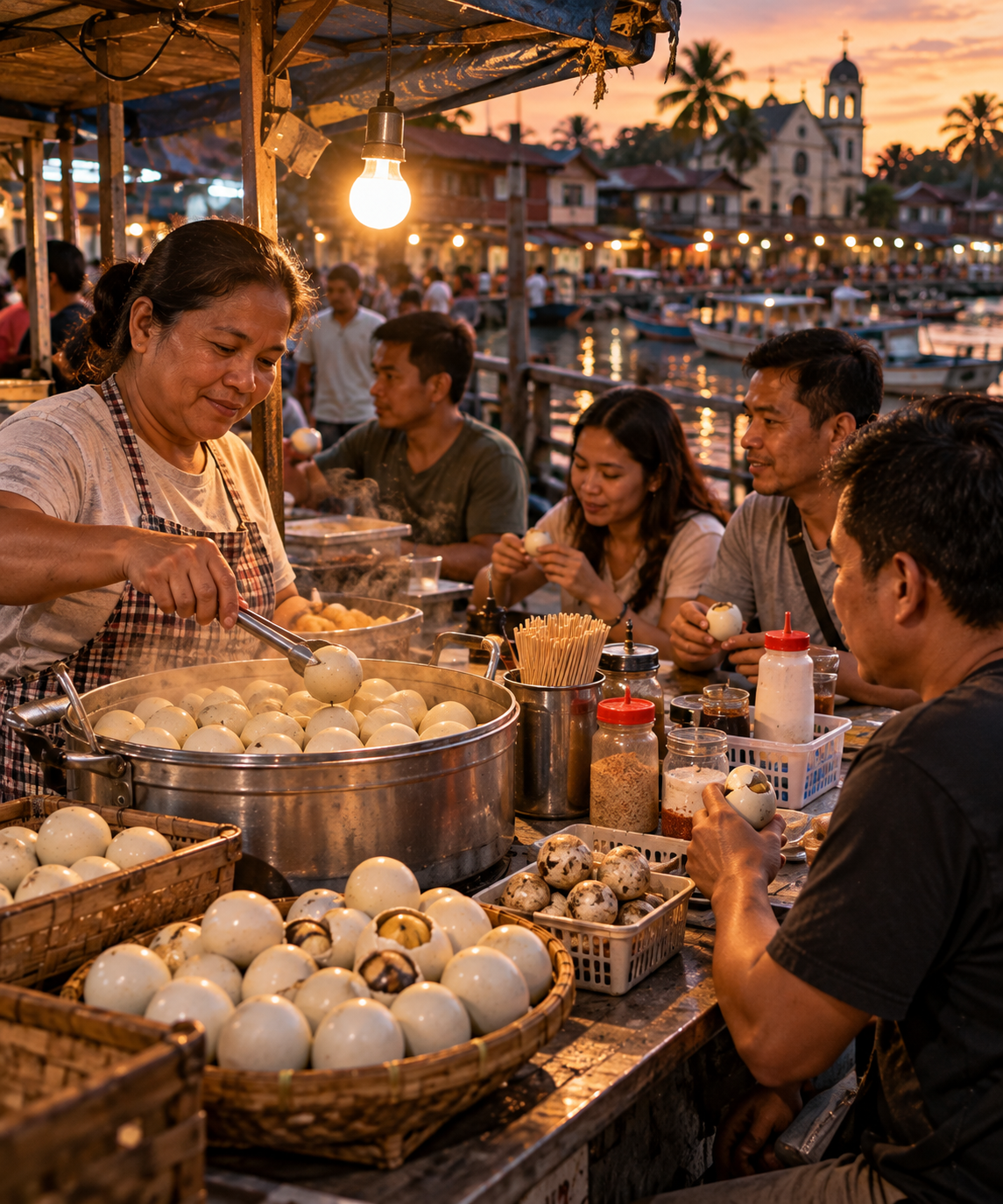
The Philippine government sources also emphasize its nutritional characteristics, demonstrating another important point about food traditions: cultural meaning and practical value can coexist. A food can be socially familiar, nutritionally useful, economically significant, and visually surprising to an outsider at the same time. Reducing such a tradition to its most shocking visual element can therefore obscure much of the history that makes it meaningful.
When Insects Become Food Instead of Curiosity
For many Western visitors, insects are among the clearest examples of a food category that can provoke an immediate emotional reaction. Yet entomophagy, or the practice of eating insects, is not a modern novelty. The Natural History Museum in London notes that humans have eaten insects, arachnids, and related creatures for a very long time, while historical references from the ancient Mediterranean world document insect consumption among Greeks and Romans.
The important historical point is that societies do not divide the animal world into “food” and “not food” in identical ways. Insects can provide protein and other nutrients while requiring relatively little space compared with many forms of livestock, and communities living in different ecological environments have developed different ways of incorporating them into diets. What one society categorizes as an unpleasant pest may be treated elsewhere as an ordinary seasonal ingredient or snack.
This difference becomes particularly interesting when visitors encounter insect foods in markets or restaurants. The reaction often says as much about the visitor’s own upbringing as it does about the food itself. Someone accustomed to seeing insects only as pests has learned a different cultural association from someone who grew up seeing them prepared, sold, and eaten as food.
Casu Marzu and the Boundary Between Food and Transformation
Sardinia has its own famously unusual food tradition in casu marzu, a traditional cheese associated with the island. Italy’s official tourism platform, Italia.it, identifies su casu marzu or giampagau among the distinctive foods associated with Sardinian cuisine, particularly the culinary traditions of Barbagia.
What makes the cheese so startling to many outsiders is the biological transformation involved in its traditional preparation. Instead of treating biological activity as automatically undesirable, the tradition incorporates it into the transformation of the food itself. The resulting product occupies a cultural space that can be difficult for visitors to understand if they approach it only through the expectations of industrial food production.
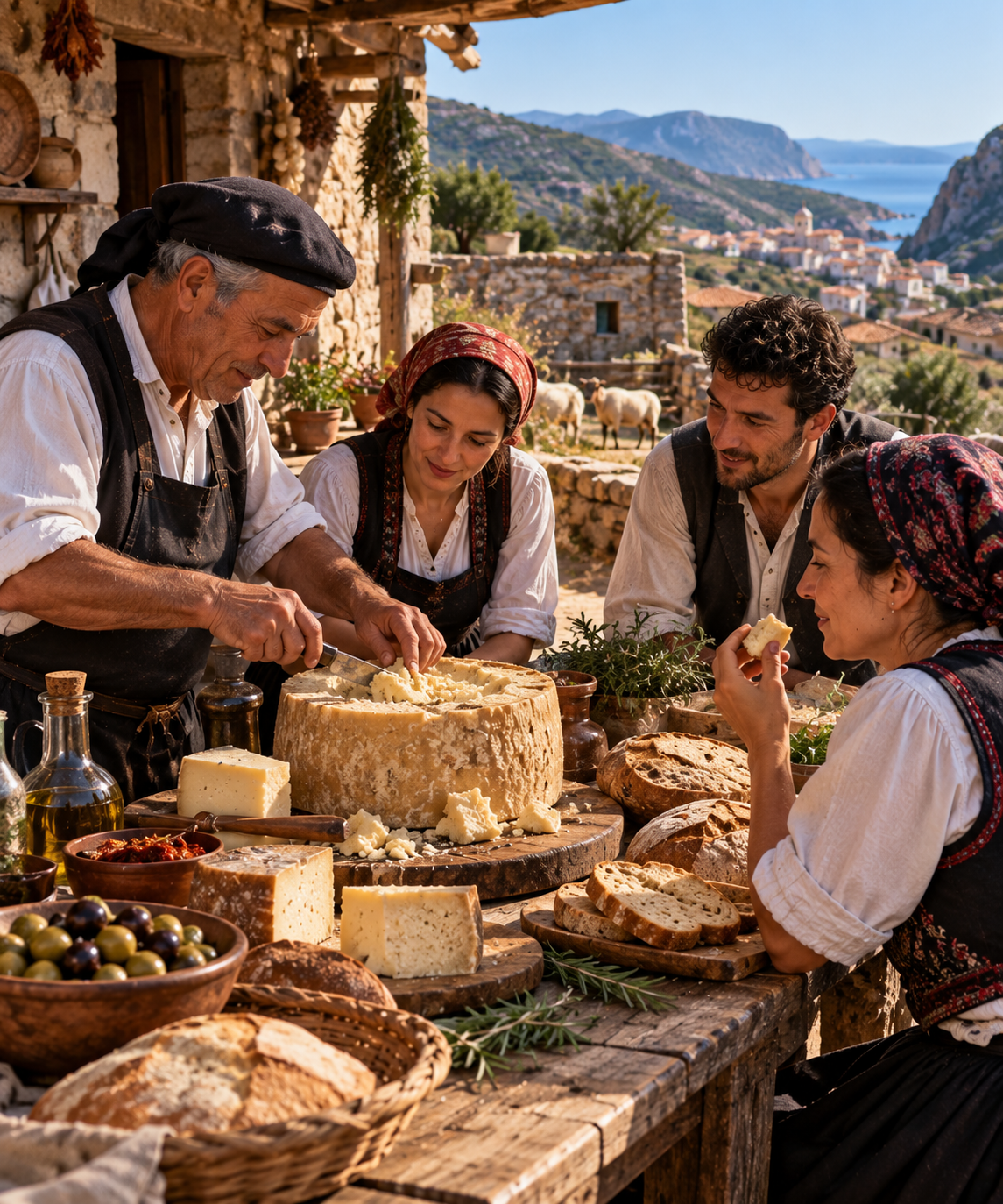
Casu marzu is therefore useful as a historical example because it exposes an assumption that modern consumers often make without noticing it: that desirable food should remain biologically stable after production. Traditional foodways frequently operate according to different expectations, particularly when techniques developed before modern refrigeration, standardized processing, and industrial quality control. The contrast between those systems can make an old culinary tradition appear more radical than it actually is within its own historical setting.
Food Heritage Is About More Than a Recipe
The strongest food traditions are rarely just lists of ingredients. They include knowledge about when ingredients should be gathered, how they should be prepared, who teaches the technique, which occasions call for the food, and how it is served. UNESCO’s work on intangible cultural heritage makes this distinction explicit by emphasizing cultural practices connected with food and drink rather than treating individual dishes simply as isolated products.
UNESCO’s heritage lists include food-related traditions from many regions, including the Mediterranean diet, Japanese washoku, Arabic coffee, French gastronomic traditions, Neapolitan pizzaiuolo craftsmanship, and other practices involving preparation, sharing, knowledge, and social customs. In 2025, UNESCO also inscribed the Egyptian tradition of koshary as a cultural practice connected with everyday life, describing the dish and the practices associated with preparing and eating it.
This approach changes how unusual foods can be understood. A dish does not need to be visually exotic to be culturally important, and a food that looks strange to outsiders can carry layers of knowledge that are invisible to a first-time visitor. The recipe may be only the most visible part of a much larger cultural system.
Why Scarcity and Geography Matter
Many unusual food traditions become easier to understand when viewed through geography. Communities living near coasts, mountains, forests, deserts, wetlands, or agricultural regions have access to different ingredients, while climate influences which preservation techniques are practical. Over time, those environmental conditions shape the foods that become ordinary.
Scarcity can be equally influential. When an ingredient is difficult to obtain or when food must survive for months between harvests, people develop ways to preserve, transform, or reuse what is available. A technique that initially emerges from necessity may eventually become so familiar that later generations value the resulting flavor independently of the original problem it solved.
Food history therefore intersects with economic history and environmental history. Understanding a traditional dish can reveal how people responded to seasonal cycles, available animals and plants, transportation limits, storage problems, and changing patterns of trade. What looks bizarre on a restaurant menu can sometimes be understood as a small record of the environment in which a community learned to live.
Why Visitors Often See the Food Without Seeing the History
Tourism can create a peculiar situation in which the most unusual element of a food becomes more visible than its cultural context. A visitor may be introduced to a fermented fish because of its smell, a fertilized egg because of its appearance, or an insect snack because of its novelty. Photographs and short videos can amplify that reaction by emphasizing the moment of surprise rather than the tradition surrounding the food.
That does not mean the visitor’s reaction is fake. Smell, texture, and appearance can genuinely be powerful, and travelers do not have to enjoy every traditional food they encounter. The problem arises when an immediate personal reaction is transformed into a judgment about an entire culture.
Responsible cultural tourism requires a little more curiosity. Asking how a food developed, when people traditionally eat it, how it is prepared, and what role it plays in community life can turn an uncomfortable first impression into a much more interesting historical encounter. The food may still not appeal to the visitor, but the tradition becomes easier to understand.
The Difference Between Disgust and Cultural Difference
Disgust is not entirely biological or universal in the way people sometimes assume. Human beings have physical reactions to spoiled or contaminated food, but cultural learning also teaches people which animals, ingredients, textures, preparation methods, and eating behaviors should be considered acceptable. Food taboos provide some of the clearest evidence that societies construct different boundaries around what can and cannot be eaten.
That does not mean every food preference is purely cultural. Taste, smell, safety, nutrition, availability, and individual experience all matter, and food traditions can change when new information or technology becomes available. The useful historical observation is simply that cultural expectations play a substantial role in determining what people consider ordinary.
This helps explain why international food encounters can be so revealing. Travelers are not merely discovering another country’s cuisine; they are temporarily stepping outside their own learned assumptions. The resulting surprise can become an opportunity to understand how strongly everyday habits are shaped by history.
When Food Becomes Cultural Memory
Food can also preserve memories that are difficult to maintain through written records alone. Recipes are often taught through demonstration rather than formal instruction, while techniques may be learned from parents, grandparents, neighbors, or community specialists. The knowledge survives because people continue performing it, not merely because someone has documented it.
UNESCO’s work on traditional foodways illustrates this broader idea of culinary heritage. Its documentation of traditional foodways in Kenya, for example, describes efforts to safeguard knowledge connected with indigenous plants, recipes, ceremonies, and other practices. Such projects demonstrate that protecting food heritage can also mean protecting ecological knowledge, agricultural practices, community memory, and cultural identity.
This is one reason unfamiliar foods deserve more attention than their novelty value alone suggests. A traditional dish may represent generations of adaptation and accumulated knowledge. Once the food disappears, the loss may involve much more than a recipe disappearing from a menu.
How to Approach an Unfamiliar Traditional Food
There is no requirement for travelers to like everything they encounter. Curiosity can exist alongside personal limits, dietary restrictions, allergies, religious boundaries, or concerns about food safety. The respectful approach is to distinguish between saying “this is not for me” and declaring that a community’s food tradition is inherently disgusting or irrational.
A good first step is to learn how the food is normally eaten rather than judging it from an unusual tourist presentation. Ask what the ingredients are, how the dish developed, whether it is associated with a particular region or season, and whether there are customary ways to serve it. These questions can reveal why the food exists in its current form and may also prevent visitors from misunderstanding a dish because of an unfamiliar preparation method.
The most interesting travel experiences are not always the ones that confirm what visitors already believe. Sometimes they are the experiences that expose how arbitrary familiar habits can appear when viewed from somewhere else. Food is especially powerful in this respect because everyone eats, but almost no two cultures organize the meaning of eating in exactly the same way.
Conclusion
The strange food traditions that shock foreign visitors are often less strange when their histories are understood. Surströmming reflects preservation and northern Swedish culinary heritage, balut belongs to a long-standing Philippine food culture, Sardinian casu marzu demonstrates a distinctive approach to cheese transformation, and insect consumption reveals how different societies have drawn different boundaries around edible animals.
These foods remind us that cuisine is shaped by more than taste. Geography, scarcity, technology, ecology, social customs, inherited knowledge, and cultural identity all influence what eventually becomes normal at the dinner table. What seems shocking to one visitor may be comforting, traditional, celebratory, or completely ordinary to someone who grew up with it.
The most useful lesson is not that travelers should force themselves to enjoy unfamiliar foods. It is that a moment of surprise can be the beginning of a historical question rather than the end of one. Behind many of the world’s most unusual dishes is a story about how people adapted to their environment, preserved what they had, and passed knowledge from one generation to the next.
FAQ
What are some strange food traditions that surprise foreign visitors?
Examples include Sweden’s fermented herring known as surströmming, the Philippine fertilized duck egg known as balut, Sardinia’s distinctive casu marzu cheese, and traditional insect foods found in different parts of the world. These foods can surprise visitors because their smells, textures, appearances, or ingredients differ from what the traveler considers normal. Within their cultures of origin, however, they can have long histories and specific culinary or social meanings.
Why do some cultures eat foods that seem strange to outsiders?
Food traditions develop in response to many factors, including geography, available ingredients, climate, preservation needs, economics, religion, and cultural habits. A preparation method that looks unusual today may have originally been an effective way to preserve seasonal food or make use of resources that were readily available. Over time, practical techniques can become valued traditions that are maintained even after the original necessity has changed.
Why does fermented food sometimes smell so strong?
Fermentation changes food through the activity of microorganisms, producing chemical compounds that can significantly alter aroma, texture, acidity, and flavor. In the case of surströmming, fermentation continues after the herring is canned, contributing to its exceptionally strong smell. The intensity that surprises outsiders is therefore part of the transformation created by the traditional preservation process rather than an accidental characteristic.
Is balut a traditional Filipino food?
Yes. Balut is a fertilized duck egg that is incubated before being boiled and eaten, and the Philippine National Nutrition Council identifies it as a common Filipino street food. The Philippine Department of Tourism also identifies Pateros with a long-standing culinary heritage associated with balut and highlights experiences that explain its preparation and cultural significance.
Why are insects eaten as food in some cultures?
Insects can provide edible nutrients and have historically been available in environments where communities developed ways to collect and prepare them. Historical evidence also shows that insect consumption is not restricted to modern societies in tropical regions, with references to insect eating appearing in ancient Greek and Roman sources. The major difference for many modern visitors is cultural familiarity: whether an insect is perceived as food or as a pest depends partly on what a person learned while growing up.
What makes a food tradition part of cultural heritage?
A food tradition involves more than the finished dish. It can include agricultural knowledge, ingredient selection, preparation techniques, serving customs, ceremonies, social relationships, and the knowledge passed between generations. UNESCO’s approach to intangible cultural heritage specifically recognizes food-related practices as cultural traditions when the emphasis is on the living knowledge and social practices surrounding food rather than simply treating a dish as an isolated product.
Should travelers try unfamiliar traditional foods?
Travelers can decide according to their own health, dietary, religious, ethical, and personal boundaries, so there is no obligation to eat something that makes them uncomfortable. If they do choose to try an unfamiliar dish, learning about its ingredients, preparation, and cultural context beforehand can make the experience more meaningful. Respecting the tradition does not require liking the taste, and declining a food politely does not require dismissing the culture that created it.
SOURCES & REFERENCES
- Visit Sweden — Fermented Herring / Surströmming
- Visit Sweden — Regional Flavours of Sweden
- Philippine Department of Tourism — Pateros and Balut Heritage
- Philippine National Nutrition Council — Nutritional Information on Balut
- Natural History Museum, London — Eating Insects
- Italia.it — Typical Food and Dishes in Sardinia
- UNESCO — Food and Intangible Heritage: A Flavourful Relationship
- UNESCO — Representative List of the Intangible Cultural Heritage of Humanity
- Cambridge University Press — Food Taboos in Archaeology
- UNESCO — Traditional Foods and Safeguarding Traditional Foodways in Kenya