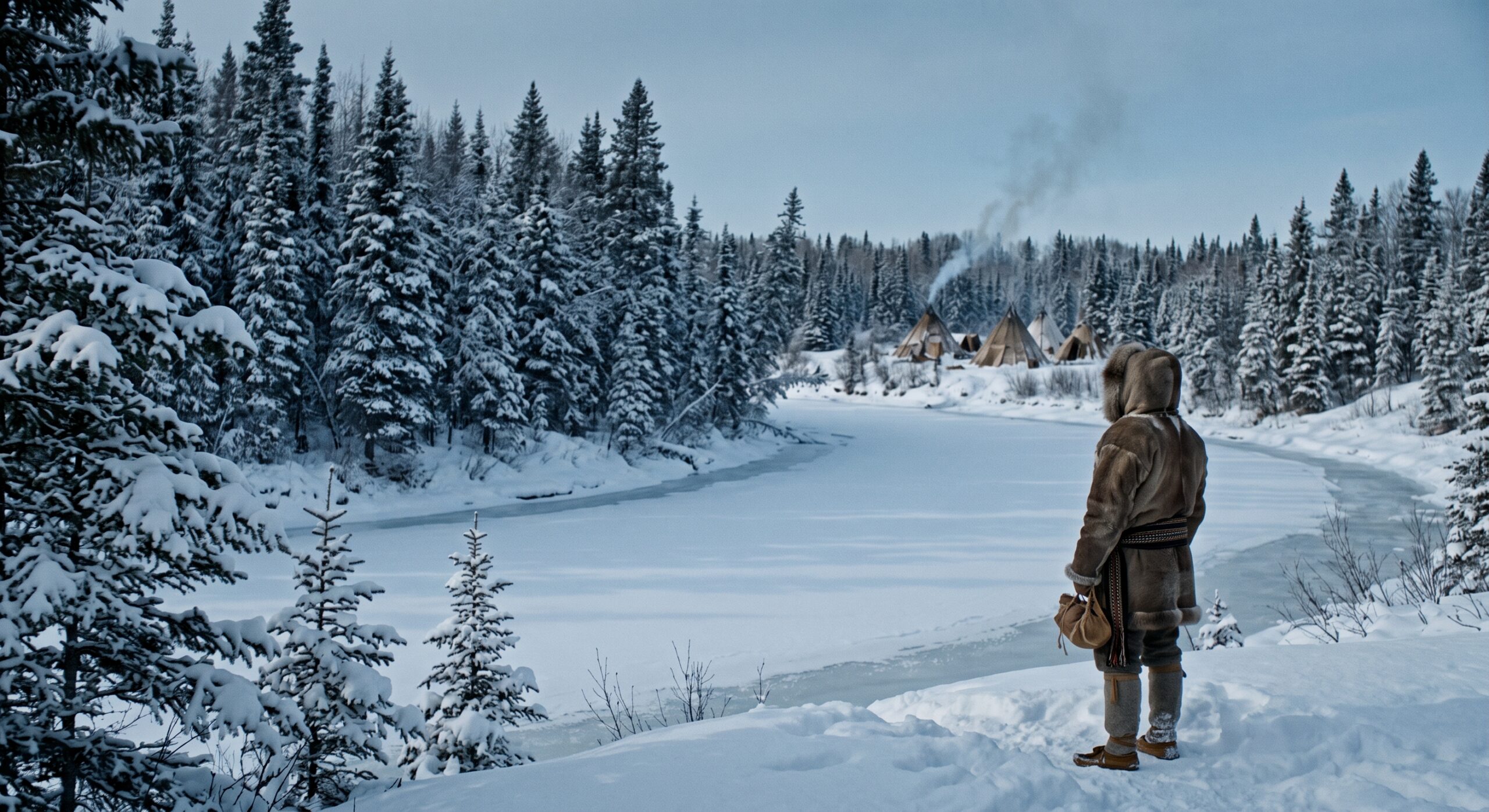
Few figures in North American folklore have become as distorted by modern horror as the Wendigo. The Wendigo legend is often presented today as a gaunt, antlered monster that stalks frozen forests, but the older traditions are more complicated, more culturally specific and far less uniform than that familiar image suggests. Among several Algonquian-speaking peoples, including Cree, Ojibwe and Saulteaux communities, related Windigo traditions connected cannibalism, greed, isolation, hunger and the breakdown of social obligations in ways that could function as warnings about what happens when a person places survival or appetite above the well-being of the community. Cambridge University Press
AI & Editorial Note
Hidden Frontiers uses AI-assisted tools as part of its content-production workflow, including research organization, drafting assistance, and visual development. The factual content of this article is strictly grounded in verified, cited sources, and disputed or uncertain information is identified where appropriate. Visuals accompanying this article are AI-generated historical reconstructions created for illustrative purposes.
The Wendigo Was Never Just One Monster
The first complication is the name itself. Wendigo is an English spelling used for a group of related terms that appear in different Indigenous languages and communities, including Windigo, Wihtikow and Wetiko, and the meanings and characteristics associated with the figure vary across traditions. Scholars have therefore cautioned against treating every story from every Algonquian-speaking community as though it described one standardized supernatural creature with a single biography. Cambridge University Press
The Cree material studied by anthropologist Richard Preston, for example, describes an Atuush or Windigo as a cannibalistic monster or “wild man” associated with the bush, isolation and predation. In the ethnographic material, the being could be understood as something that was no longer properly human, even if it had once been human, and its behavior was defined by an extreme rejection of reciprocity. Such accounts show why translating the Windigo simply as a “monster” can lose an important part of its social meaning. MacSphere
The figure could represent a profound inversion of ordinary community life. A healthy social relationship depended on sharing, reciprocity, kinship and mutual obligations, whereas the Windigo represented an individual who consumed others without recognizing their humanity or value. In that sense, the horror was not merely that a supernatural creature might kill someone in the forest; it was that a person could become the embodiment of radical selfishness and social disconnection. Macsphere
Why Cannibalism Became Central to the Legend
Cannibalism occupies an important place in many Windigo traditions, particularly in stories associated with extreme hunger and the danger of violating fundamental social rules. This association made the figure especially powerful in environments where winter travel, scarcity and isolation could present genuine threats to survival. The supernatural story gave those dangers a moral and social dimension by imagining what happened when hunger overwhelmed the boundaries that normally governed human behavior.
Modern retellings sometimes reduce the idea to a simple formula in which eating human flesh automatically transforms a person into a monster. The traditional material is more varied than that, and scholars have emphasized that Windigo narratives cannot be separated from questions of morality, social relationships, scarcity and power. The figure could embody a person who became dangerous through greed or destructive appetite, not simply a biological creature whose diet happened to include human beings. MacSphere
This distinction matters because the Windigo could function as a warning about ordinary human behavior. Stories used in Anishinaabe teaching traditions can present the Windigo as a figure of excessive selfishness, someone who takes more than necessary while others suffer. In that interpretation, the frightening creature is also a moral lesson about gratitude, restraint, generosity and responsibility to the community. Iowa State University Pressbooks
Hunger, Winter and Isolation
The association between the Windigo and winter has obvious environmental significance, but it should not be mistaken for evidence that the tradition was simply a primitive explanation for starvation. Northern communities developed detailed knowledge of seasonal conditions, hunting, fishing, travel and food preservation, and the supernatural tradition existed within that practical knowledge rather than replacing it. The Windigo represented something more threatening than cold weather alone: the possibility that scarcity could fracture the relationships on which survival depended.
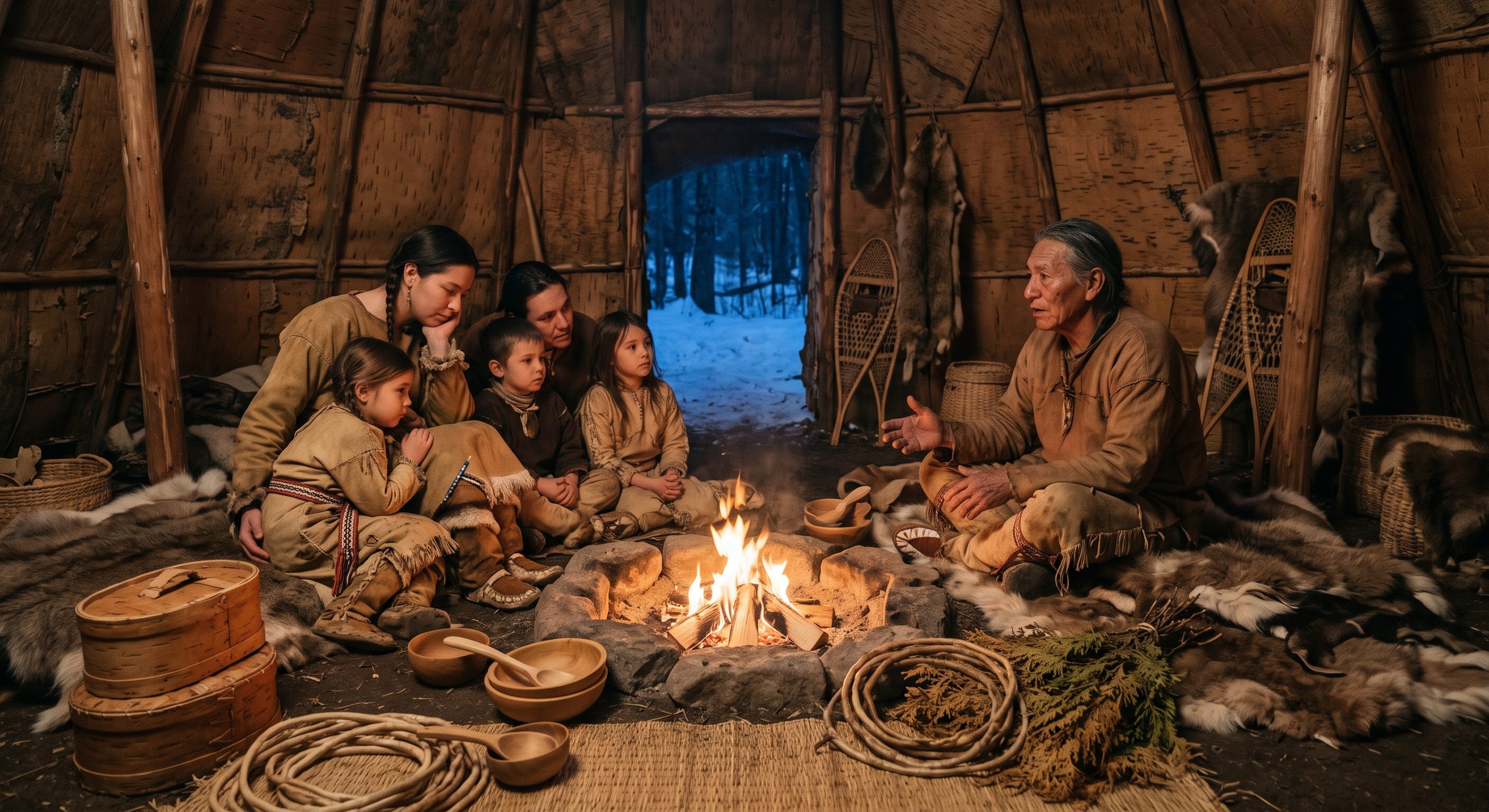
Isolation was equally important. In Preston’s ethnographic material, the Windigo is described as a solitary being that lives away from ordinary society and treats other people as objects to be consumed or controlled. The contrast is deliberate because Cree social relations in the same material are characterized by exchange, kinship, hospitality and mutual assistance. The monster therefore represents the opposite of social belonging. MacSphere
This helps explain why the figure could be frightening even without the elaborate physical characteristics associated with modern horror. A monster with antlers and enormous teeth is frightening because it looks dangerous, but a human being who no longer recognizes the humanity of other people can be frightening in a deeper way. The Windigo tradition could turn the fear of starvation, isolation and social breakdown into a single symbolic figure.
The Legend Was Also About Greed
One of the most persistent themes in modern discussions of the Wendigo is greed. An educational resource produced through Iowa State University presents Windigo stories as teachings for young Anishinaabe people, emphasizing the danger of selfishness and taking more than one needs while others go without. Although educational adaptations should not be treated as substitutes for primary ethnography, this interpretation is consistent with the broader anthropological understanding of the Windigo as an inversion of reciprocity. Iowa State University Pressbooks
That moral dimension gives the legend a broader meaning than cannibalism. A person does not have to literally eat another human being to behave in a Windigo-like way within the metaphorical tradition; extreme selfishness, exploitation and disregard for others can move in the same conceptual direction. The figure consequently became useful as a way of talking about the limits of acceptable human behavior. Macsphere
Basil Johnston’s archival legacy is particularly relevant to this discussion because he was an Anishinaabe writer and scholar whose papers include extensive work on Ojibway language, mythology and the Windigo. His archive at McMaster University contains manuscripts and story materials concerning the Windigo and related Anishinaabe traditions. The existence of such Indigenous-authored and Indigenous-connected records is important because much earlier written material about Indigenous traditions was filtered through European observers and their assumptions. McMaster University Libraries
The Colonial Record Changed the Story
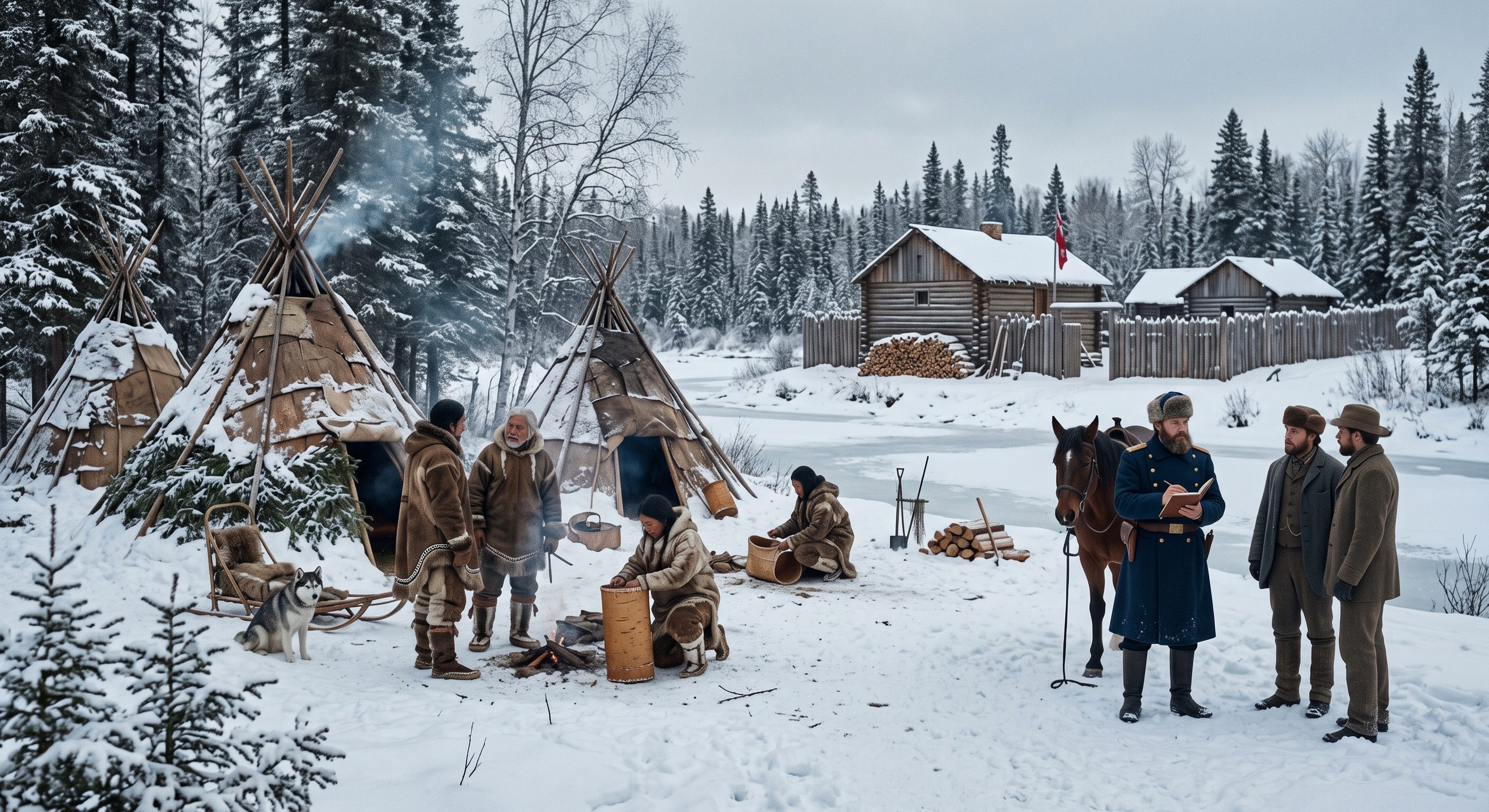
Much of what modern readers think they know about the Wendigo comes from written accounts produced during periods of European and Canadian colonial expansion. Those records can be valuable historical evidence, especially when they document actual court cases or interactions involving Indigenous communities, but they must be read carefully because colonial officials often interpreted Indigenous beliefs through European religious, legal and medical categories. Translation itself could change the meaning of an Indigenous term. Cambridge University Press
A particularly revealing example comes from the nineteenth-century Canadian legal record. In one case discussed by historian Catherine Evans, three Cree men killed an elderly Cree woman in 1885 because they believed she was a wendigo, and colonial authorities subsequently confronted the question of how Indigenous law and spiritual belief should be understood within Canadian criminal law. The case is significant not because it proves that a supernatural creature existed, but because it documents how a Windigo belief could become a real factor in a murder case and expose tensions between Indigenous and colonial systems of law. Cambridge University Press
The case also demonstrates why the subject cannot be reduced to folklore alone. A belief can have material consequences even when historians cannot establish the supernatural claim behind it as fact. In this instance, the belief affected the actions of the defendants, the interpretation of the crime and the response of colonial authorities. The Windigo therefore existed in the historical record not simply as a story told around a winter fire, but as a concept that could shape law, violence and social conflict. Cambridge University Press
The Strange History of “Wendigo Psychosis”
The term “Wendigo psychosis” became popular in twentieth-century anthropology and psychiatry as a proposed culture-bound syndrome involving fear of becoming a cannibal or beliefs about Windigo transformation. Older medical literature sometimes presented it as a distinctive psychiatric disorder associated with Cree, Ojibwe and Saulteaux communities. More recent scholarship has strongly questioned whether this category accurately described a recurring medical syndrome at all. Cambridge University Press
The criticism is significant because the label can make a complex cultural belief appear to be a psychiatric disease belonging to an entire population. A Cambridge discussion of cultural psychiatry notes that anthropologist Lou Marano argued that the supposed Windigo syndrome probably did not exist as a behavioral syndrome in the form later described, but instead involved a mythological belief that could be used as an accusation against others. This scholarship shifts the question from “What disease was the Wendigo?” to “How did colonial observers transform a cultural belief into a psychiatric category?” Cambridge University Press
A modern medical review published in Cureus presents a more complicated picture, examining historical accounts of Windigo beliefs alongside psychological and cultural explanations. It emphasizes that the concept has been associated with periods of scarcity and famine but also warns that cannibalism has many possible cultural and psychological contexts. Such research is useful precisely because it demonstrates how difficult it is to separate historical belief, individual behavior, psychiatric interpretation and colonial documentation. PubMed
The Historical Cases Were Real, but the Monster Was Not Proven
There are genuine historical records of people accused of being Windigos or of acting under Windigo beliefs. Library and Archives Canada preserves government records containing nineteenth- and early twentieth-century material concerning Indigenous communities, criminal cases and the colonial administration of the period. Some archival documents explicitly describe beliefs in Wendigos and record violent incidents arising from those beliefs. Library and Archives Canada
One government record describes an incident in which members of a community became convinced that a Wendigo was harming them and organized armed watches to catch the supposed supernatural being. The situation culminated in a shooting in which the accused believed he had fired at the mysterious figure but instead killed his foster father. A Canadian judicial proceeding subsequently treated the circumstances as highly unusual, resulting in a manslaughter conviction rather than a straightforward murder verdict. Library and Archives Canada
These records should not be presented as evidence that an actual supernatural creature was present. They are evidence that people held Windigo beliefs and that those beliefs could influence behavior, conflict and legal proceedings. That distinction is essential to responsible historical writing because the archive documents human actions and interpretations, not the existence of a supernatural being. Cambridge University Press
The Wendigo Was Not Always an Antlered Creature
Perhaps the biggest difference between traditional Windigo traditions and modern horror is physical appearance. Contemporary films, video games, illustrations and internet folklore frequently portray the Wendigo as a skeletal humanoid with antlers, elongated limbs, exposed ribs and an animal-like skull. There is no single traditional description shared across all communities that establishes this image as the universal or original form of the Wendigo.
The transformation of the figure into a standardized monster is part of a much longer history of cultural translation. Written European descriptions, popular literature, horror fiction, visual art and later entertainment repeatedly reshaped Indigenous supernatural concepts to fit familiar Western ideas about monsters and demons. One scholarly study preserved through the University of Calgary notes that European concepts, including vampire imagery and Christian terminology, became entangled with later written representations of Windigo traditions. Library and Archives Canada
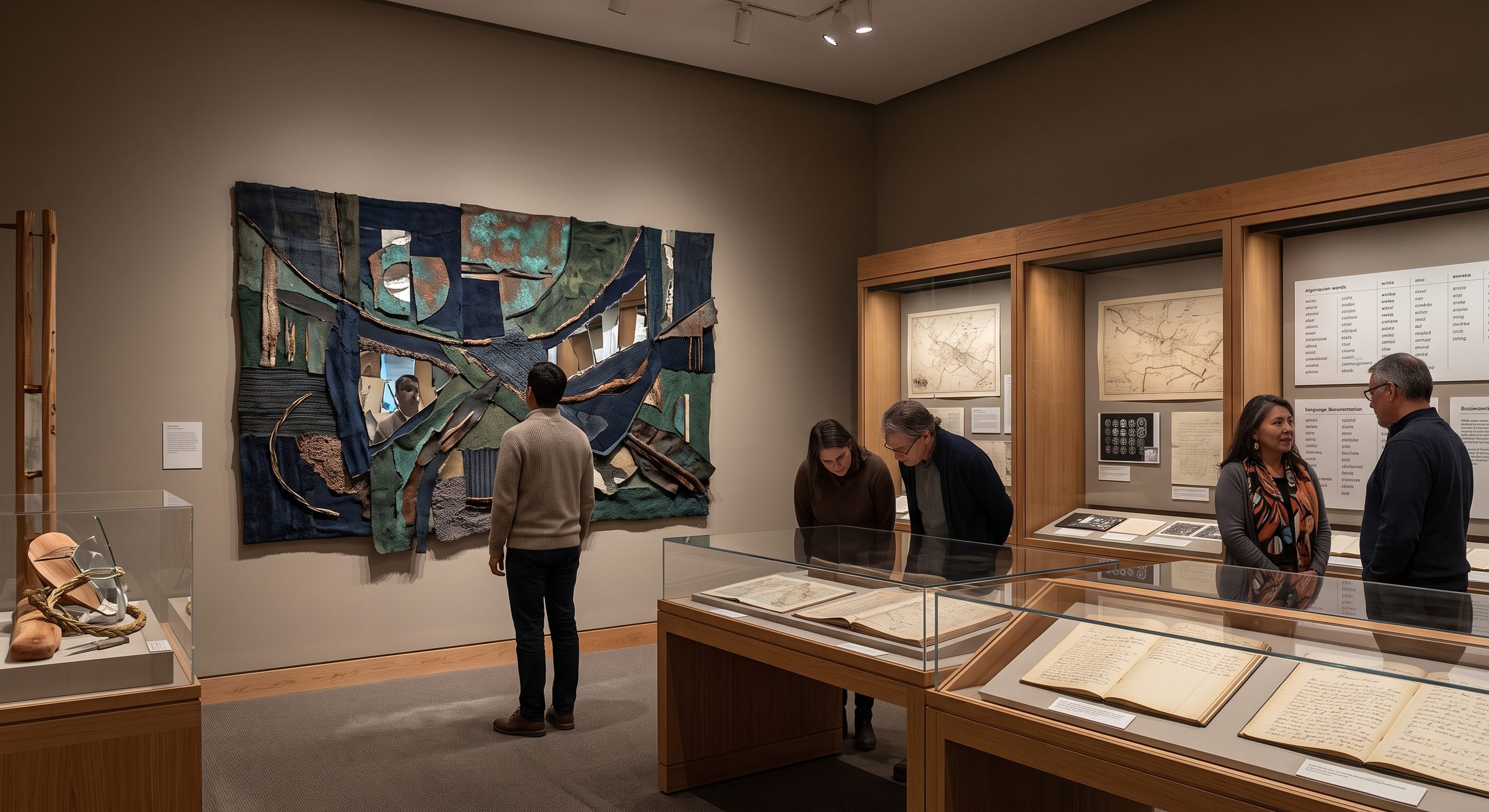
The National Museum of the American Indian has also used Windigo imagery in the work of contemporary Indigenous artist Andrea Carlson, whose art examines themes of cultural consumption and colonial collecting. The museum’s discussion is valuable because it demonstrates that Windigo imagery remains part of contemporary Indigenous artistic expression rather than existing only as a relic of an ancient mythology. The meaning of the figure can therefore change depending on who is telling the story and what historical circumstances surround it. National Museum of the American Indian
Why the Antlers Became So Familiar
The antlered Wendigo is now so common that it can be difficult to imagine the legend without it. Yet the image is better understood as a product of modern popular culture than as a universally documented feature of the older traditions. Different communities and storytellers described Windigo beings differently, and the available historical and ethnographic records do not justify reducing all of those traditions to one standardized skeletal forest monster.
Modern horror also tends to remove the social context that made the figure meaningful. The creature becomes a predator hiding among snow-covered trees, while the original themes of reciprocity, hunger, greed, isolation and communal responsibility fade into the background. What remains is an effective monster design, but much of the cultural argument behind the figure disappears with it.
That transformation is common in folklore. Once a story moves from an oral tradition into books, museums, popular literature, films and games, details can be combined from different sources until audiences begin to regard the resulting version as the original. The history of the Wendigo demonstrates why folklore should be studied as a living cultural tradition rather than treated as a fixed encyclopedia entry with one definitive appearance.
A Spirit of Consumption
The most enduring idea behind the Windigo may be the concept of consumption itself. The creature consumes people, but the metaphor can also describe the endless appetite for food, wealth, power or control that destroys the relationships necessary for a community to survive. In the Cree material examined by Preston, the Windigo is contrasted with kinship and reciprocity because it treats human beings as resources rather than as persons. Macsphere
This interpretation gives the legend an unsettling relevance without turning it into a modern self-help metaphor. The horror comes from the possibility that someone who belongs to a community can become radically detached from its moral obligations. A person does not merely become dangerous; the person becomes an embodiment of a relationship in which everything and everyone else exists only to be consumed.
That idea also explains why the Windigo could be invoked in discussions of colonialism and exploitation. Contemporary Indigenous artists and scholars have sometimes used Windigo imagery to examine systems of cultural consumption, extraction and domination. The metaphor can therefore move beyond the original supernatural narrative while retaining its central concern with what happens when appetite becomes more important than reciprocity. National Museum of the American Indian
The Legend and the Reality of Scarcity
It would be too simplistic to say that the Windigo was merely a superstition created by famine. Northern Algonquian societies possessed sophisticated strategies for dealing with difficult environments, and scarcity was not a permanent condition. At the same time, severe hunger, isolation and winter travel were genuine dangers, making stories about cannibalism and social breakdown especially powerful in communities where cooperation could literally determine survival.
The legend gave those dangers a moral vocabulary. Hunger could be endured through sharing and mutual responsibility, while selfishness could threaten everyone. The Windigo represented the terrifying endpoint of the opposite behavior: a person who could no longer participate in the reciprocal relationships that made communal life possible. Iowa State University Pressbooks
This is one reason the figure has survived so effectively. A supernatural monster can frighten listeners, but a story about greed and isolation can remain meaningful even after the original circumstances change. The Windigo became frightening precisely because it connected an extraordinary creature to an ordinary human weakness.
What the Historical Record Cannot Tell Us
The archival record is extensive enough to establish that Windigo beliefs existed and that they sometimes influenced real behavior, but it cannot establish the supernatural claims themselves. Historical documents are records of people describing what they believed, what they saw or what officials thought had happened. They do not provide scientific evidence that a supernatural creature inhabited the forests of northern North America.
The same caution applies to stories of people physically transforming into monsters. Some historical accounts describe alleged Windigo transformations or cannibalistic behavior, but many such accounts passed through missionaries, government officials, newspapers or colonial courts. Scholars have therefore emphasized the problems involved in treating those sources as transparent windows into Indigenous beliefs. Cambridge University Press
What can be established is still remarkable. The Windigo was important enough to appear in Indigenous traditions across a broad northern region, to become entangled with colonial law, to appear in archival records and to influence later anthropological theories. Its history reveals as much about the societies that recorded and interpreted the belief as it does about the supernatural figure itself.
Why the Wendigo Legend Still Terrifies People
Modern audiences are often drawn to the Wendigo because the legend combines several primal fears at once. There is the fear of being alone in an immense wilderness, the fear of starvation, the fear of losing control over one’s own behavior and the fear that another human being might become something unrecognizable. Those elements can produce powerful horror without requiring the elaborate supernatural mythology added by modern entertainment.
But the deeper reason the legend remains disturbing is that the monster is not simply outside the community. In many traditions, the terrifying possibility is that the boundary between human being and Windigo can be crossed. The horror therefore comes from transformation, moral collapse and the loss of relationships rather than from an animal-like creature hiding behind a tree. MacSphere
That is a very different story from the modern antlered monster. The popular image is visually memorable, but the older traditions are more unsettling because they ask what happens when hunger, greed, isolation or the desire for control overwhelms the obligations that make a person part of a community. The Wendigo is frightening not simply because it eats people, but because it represents the terrifying possibility of becoming someone who can no longer see other people as human.
Conclusion
The Wendigo legend is far older and more complicated than the antlered horror creature familiar from modern entertainment. Related Windigo traditions among Cree, Ojibwe, Saulteaux and other Algonquian-speaking peoples connected the figure with cannibalism, hunger, isolation, greed, social breakdown and the rejection of reciprocity. Historical records show that these beliefs could have very real consequences, including accusations, violence and difficult encounters between Indigenous legal traditions and colonial authorities. Cambridge University Press
The later concept of “Wendigo psychosis” adds another layer to the story, but modern scholarship warns against treating it as a simple, clearly defined psychiatric disorder belonging to Indigenous peoples. The category emerged through an interaction of anthropology, psychiatry and colonial interpretation, and researchers have questioned whether the supposed syndrome existed in the form later described. Understanding that debate is essential because it prevents a complex cultural tradition from being reduced to a medical stereotype. Cambridge University Press
The most frightening part of the Wendigo tradition may therefore be the idea hidden beneath the monster. It is a warning about what happens when appetite becomes stronger than responsibility, when isolation destroys reciprocity and when human beings begin treating one another as things to consume. The forest monster may have changed dramatically in modern culture, but that older question remains at the heart of the legend: how much of our humanity depends on the way we treat other people?
FAQ
What is the Wendigo legend?
The Wendigo, also spelled Windigo or represented by related Indigenous terms such as Wihtikow and Wetiko, refers to traditions found among several Algonquian-speaking peoples of North America. The figure is commonly associated with cannibalism, hunger, isolation, greed and the rejection of social reciprocity, although traditions differ between communities. It should not be treated as one standardized monster with a single appearance or mythology. Cambridge University Press
Is the Wendigo an Ojibwe legend?
The Wendigo is associated with Ojibwe and other Anishinaabe traditions, but it is not exclusively an Ojibwe figure. Related traditions are documented among several Algonquian-speaking peoples, including Cree and Saulteaux communities, and the terminology and characteristics can vary significantly. It is therefore more accurate to discuss Wendigo traditions in their specific cultural contexts than to attribute one universal version to all Indigenous peoples. Cambridge University Press
What does the Wendigo represent?
The Windigo can represent extreme selfishness, destructive appetite, isolation and the breakdown of reciprocal relationships. In some Anishinaabe educational interpretations, stories about the figure teach the importance of gratitude, generosity and avoiding the kind of greed that causes other people to suffer. The figure’s meaning is consequently moral and social as well as supernatural. Iowa State University Pressbooks
Did people really believe in Wendigos?
Historical and ethnographic records clearly demonstrate that Windigo beliefs existed and could influence people’s behavior. Colonial archives contain cases in which individuals were accused of being Windigos or people acted against others because they believed a Windigo was present. These records establish the existence and historical importance of the belief, but they do not establish that a supernatural creature physically existed. Cambridge University Press
Was Wendigo psychosis a real disorder?
“Wendigo psychosis” was proposed in older anthropological and psychiatric literature as a culture-bound syndrome associated with fears of becoming a cannibal or being transformed by a Windigo. Later scholarship has questioned whether the syndrome existed as a distinct behavioral disorder in the way earlier researchers claimed, arguing that cultural belief, accusation, colonial power and individual psychological distress were often entangled. Modern discussions therefore treat the concept much more cautiously than older psychiatric literature did. Cambridge University Press
Does the Wendigo really have antlers?
The antlered, skeletal Wendigo is overwhelmingly familiar in modern horror, but it should not be treated as a universal feature of traditional Windigo traditions. Historical and ethnographic accounts contain varied descriptions, while later popular culture combined Indigenous concepts with other monster imagery. The antlered figure is therefore better understood as a modern representation than as the definitive original form of the legend. Library and Archives Canada
Why is the Wendigo associated with cannibalism?
Cannibalism is a central element in many Windigo traditions because the figure represents a profound violation of social and moral boundaries. In environments where hunger and scarcity could threaten survival, the idea of someone consuming another person represented an extreme rejection of the sharing and reciprocity necessary for community life. The Windigo consequently became a powerful way of expressing fears about hunger, greed and social breakdown. MacSphere
Is the Wendigo still part of Indigenous culture today?
Windigo traditions have not simply disappeared into the past, although contemporary Indigenous communities and individuals may understand and represent them in different ways. Indigenous writers, artists and scholars continue to engage with Windigo imagery and ideas, sometimes using the figure to discuss contemporary questions of exploitation, colonialism, consumption and identity. The work of Anishinaabe artist Andrea Carlson, for example, incorporates Windigo themes into contemporary Indigenous art. National Museum of the American Indian
SOURCES & REFERENCES
- Catherine L. Evans, “Heart of Ice: Indigenous Defendants and Colonial Law in the Canadian North-West,” Law and History Review, Cambridge University Press. A scholarly examination of a nineteenth-century Cree case involving a belief that a victim was a Wendigo, with important discussion of Indigenous law, colonial jurisdiction and the limitations of colonial archives.
Cambridge University Press — Heart of Ice - Richard Preston, ethnographic research on Cree concepts of Atuush/Windigo, McMaster University. Provides detailed anthropological material concerning Windigo as a cannibalistic “wild man,” its relationship to isolation, reciprocity and Cree social relationships.
McMaster University — Ethnographic Research on Atuush/Windigo - Cambridge University Press, Textbook of Cultural Psychiatry. Discusses the historical development and scholarly criticism of Windigo psychosis as a supposed culture-bound syndrome, including the work of Lou Marano.
Cambridge University Press — Cultural Psychiatry in Historical Perspective - Sean E. Oldak, Anthony J. Maristany and Brianna J. Sa, “Wendigo Psychosis and Psychiatric Perspectives of Cannibalism,” Cureus. A modern review examining Wendigo-related psychiatric interpretations, cultural context and the complex history of cannibalism research.
PubMed — Wendigo Psychosis and Psychiatric Perspectives of Cannibalism - Library and Archives Canada — Historical Government Records Concerning Wendigo Beliefs. Archival government material documenting historical incidents in which Wendigo beliefs influenced community actions and criminal proceedings.
Library and Archives Canada — Government Record on Wendigo Beliefs - Library and Archives Canada — Basil Johnston Fonds. Archival finding aid for the writings of Anishinaabe author and scholar Basil H. Johnston, including manuscripts concerning Windigo traditions and Ojibway mythology.
McMaster University Libraries — Basil H. Johnston Fonds - Smithsonian National Museum of the American Indian — Andrea Carlson exhibition materials. Institutional material discussing contemporary Indigenous artist Andrea Carlson’s use of Windigo imagery and its relationship to cultural consumption.
National Museum of the American Indian — Andrea Carlson Exhibition Material